Nearly 3,000 Foreign Nationals Visited Afghanistan In Two Months, Claims Taliban

The Taliban National Statistics and Information Authority has reported that 2,901 foreign nationals visited Afghanistan between 22 May and 22 July.

The Taliban National Statistics and Information Authority has reported that 2,901 foreign nationals visited Afghanistan between 22 May and 22 July.
According to the data released on Saturday at least 141 of the visitors were women. Of the total number, 2,855 reportedly entered the country via land border crossings, while 46 arrived through airports.
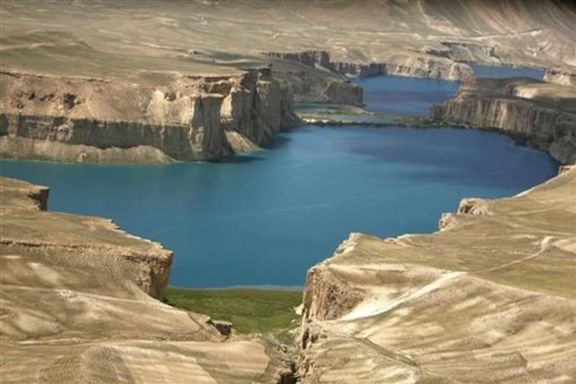
The Taliban stated that 467 of the visitors cited tourism including visits to historical monuments and cultural sites as their primary reason for travelling to Afghanistan. Others reportedly came for work or study purposes.
The Taliban administration views tourism as a potential revenue stream and a way to bolster the country’s struggling economy. In recent months, officials have attempted to simplify visa processes and promote direct flights, while actively encouraging YouTube and TikTok travel vloggers to document their experiences in Afghanistan. The campaign aims to promote a narrative of security and stability under Taliban rule.
However, the group’s engagement with foreign social media influencers has sparked controversy. A notable example was the widely publicised visit of a foreign pornographic film actor to Taliban-controlled Afghanistan, a move that drew sharp criticism.
Rights advocates argue that while Afghan women face severe restrictions on their basic freedoms, foreign tourists are being used as tools in a propaganda effort designed to normalise the Taliban’s repressive governance.


Pakistan’s Ministry of Interior has ordered all Afghan nationals without valid visas or residence permits to leave the country, as authorities resume deportations of undocumented migrants.
According to a notice obtained by Afghanistan International, the return process officially began on August 1. The government has also started deporting Afghans whose Proof of Registration (PoR) cards or Afghan Citizen Registration (ACR) cards have expired.
Afghan migrants previously told Afghanistan International that Pakistan’s immigration authorities have suspended the visa renewal process. Police have reportedly begun arresting and deporting Afghans who were awaiting visa extensions.
The policy marks a continuation of Pakistan’s deportation drive, which began last year and drew widespread international criticism. Many Afghan refugees had fled Taliban persecution and face grave risks if forced to return.
Amnesty International said the government’s failure to renew PoR cards has left an estimated 1.4 million Afghans in legal limbo. The rights organisation has called on Islamabad to immediately halt the deportations and resume processing residency renewals for Afghan nationals.

The National Resistance Council for the Salvation of Afghanistan has reported credible evidence of forced displacement in the Afghan provinces of Maidan Wardak, Bamiyan, Ghor, and other regions.
According to a statement released on Friday, the council accused the Taliban of directly supporting the displacement activities in coordination with nomadic Kuchi groups, alleging these actions are aimed at deliberately altering the demographic composition of targeted areas.
The council highlighted systematic threats, intimidation, dispossession, denial of fundamental human rights, and forced expulsion faced by indigenous communities, particularly in Behsud district of Maidan Wardak, Panjab district in Bamiyan, and parts of Ghor province.
The Resistance Council, comprising political factions and former jihadi leaders opposed to Taliban rule, condemned the displacements as violating fundamental principles of national coexistence, human rights standards, and Islamic and legal provisions. It characterised these acts as “collective crimes, structural discrimination, and ethnic cleansing.”
The council further warned that such forced displacement is not merely a local or isolated issue, but rather part of a broader strategy to erase historical identities, culturally and geographically marginalise indigenous communities, and reinforce the Taliban’s authoritarian and monopolistic control.
Describing the Taliban as lacking “political, legal, and popular legitimacy,” the council called upon the United Nations, the Office of the High Commissioner for Human Rights, and other international monitoring organisations to clearly condemn these actions, send investigative teams to the affected regions, and formally document cases of forced displacement.
In recent weeks, hundreds of families from Dawlat Yar district in Ghor province and Panjab district in Bamiyan province have reportedly been forced from their homes by Taliban forces.

United Nations experts have warned that the Taliban is providing a permissive environment for foreign terrorist groups in Afghanistan, creating a serious threat to the security of Central Asia and the wider international community.
In a new report to the UN Security Council, the panel of experts said several al-Qaeda-linked training camps are operating across Afghanistan, while the Islamic State–Khorasan Province (ISIS-K) remains “the most serious threat” to both the region and global security.
The report estimates ISIS-K has around 2,000 active fighters and continues to recruit from within and beyond Afghanistan’s borders. The group has reportedly run suicide training programmes for children under 14 and is training youths in religious schools, particularly in northern Afghanistan and near the Pakistani border.
The experts also detailed the ongoing presence of al-Qaeda, made up largely of Arab-origin fighters who fought alongside the Taliban in previous years. Al-Qaeda fighters are reportedly based in Helmand, Kandahar, Kunar, Uruzgan, and Zabul provinces. According to the report, three new training camps are now being used by both al-Qaeda and Tehreek-e-Taliban Pakistan (TTP) militants.
Foreign Fighters Transferred to Afghanistan
The UN report highlights growing concern over the transfer of extremist fighters from Syria to Afghanistan, including members of the Khatiba Imam al-Bukhari (KIB) and the Islamic Movement of Uzbekistan (IMU), both affiliated with al-Qaeda. These fighters have reportedly relocated to northern Afghanistan, raising fears of cross-border attacks.
In December 2024, a three-member delegation, including a representative of the East Turkestan Islamic Movement, is believed to have travelled from Damascus to Kabul for talks with Taliban officials about the relocation of foreign fighters.
The Taliban has consistently denied the presence of foreign terrorist groups in the country. However, the report suggests that the group is either unwilling or unable to prevent these groups from operating freely.
ISIS-K Recruitment and Funding
The report also reveals that ISIS-K has called on its Afghan-based fighters to travel to Syria to reinforce its ranks, with unconfirmed reports suggesting that a significant number have already departed.
Despite ongoing counterterrorism operations, ISIS-K is believed to remain financially stable. UN member states estimate the group holds reserves of approximately $10 million, with some funds invested in Middle Eastern real estate. It continues to receive external funding, reportedly from an office in Somalia, and engages in kidnappings for ransom, targeting Afghan businessmen.
TTP and Baloch Militants Operating in Southern Afghanistan
According to the report, the TTP, which maintains an estimated 6,000 fighters, enjoys strong logistical and operational support from the Taliban. However, there is said to be internal division within the Taliban leadership over continued ties with the group, as some officials push for distancing to improve regional relations.
The report also highlights coordination between the TTP and the Baloch Liberation Army (BLA), including its Majeed Brigade. One UN member state reported that the two groups share four training camps in southern Afghanistan — including Shah Wali Kot and Shorabak districts of Kandahar — where al-Qaeda provides both ideological indoctrination and weapons training.
Taliban Dismisses Allegations
Taliban officials continue to insist that ISIS-K has been neutralised and that no foreign terrorist groups are operating in the country. They have dismissed the UN findings as politically motivated propaganda.
However, the UN experts noted that while Taliban operations have weakened ISIS-K to some extent, the group continues to function with “relative impunity” and is actively exploiting dissatisfaction with Taliban governance.
The report calls on the international community to remain vigilant and urges continued monitoring of the evolving security situation in Afghanistan.
The Ghulam Khan border crossing between Afghanistan and Pakistan was closed to passengers and medical patients on Friday, according to local sources in Afghanistan’s Khost province.
Residents told Afghanistan International that Pakistani authorities shut the crossing to pressure Afghans into obtaining visas for entry. The closure has sparked concern among local travellers, particularly those seeking urgent medical treatment in Pakistan.
Neither Pakistani nor Taliban officials have commented publicly on the move.
Local sources said that, until now, patients were permitted to cross the border using a “temporary travel pass.” It remains unclear whether the current closure extends to commercial vehicles or trade-related transport.
Pakistan has previously closed the Ghulam Khan crossing entirely for several days, halting all movement, including trade and humanitarian access.
In late June, Taliban officials in Khost announced a similar closure, stating that Pakistan had shut the crossing without providing a reopening date. At the time, authorities advised citizens, traders and travellers to avoid the Ghulam Khan route and seek alternative border points.
Located in the Gurbuz district in southwestern Khost, the Ghulam Khan crossing is the third most significant border checkpoint between Afghanistan and Pakistan, after Chaman and Torkham. It lies in a mountainous area adjacent to Pakistan’s North Waziristan district, a region often affected by security concerns.
Pakistan periodically shuts border crossings with Afghanistan due to political tensions, trade disputes, or security operations, frequently disrupting travel and commerce between the two countries.

The White House on Thursday released a revised list of import tariffs under President Donald Trump’s trade policy, announcing an increase in tariffs on goods from Afghanistan from 10 percent to 15 percent.
The new tariff structure was published just hours before the 1 August deadline for trade negotiations and agreements with foreign governments.
Under the updated policy, countries with a trade deficit with the United States, including Afghanistan, will now face a base tariff rate of 15 percent. The previous 10 percent rate will remain in place only for countries that maintain a trade surplus with the US
In 2024, the total value of US-Afghanistan goods trade is estimated at $34 million. According to the Office of the United States Trade Representative, US exports to Afghanistan fell sharply in 2024, totalling $11.4 million, a 76.9 percent decline from $38.2 million, compared to 2023.
Meanwhile, US imports from Afghanistan rose to $22.6 million in 2024, an increase of 13.2 percent from the previous year.
This shift led to a reversal in the trade balance between the two countries, moving from a $29.7 million US surplus in 2023 to an $11.1 million deficit in 2024.