• العربية
  • پښتو
  • فارسی
Brand
  • Afghanistan
  • Sport
  • Markets
  • Afghanistan
  • Sport
  • Markets
  • Theme
  • Language
    • العربية
    • پښتو
    • فارسی
  • Afghanistan
  • Sport
  • Markets
All rights reserved for Volant Media UK Limited
volant media logo

Iran Bans Bus Ticket Sales To Afghan Migrants, Tightens Travel Restrictions

Aug 3, 2025, 10:42 GMT+1

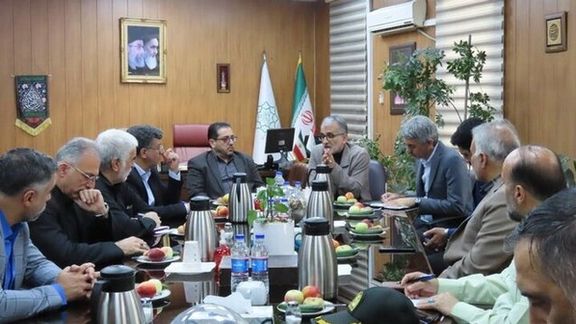
Iranian officials have moved to tighten travel restrictions on Afghan migrants, banning the sale of bus tickets to undocumented individuals and prohibiting travel even for documented migrants to certain provinces.

At a high-level meeting on Saturday, 2 August, officials reviewed the deportation process for Afghan migrants. Vahid Golikani, head of the General Directorate for Foreign Nationals and Migrant Affairs in Tehran province, said that “Afghan migrants with legal documents are not permitted to travel to restricted provinces, and selling tickets or transporting them to these areas is illegal.”

He warned transportation companies against selling tickets or transporting Afghan nationals to provinces where their presence is prohibited, stressing that violations would be met with legal consequences.

According to Iran’s Ministry of Interior, Afghan migrants, documented or undocumented, are banned from residing in or travelling to 15 provinces, including East Azerbaijan, West Azerbaijan, Ardabil, Zanjan, Kurdistan, Kermanshah, Ilam, Lorestan, Chaharmahal and Bakhtiari, Kohgiluyeh and Boyer-Ahmad, North Khorasan, Gilan, Mazandaran, Sistan and Baluchistan, Khuzestan, and Hamedan.

Golikani stated that the deportation of undocumented migrants requires full coordination between agencies and should only occur after proper registration through designated detention and processing centres. He added that unauthorised removals pose significant legal and humanitarian challenges.

He also announced that Afghan nationals wishing to return voluntarily must register at the Khavaran Return Centre. Once repatriated, they are not permitted to re-enter Iran.

Hamidreza Rahmani, head of Iran’s Terminals and Transportation Organisation, reiterated that undocumented Afghans are not allowed to work in passenger transport services, commercial stalls, or as contractors. He said that security forces are actively monitoring bus terminals to prevent the sale of tickets to Afghan migrants and to ensure continued coordination among agencies to maintain public order.

Iran enforces some of the strictest restrictions on Afghan migrants in the region. Authorities have previously directed employers not to hire Afghans and instructed landlords not to rent property to them.

According to the Taliban, nearly two million Afghans have been forcibly deported from Iran in the past three months alone.
Most Viewed

Taliban & Pakistan Prepared To Work Together For Peace & Security, Says China
1

Taliban & Pakistan Prepared To Work Together For Peace & Security, Says China

2

Taliban to Sell Confiscated Housing Estates Back to Residents

3

Taliban Signs $46 Million Customs Laboratory Deal With Indian Company

4

EU Commission Clarifies Talks With Taliban Representatives In Brussels

5

Taliban Promised Inquiry Into Abuse Of Cleric, Says Shia Commission

•
•
•

More Stories

TTP, Baloch Militants Get Support From Inside Afghanistan, Says Pak

Aug 3, 2025, 09:53 GMT+1

Pakistan has accused Afghanistan of providing financial and logistical support to militant groups, including the Baloch Liberation Army (BLA) and Tehreek-e-Taliban Pakistan (TTP). The country has called on the Taliban to take decisive action against them.

Speaking at a weekly press briefing, Shafqat Ali Khan, spokesperson for Pakistan’s Ministry of Foreign Affairs, said the issue of cross-border terrorism remains central in ongoing diplomatic discussions with the Taliban administration in Kabul.

Khan stated that groups such as the TTP and BLA, both designated as terrorist organisations by Pakistan, are operating from Afghan territory and receiving external support. He said they have credible evidence that these groups receive support from within Afghanistan and that Pakistan has repeatedly raised the issue with Afghan authorities.

The Foreign Ministry spokesperson also alleged that India has played a role in backing Baloch militants, asserting that there is documented evidence of Indian support for the group’s activities.

According to Khan, Pakistan expects the Taliban to take effective measures to prevent militant groups from using Afghan soil to launch attacks inside Pakistan.

His comments echo concerns raised by United Nations experts, who have previously reported that the TTP, with an estimated 6,000 fighters, benefits from significant operational and logistical backing from the Taliban in Afghanistan. The UN also cited internal divisions within the Taliban leadership, with some figures pushing for a reduction in support for the TTP to improve relations with neighbouring countries.

UN assessments have warned that Afghanistan remains a safe haven for various transnational terrorist groups. The UN Security Council’s monitoring team reported that the presence of ISIS–Khorasan (ISIS-K) poses the most serious regional and international threat, while al-Qaeda continues to offer ideological and weapons training to other militant organisations in the region.

The Taliban has rejected the UN’s findings, with a deputy spokesperson calling the reports “propaganda” and denying the presence of ISIS or other terrorist groups operating in Afghanistan.

Nevertheless, the UN has said that some member states have reported close cooperation between the BLA, including its Majeed Brigade, and the TTP in parts of southern Afghanistan. One state cited intelligence indicating that the two groups operate at least four shared training camps, including in Kandahar’s Shah Wali Kot and Shorabak districts, with al-Qaeda providing support and training.

Iran Moves To Deny Compensation For Undocumented Afghan Migrants Injured In Accidents

Aug 2, 2025, 18:57 GMT+1

A senior Iranian lawmaker has announced that undocumented foreign nationals including Afghan migrants will no longer be eligible for government compensation if injured in traffic accidents.

Osman Salari, deputy head of Iran’s parliamentary Legal Commission, said on Saturday that the commission is reviewing a new bill aimed at combating human and organ trafficking. Under the proposed legislation, the Fund for the Compensation of Bodily Injuries will be barred from paying diyah (blood money) or damages to undocumented migrants injured in road incidents.

According to Fars News Agency, affiliated with Iran’s Islamic Revolutionary Guard Corps, the Islamic Republic previously covered such compensation when insurance providers refused to pay. In those cases, the government would issue blood money payments on behalf of undocumented Afghan migrants.

Under current law, the compensation fund is required to pay damages to the families of undocumented foreigners who are injured or killed in accidents. However, Fars claims that in many cases, lawyers exploited the system securing payments on behalf of unidentifiable or fictitious victims and pocketing most of the money while giving only a small portion to real or fabricated families.

The report states that the fund’s ongoing efforts have successfully pressured lawmakers to end this practice.

Iranian officials commonly refer to undocumented Afghan migrants as “foreign nationals” or “undocumented foreigners.” The country hosts one of the largest Afghan refugee populations in the world, many of whom live without legal residency status.

Tensions over Afghan migrants in Iran have escalated in recent years. A recent video widely circulated on social media drew public outrage after showing two Iranian men chasing a teenage Afghan cyclist in the southern city of Bandar Abbas.

In the footage, one man urges the driver to “run him over,” saying: “Afghans don’t get blood money,” while shouting racist abuse. The video has further fuelled criticism over Iran’s treatment of Afghan migrants and raised concerns about rising xenophobia and the potential consequences of the proposed legal changes.

Taliban Warns Of ‘Dire’ Environmental Crisis In Afghanistan, Urges Global Support

Aug 2, 2025, 17:33 GMT+1

Afghanistan’s environmental situation is “dire and alarming,” according to Matiulhaq Khalis, head of the Taliban-led National Environmental Protection Agency, who has called for urgent international cooperation to address the crisis.

Speaking at a conference on Saturday titled Assessment of the Environmental Situation in the Northern Zone, Khalis highlighted the escalating impact of climate change and environmental degradation across the country. The event, held in Mazar-e-Sharif, was attended by Taliban officials from Balkh province, as well as representatives of national and international organisations and environmental activists.

According to a statement from the agency, participants described Afghanistan as one of the most climate-vulnerable countries in the world, citing the intensifying effects of droughts, desertification, and dwindling water resources.

Noorul Hadi Abu Idris, the Taliban’s deputy governor for Balkh, noted that approximately 75 percent of the land in the north, west, and south is being affected by desertification. He warned that recurring droughts and the rapid depletion of natural resources have significantly reduced agricultural productivity and damaged ecosystems.

Khalis cited conflict, soil erosion, deforestation, rising temperatures, and over-extraction of groundwater as the main drivers of environmental decline. He stressed that the situation poses serious threats to food security and livelihoods, and urged the global community to prioritise Afghanistan in climate-related aid and environmental policy.

Afghanistan ranks among the ten countries most severely affected by climate change, grappling with extreme weather events such as droughts, floods, rainfall, and water scarcity.

Earlier this year, the International Organization for Migration reported that nearly five million people across Afghanistan were impacted by widespread flooding and avalanches in early 2025. The International Committee of the Red Cross also warned that groundwater levels in many parts of the country particularly in Kabul are dropping at an alarming rate.

Tribal Jirga Tells TTP Militants To Leave Civilian Areas Or Return To Afghanistan

Aug 2, 2025, 15:07 GMT+1

The first round of talks between the Bajaur Peace Jirga and the Tehreek-e-Taliban Pakistan (TTP) concluded on Friday, 2 August, with tribal elders urging militants to withdraw from civilian areas or return to Afghanistan.

“We demanded that the armed groups either return to Afghanistan or, if they are intent on fighting, leave populated areas and move toward the mountains,” said Dr. Khalil-ur-Rehman, a jirga member, during a media briefing.

The meeting was held in a mosque in the Mamund tehsil area. According to Pakistani media reports, TTP representatives responded by saying they would convey the jirga’s message to their “leaders in Afghanistan.” The group has not issued an official statement.

The talks come amid growing unrest in the region. On Monday, thousands of residents of the Tirah Valley staged a mass protest, demanding the removal of militants due to rising insecurity, economic hardship, and daily disruptions. The protest turned deadly when Pakistani security forces opened fire, killing at least three demonstrators and injuring eight others.

Despite the violence, tribal leaders pressed ahead with the peace effort. On Friday, they held a jirga reiterating calls for the withdrawal of TTP militants from the area.

Dawn newspaper reported Saturday that the TTP’s pledge to consult leadership in Afghanistan suggests the group’s command structure remains intact across the border. Pakistani officials estimate that approximately 4,000 TTP fighters are operating from within Afghanistan.

The Taliban administration in Kabul has repeatedly denied hosting the Pakistani Taliban on its soil.

However, in a report released Friday, 1 August, the US Special Inspector General for Afghanistan Reconstruction (SIGAR) stated that terrorist groups including al-Qaeda, TTP, and Islamic State–Khorasan continue to operate within Afghanistan.

Additionally, earlier this year, three sources told Afghanistan International that TTP members had sought to acquire drones in Kabul and other Afghan cities for use against the Pakistani military.

Taliban, Azizi Energy Ink $10 Billion Power Agreement

Aug 2, 2025, 13:13 GMT+1

The Taliban’s Ministry of Water and Energy has signed a $10 billion agreement with Azizi Energy to produce, transmit, and distribute 10,000 megawatts of electricity across Afghanistan.

According to a statement released on Saturday, 2 August, by the Office of the Deputy Prime Minister for Economic Affairs, the project will be implemented over the next seven to ten years and aims to make Afghanistan self-sufficient in energy production.

Work on the project is set to begin on Sunday, 3 August, and will be carried out across multiple provinces. A joint technical team from the Ministry and Azizi Energy is expected to complete the initial survey within ten days, while the overall design is slated for completion within six months. The first phase generating between 2,000 and 3,000 megawatts will commence thereafter.

Azizi Energy stated that the project will use a combination of natural resources including coal, water, and wind to produce electricity. The company plans to generate around 700 megawatts from wind power alone.

Mirwais Azizi, chairman of Azizi Bank and Azizi Energy, said electricity generation is critical to Afghanistan’s economic recovery. He claimed the project would create more than 150,000 jobs and contribute significantly to reducing unemployment and boosting economic growth.

According to Taliban officials, 4,000 megawatts of the total output will be allocated for public use, while the remaining 6,000 megawatts will supply industrial facilities.

In January 2024, Azizi pledged a $10 billion investment in Afghanistan’s energy and transportation sectors. In February 2025, he also announced plans to build a $500 million medical complex in Kabul’s District 8, named after his daughter, Farishta. Despite the announcement, no visible progress on the hospital project has been reported six months later.