
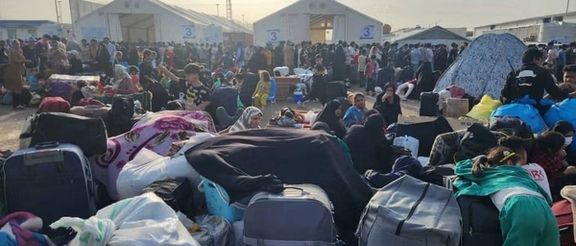
The United Nations Refugee Agency (UNHCR) has warned that a sharp decline in international funding has forced the scaling back of essential support programmes for Afghan returnees, as the country struggles to absorb millions of people returning from Iran and Pakistan.
In a statement issued this week, the agency said it requires $216 million in 2025 to meet the needs of returning Afghans but has so far received only 28 per cent of the required funding. As a result, UNHCR has significantly reduced its assistance in areas such as shelter, livelihoods, and cash support.
According to UNHCR, more than 2 million Afghans have returned to the country this year, either voluntarily or through forced deportations, exacerbating the humanitarian crisis in a nation already reeling from economic collapse, conflict, and widespread displacement.
“The scale of returns is placing immense pressure on already overstretched resources,” the agency said, noting that nearly half of Afghanistan’s population now depends on humanitarian aid.
UNHCR also reiterated earlier warnings about the risks facing returning refugees, particularly women and girls. The agency said that many returnees have reported “disturbing accounts of restrictions, harassment, and discrimination” since arriving back in Afghanistan.
The situation remains critical as deportations continue from neighbouring countries and humanitarian actors struggle to meet basic needs in the face of persistent funding shortfalls.
The Taliban has relocated several families affiliated with Tehreek-e-Taliban Pakistan (TTP) from Kunar province to Ghazni and Zabul provinces, local sources told Afghanistan International on Sunday.
According to sources in Kunar, the transfers began approximately a month ago and were coordinated by a special Taliban committee in cooperation with TTP. The families were reportedly moved using military vehicles from the districts of Khas Kunar, Marawara, Dara-i-Pech (Mano Gai area), Sirkanay, and Dangam.
Residents of Khas Kunar confirmed that many of the relocated families originated from Pakistan’s Khyber Pakhtunkhwa province, particularly the Bajaur and Mohmand tribal areas. One tribal elder said that around 25 TTP-affiliated families who had been living in the Wali and Shali valleys of Khas Kunar have now been transferred. However, the families of two senior TTP officials, Mullah Haidar, a financial chief, and Qari Kamran, an intelligence operative, remain in the district.
Local residents alleged that TTP officials have been collecting ushr (an Islamic tax) and financial contributions from the community. In Sirkanay’s Shungari Valley, residents confirmed the presence of TTP families, stating that while they once operated discreetly, they now move openly with weapons and vehicles.
Some relocated families, initially moved from Khost and Paktika to Ghazni, have reportedly returned due to a lack of adequate facilities in their new locations.
Earlier this year, Afghanistan International reported that dozens of TTP families had been secretly moved from the “Gulan” camp in Khost, surrounding villages, Ismail Khel district, and parts of Paktika to refugee camps in Ghazni. According to sources at the time, the Taliban provided each family member with a $40 monthly allowance, along with transportation costs and funds for basic household goods.
Under an agreement between the Taliban and TTP, relocated families were not to be photographed, registered for biometrics, or documented in any official capacity. One source involved in the process said the families agreed to move on the condition of confidentiality and continued financial support.
TTP fighters were also offered relocation options in Logar, Maidan Wardak, Kunduz, and Baghlan provinces, where Mehsud and Waziri tribal members reside, but declined, citing concerns that moving farther from the border would complicate access to military supplies.
In Ghazni, a local source said that only families of ordinary fighters have been moved to Qarabagh district, while the families of senior commanders are living in Kabul and other major cities.
Neither the Taliban administration nor TTP has issued any public comment on the reported relocations.
Two former Afghan interpreters for US forces, both of whom have completed legal immigration procedures and possess supporting documentation, are facing possible deportation from the United States, raising concerns among veterans and refugee advocates.
The men, identified as 36-year-old Zia and 33-year-old Sayed Naser, are currently detained in Connecticut and San Diego, respectively. According to the US Department of Homeland Security (DHS), Zia is under investigation for a “serious criminal allegation” and has been deemed a “risk to national security.”
However, their attorneys told The Washington Post that both men have extensive documentation, including military records, letters of recommendation, contracts, and immigration approvals, proving their cooperation with US forces in Afghanistan and their eligibility for protection under the US Special Immigrant Visa (SIV) and asylum programmes.
Zia worked as an interpreter and cultural adviser for the US military from 2005 to 2009. After fleeing to Pakistan with his family in 2021, he applied for an SIV, which was approved by the US State Department in April 2024. Residing in Connecticut and nearing the final stage of obtaining his green card, Zia was arrested on 16 July and issued an immediate deportation order.
Sayed Naser, who worked as an interpreter between 2011 and 2013 before founding a logistics firm contracting with US forces, fled Afghanistan after the Taliban targeted his family. His brother was killed and his father arrested after militants failed to locate him following an attack on a family wedding in 2021. Naser travelled through Iran and Brazil before reaching Mexico, and in July 2024 was granted entry to the US on a humanitarian visa. He was arrested during his first asylum hearing in June this year.
The Department of Homeland Security claims there is no evidence that Naser worked with US forces. His attorney disputes this, stating that extensive records proving his service have been submitted.
Matt Zeller, a US Army veteran and long-time advocate for Afghan allies, criticised the arrests: “The Trump administration knows what’s going to happen to these folks. They’re not stupid. They understand that the Taliban is going to kill them when they get back to Afghanistan.”
Andrew Sullivan, another US Army veteran who served in Afghanistan, called the detentions “another betrayal” by a government that has also ended Temporary Protected Status (TPS) for Afghans.
Jill Marie Bussey, director of legal affairs at Global Refuge, said the crackdown on Afghan migrants is part of a broader immigration directive by the Trump administration, which reportedly mandates that immigration enforcement agencies detain at least 3,000 individuals per day.
A White House spokesperson defended the administration’s immigration policies, saying its top priority is “arresting and removing the dangerous, violent, illegal criminal aliens that Joe Biden let flood across our southern border, of which there are many.”
Advocates have warned that deporting individuals like Zia and Naser could be tantamount to handing them a death sentence under Taliban rule.
The planned visit of Taliban Foreign Minister Amir Khan Muttaqi to Pakistan has been postponed, sources in Kabul confirmed to Afghanistan International.
According to the sources, the visit, originally scheduled for Monday, 4 August, has been delayed due to unspecified “technical issues.” Muttaqi had been expected to travel to Islamabad for a three-day visit.
Pakistan’s Foreign Minister, Ishaq Dar, had extended the invitation during his official trip to Kabul in April.
Earlier reports in Pakistani media indicated that Muttaqi was scheduled to meet with Prime Minister Shehbaz Sharif, Foreign Minister Ishaq Dar, and other senior officials to discuss key political, economic, and security matters.
No new date for the visit has been announced.
Iranian officials have moved to tighten travel restrictions on Afghan migrants, banning the sale of bus tickets to undocumented individuals and prohibiting travel even for documented migrants to certain provinces.
At a high-level meeting on Saturday, 2 August, officials reviewed the deportation process for Afghan migrants. Vahid Golikani, head of the General Directorate for Foreign Nationals and Migrant Affairs in Tehran province, said that “Afghan migrants with legal documents are not permitted to travel to restricted provinces, and selling tickets or transporting them to these areas is illegal.”
He warned transportation companies against selling tickets or transporting Afghan nationals to provinces where their presence is prohibited, stressing that violations would be met with legal consequences.
According to Iran’s Ministry of Interior, Afghan migrants, documented or undocumented, are banned from residing in or travelling to 15 provinces, including East Azerbaijan, West Azerbaijan, Ardabil, Zanjan, Kurdistan, Kermanshah, Ilam, Lorestan, Chaharmahal and Bakhtiari, Kohgiluyeh and Boyer-Ahmad, North Khorasan, Gilan, Mazandaran, Sistan and Baluchistan, Khuzestan, and Hamedan.
Golikani stated that the deportation of undocumented migrants requires full coordination between agencies and should only occur after proper registration through designated detention and processing centres. He added that unauthorised removals pose significant legal and humanitarian challenges.
He also announced that Afghan nationals wishing to return voluntarily must register at the Khavaran Return Centre. Once repatriated, they are not permitted to re-enter Iran.
Hamidreza Rahmani, head of Iran’s Terminals and Transportation Organisation, reiterated that undocumented Afghans are not allowed to work in passenger transport services, commercial stalls, or as contractors. He said that security forces are actively monitoring bus terminals to prevent the sale of tickets to Afghan migrants and to ensure continued coordination among agencies to maintain public order.
Iran enforces some of the strictest restrictions on Afghan migrants in the region. Authorities have previously directed employers not to hire Afghans and instructed landlords not to rent property to them.
According to the Taliban, nearly two million Afghans have been forcibly deported from Iran in the past three months alone.
Pakistan has accused Afghanistan of providing financial and logistical support to militant groups, including the Baloch Liberation Army (BLA) and Tehreek-e-Taliban Pakistan (TTP). The country has called on the Taliban to take decisive action against them.
Speaking at a weekly press briefing, Shafqat Ali Khan, spokesperson for Pakistan’s Ministry of Foreign Affairs, said the issue of cross-border terrorism remains central in ongoing diplomatic discussions with the Taliban administration in Kabul.
Khan stated that groups such as the TTP and BLA, both designated as terrorist organisations by Pakistan, are operating from Afghan territory and receiving external support. He said they have credible evidence that these groups receive support from within Afghanistan and that Pakistan has repeatedly raised the issue with Afghan authorities.
The Foreign Ministry spokesperson also alleged that India has played a role in backing Baloch militants, asserting that there is documented evidence of Indian support for the group’s activities.
According to Khan, Pakistan expects the Taliban to take effective measures to prevent militant groups from using Afghan soil to launch attacks inside Pakistan.
His comments echo concerns raised by United Nations experts, who have previously reported that the TTP, with an estimated 6,000 fighters, benefits from significant operational and logistical backing from the Taliban in Afghanistan. The UN also cited internal divisions within the Taliban leadership, with some figures pushing for a reduction in support for the TTP to improve relations with neighbouring countries.
UN assessments have warned that Afghanistan remains a safe haven for various transnational terrorist groups. The UN Security Council’s monitoring team reported that the presence of ISIS–Khorasan (ISIS-K) poses the most serious regional and international threat, while al-Qaeda continues to offer ideological and weapons training to other militant organisations in the region.
The Taliban has rejected the UN’s findings, with a deputy spokesperson calling the reports “propaganda” and denying the presence of ISIS or other terrorist groups operating in Afghanistan.
Nevertheless, the UN has said that some member states have reported close cooperation between the BLA, including its Majeed Brigade, and the TTP in parts of southern Afghanistan. One state cited intelligence indicating that the two groups operate at least four shared training camps, including in Kandahar’s Shah Wali Kot and Shorabak districts, with al-Qaeda providing support and training.