Large Crowd Attends Funeral Of Anti-Taliban General Killed In Tehran

A large number of Afghan migrants attended the funeral of Ikramuddin Sari, a former Afghan police commander and prominent opponent of the Taliban, in Tehran on Saturday.

A large number of Afghan migrants attended the funeral of Ikramuddin Sari, a former Afghan police commander and prominent opponent of the Taliban, in Tehran on Saturday.
Sari was assassinated in the Iranian capital on Wednesday, December 24. Mohammad Amin Almas, a former battalion commander in the Afghan army, was also killed in the attack.
The funeral ceremony was held on Saturday afternoon in the Chahardangeh area of Tehran, where mourners gathered in large numbers to pay their respects.
The killing marked the third assassination of Taliban opponents in Iran in the past four months. No group has claimed responsibility for the attack. However, anti-Taliban groups, including the Afghanistan Freedom Front and the National Resistance Front, have accused the Taliban of involvement.
So far, neither the Taliban nor the Islamic Republic of Iran has issued an official response to the killing.
Several Iranian media outlets have criticised the authorities’ silence over the assassinations of Taliban opponents, describing the group as an unreliable partner. Some newspapers have also questioned Iran’s decision to hand over Afghanistan’s embassy and consulates to the Taliban, arguing that the group has carried out assassination operations reaching as far as Tehran.
A number of Afghan political parties and factions have called on Iranian authorities to conduct a transparent investigation into the killings of Taliban opponents and to make the findings public.
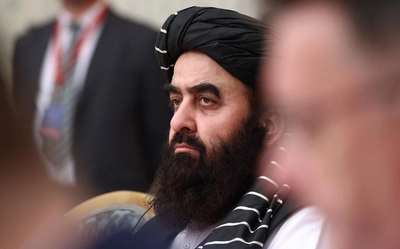

Pakistan’s foreign minister has, for the first time, confirmed that talks between Islamabad and the Taliban were held in Saudi Arabia. He said that the negotiations failed to produce results, as did earlier rounds in Qatar and Turkiye.
Ishaq Dar said the Saudi talks collapsed without agreement, mirroring the outcome of the second and third rounds of negotiations previously held in Doha and Istanbul. Pakistani officials had earlier said they were unaware of such discussions.
Sources had previously told Afghanistan International that delegations from Pakistan and the Taliban met in Saudi Arabia but failed to reach any understanding.
Speaking at a press conference on Saturday marking the end of the 2025 calendar year, Dar welcomed a recent fatwa issued by Taliban clerics aimed at preventing the export of war beyond Afghanistan’s borders. However, he said attacks originating from Afghan soil were continuing and that Pakistani soldiers were being killed on a weekly basis in the country’s north.
Referring to the fatwa, Dar said it reflected Pakistan’s longstanding demands, adding that the key question was whether the Taliban would implement it in practice.
He also cited remarks made last week by Sirajuddin Haqqani, who said the Taliban remained committed to the Doha agreement and would not allow Afghan territory to be used against countries in the region or beyond. Dar said that if this commitment were implemented, Pakistan’s concerns would be resolved.
Pakistan, he stressed, has only one demand of the Taliban: that Afghan soil not be used to launch attacks against Pakistan.
Meanwhile, Amir Khan Muttaqi said on Saturday that tensions with Pakistan had been turned into an opportunity for Afghanistan. He said the Taliban had found new markets and reduced their dependence on Pakistan.
Earlier this month, Taliban clerics declared at a gathering in Kabul that using Afghan territory to wage war abroad is illegitimate and called on Taliban forces not to cross borders to fight. They also said resisting foreign aggression constitutes jihad.
Relations between the Taliban and Pakistan remain strained. Trade and transit between the two sides have been completely halted for the past two months.

The Taliban’s foreign minister has said that “malicious elements” are seeking to disrupt relations between the Taliban and Tajikistan, following the killing of Tajik border guards in an attack by militants who crossed from Afghan territory.
Amir Khan Muttaqi said an investigation into the incident has begun and stressed that cooperation with Tajikistan would continue to prevent a recurrence. His remarks followed a phone call with his Tajik counterpart after Dushanbe demanded an apology from the Taliban.
Tajik authorities announced on Thursday, December 25, that three members of what they described as a “terrorist organization” crossed into Tajik territory from Shamsiddin Shohin district. According to officials, clashes with Tajik border guards killed three militants and two Tajik security personnel.
Following the incident, Tajikistan’s State Committee for National Security said the repetition of armed attacks over the past month showed the Taliban had acted “irresponsibly” in fulfilling its international commitments and repeated assurances to ensure security along the shared border and to combat terrorist groups.
Taliban Say Investigation Under Way
Speaking on Saturday at a ceremony in Kabul marking the 46th anniversary of the former Soviet invasion of Afghanistan, Muttaqi said: “We have launched a serious investigation into the Tajikistan incident.”
He added that he had spoken with Sirojiddin Muhriddin, Tajikistan foreign minister and that both sides agreed to work jointly to prevent similar incidents in the future.
However, Muttaqi warned that unnamed actors were attempting to undermine relations between Kabul and Dushanbe. “Our concern is that certain malicious circles want to damage relations between the two neighbors and portray the situation as a crisis,” he said.
He did not identify any specific group or country. Previously, some Taliban-linked media activists have claimed that Pakistan was seeking to disrupt the Taliban’s relations with Central Asian states, particularly Tajikistan. Islamabad has not responded to those claims.
The Taliban foreign minister also said security had been established in Badakhshan province, as in other parts of Afghanistan, and reiterated that the Taliban would cooperate to ensure Afghan territory is not used to threaten neighboring countries.

Sources told Afghanistan International that several employees of the Taliban police command in Nuristan resigned on Friday, December 26, citing allegations of corruption, discrimination and ethnic bias.
According to the sources, Mohammad Muzammil, the Taliban police chief in Nuristan, has been accused of making appointments based on ethnic connections rather than merit. Images obtained by Afghanistan International show police command staff staging a collective protest in the province.
The protesters said the police chief lacks familiarity with Nuristan’s cultural and geographical conditions and has filled key posts according to ethnic ties and personal interests. They said persistent corruption was the primary reason for their resignations.
Sources also said Mohammad Ibrahim Sadr, the Taliban’s deputy interior minister, has travelled to Nuristan to address the dispute.
The Taliban Ministry of Interior has not yet commented on the resignations or the allegations.

Al Jazeera reports that rising insecurity along the Tajikistan–Afghanistan border is increasingly threatening China’s interests and heightening Beijing’s concerns about stability in Central Asia.
According to the report, Tajik authorities have recorded several armed infiltrations from Afghan territory in recent months, resulting in more than a dozen deaths. Some of the victims were Chinese nationals working on economic and mining projects in remote border areas of Tajikistan, with attacks reportedly targeting Chinese companies and workers in particular.
Al Jazeera said China, Tajikistan’s largest creditor and one of its most important economic partners, has a significant presence in infrastructure, road construction and mining projects in border regions. As a result, Beijing no longer feels confident about the safety of its citizens along the Afghanistan–Tajikistan frontier.
On November 26, a drone attack on a Chinese gold-mining company, along with gunfire targeting workers at a Chinese state-owned enterprise, reportedly killed several Chinese nationals. Following the incidents, the Chinese embassy in Dushanbe advised its citizens and companies to leave border areas and urged Tajik authorities to take “all necessary measures” to ensure the security of Chinese nationals and investments.
Citing analysts, Al Jazeera reported that while the perpetrators have not been officially identified, the pattern of the attacks is consistent with the operational methods of Islamic State Khorasan. Analysts say the group aims to undermine the Taliban’s credibility as a regional security provider by targeting foreigners.
The report said the escalation of clashes along the Tajikistan–Afghanistan border, combined with attacks on Chinese interests, could further complicate regional security dynamics and place additional pressure on the Taliban and Afghanistan’s neighbours.
Quoting Tajik officials, Al Jazeera said the attacks demonstrate the Taliban’s “irresponsibility” and repeated failure to uphold security and international commitments. Dushanbe has called on the Taliban to apologise and provide guarantees on border security.
Tajik authorities say most of the attacks originated from Afghanistan’s Badakhshan province, which Al Jazeera described as a security-wise “complex” area. The report added that the Taliban’s crackdown on poppy cultivation, and the resulting discontent among farmers, has further contributed to fragile security conditions there.
The Taliban have expressed “regret” over the incidents, blamed the attacks on unspecified groups and insisted that Afghanistan under their control poses no threat to neighbouring countries. They have reiterated their commitment to the Doha agreement.

The Tehran-based daily Jomhouri-e Eslami has sharply criticised Iran’s approach toward the Taliban, saying flawed policies have allowed terrorism to reach Tehran.
In a Saturday editorial, the newspaper cited the assassination of Ikramuddin Sari in Tehran as evidence of what it described as a series of “strategic mistakes” by Iran’s responsible institutions in dealing with the Taliban. It said the killing showed that terrorists had been able to penetrate Tehran’s security environment.
The editorial said Iran’s intelligence and security agencies are now facing a complex plot that must be uncovered and countered. It stressed that it is unacceptable for a group claiming friendly relations with the Iranian government to carry out assassinations on Iranian soil in order to silence its opponents.
According to the newspaper, the Iranian government must respond decisively. It argued that the most effective step would be to “cut off the influence of the self-proclaimed Taliban government in Iran.”
The paper also criticised what it called mistakes in Iran’s engagement with the Taliban, including the transfer of Afghan political representations in Iran to the group. It described the Taliban as a “terrorist group” whose promises cannot be trusted.
The editorial cited the assassinations in Mashhad and Tehran, the Taliban’s refusal to grant Iran its water rights, restrictions imposed on Iranian institutions in Afghanistan, and the group’s treatment of Persian speakers and Shia communities as evidence supporting its claims.
The newspaper further argued that the lack of transparency surrounding the killings of Ikramuddin Sari in Tehran and Marouf Gholami in Mashhad appeared aimed at concealing the incidents so that, in its words, “the Taliban’s credibility would not be damaged.”
Jomhouri-e Eslami said Iran must swiftly correct these mistakes and sever the influence of what it described as the Taliban’s domestic supporters, adding that only such measures could prevent the continuation of “Taliban plots in Iran.”
Ikramuddin Sari, a former police commander of Takhar and Baghlan provinces, was assassinated on Wednesday, December 24, in Tehran near his workplace. The killing sparked widespread reactions among Afghan political figures.
However, three days after the incident, Iran’s police and security authorities have neither officially confirmed nor denied that the assassination took place. Several Iranian media outlets have criticised what they described as official silence, saying it has fuelled uncertainty and speculation.