Magnitude 4.7 Earthquake Strikes Eastern Afghanistan
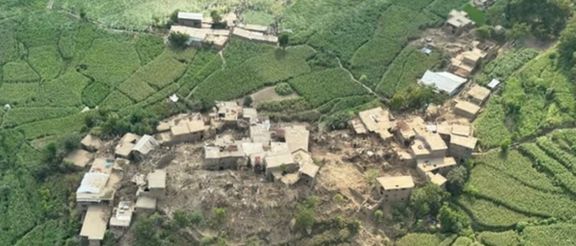
A magnitude 4.7 earthquake struck eastern Afghanistan on Thursday morning, the US Geological Survey said.
A magnitude 4.7 earthquake struck eastern Afghanistan on Thursday morning, the US Geological Survey said.
The quake hit at about 9:40 a.m. local time, with its epicentre recorded east of Jalalabad at a depth of 13 kilometres, according to USGS data.
There were no immediate reports of damage or casualties. Local sources in Kunar also confirmed the tremor.
The quake follows a magnitude 6 earthquake that struck the region five days earlier, which has since been followed by several aftershocks.

A prominent Taliban-linked social media user close to the Haqqani network has praised the work of female doctors in responding to the earthquake in Kunar province.
Mohammad Jalal shared photos of female doctors treating patients in Kunar and wrote on X that Afghan female doctors are helping tirelessly, and their dedication in these difficult days is remarkable and clear.
The presence of female doctors has again raised the issue of women’s access to education. The former US ambassador to Afghanistan welcomed the deployment of a team of female doctors from Kabul, noting on X that without them, female patients would have had no one to treat them.
Local sources in Kunar, however, told Afghanistan International on Tuesday that six pregnant women have died in provincial hospitals since the earthquake because of a shortage of female staff and medical facilities.
Similar concerns emerged after last year’s deadly earthquake in Herat, where reports said dozens of women died. The United Nations said more than 90 percent of victims were women and children. Sky News reported that some women delayed fleeing their homes during the quake out of fear of being without a hijab or male guardian.
Despite the urgent need for female doctors during crises, the Taliban have not eased restrictions on girls’ education. In December, the Ministry of Public Health banned women from studying in medical institutes. The move barred around 35,000 female students from continuing studies in medicine and nursing across 10 state institutes and 150 private centres.
The UN Population Fund has said Taliban restrictions have cut women’s access to health care by around 50 percent closing facilities and reducing the number of female medical workers. UNICEF warned in April that if the ban on medical education for women continues, more than 5,000 mothers and children could die this year. The agency estimated at least 1,600 mothers and 3,500 newborns were at risk.
The UN Population Fund has also stressed that Afghanistan urgently needs 18,000 skilled midwives and warned that failure to meet this need could put many women’s lives in danger.
Analysts say the education ban stems from Taliban leader Hibatullah Akhundzada and his circle of clerics in Kandahar. Reports suggest divisions within the movement, with Interior Minister Sirajuddin Haqqani reportedly opposing the policy, which has deepened the Taliban’s isolation and cut international funding, and indirectly criticising the ban.
The UN Refugee Agency on Wednesday appealed for urgent assistance for survivors of the earthquake in eastern Afghanistan.
The agency warned that many areas have been completely destroyed and survivors are in desperate need of shelter, medical care and emergency supplies.
The agency said its response is hampered by a severe shortage of funding.
A UNHCR staff member who visited the quake-hit areas said in a video message that they are witnessing widespread needs, whether medical aid, emergency supplies or shelter, as many villages have been completely destroyed by this earthquake.
The United Nations noted that the arrival of more than 2 million migrants from neighbouring countries has further compounded Afghanistan’s crises.
UNHCR added that this humanitarian response is facing a severe shortage of funding, and needs support to meet the most urgent needs of the affected people in Afghanistan.
The International Organization for Migration warned Wednesday that thousands of families affected by the recent earthquake in eastern Afghanistan could face the coming winter without shelter.
In a report, the agency said 12 quake-hit districts in Kunar, Nangarhar and Laghman provinces are home to about 2.74 million people. It said the districts of Nurgal and Chawkay in Kunar, Dara-i-Noor in Nangarhar and parts of Laghman were the worst affected, with access to those areas still difficult.
The IOM said many of the displaced in the affected regions including returnee migrants and internally displaced people were already living in highly vulnerable conditions before the quake struck.
The agency added that this disaster has exacerbated Afghanistan’s crises, and with the return of more than 1.7 million people from Iran and Pakistan and widespread economic problems, the situation is becoming even harder.
The organisation stressed that with winter approaching, thousands of families remain without safe shelter, raising the risk of further humanitarian consequences.
Taliban forces clashed with fighters from the National Resistance Front in Baghlan province late Tuesday, local sources told Afghanistan International.
The fighting broke out around 9 p.m. in the Kahgdai area of Nahrin district and lasted for nearly an hour, the sources said. No casualty figures have been confirmed.
The National Resistance Front has not issued a statement confirming the clash or reporting losses among its fighters.
Kahgdai is known as a stronghold of the Resistance Front, which has previously battled Taliban forces in the area. In June last year, two NRF commanders, Abdul Samad Kahgdai and Khairullah, were killed in clashes with the Taliban forces in Nahrin.
The World Health Organization warned Tuesday of severe shortages of medicine and health services for survivors of the earthquake in eastern Afghanistan, saying thousands remain at risk.
Hanan Balkhy, the WHO’s regional director, said the organisation has dispatched medicines, emergency equipment and support teams to affected areas but described the needs as overwhelming.
She added that more than 1,400 people have lost their lives in the tragic earthquake in Afghanistan and more than 3,100 others have been injured. Balkhi added that hospitals are overwhelmed with casualties, the psychological pressure is immense, and there is a risk of disease outbreaks.
She said the WHO sent public health experts to the quake zone within hours of the disaster and has since begun large-scale support operations. Those efforts include delivering 23 tonnes of trauma medicines and emergency supplies, setting up field tents to expand hospital capacity, deploying mobile teams to provide psychological support and strengthening disease surveillance.
Balkhy stressed that survivors urgently need clean drinking water and basic health services. The WHO said it has provided about $4 million to address immediate needs.