• العربية
  • پښتو
  • فارسی
Brand
  • Afghanistan
  • Sport
  • Markets
  • Afghanistan
  • Sport
  • Markets
  • Theme
  • Language
    • العربية
    • پښتو
    • فارسی
  • Afghanistan
  • Sport
  • Markets
All rights reserved for Volant Media UK Limited
volant media logo

Islamabad’s Rhetoric Makes Restraining TTP Harder, Says Taliban Spokesperson
Sep 20, 2025, 15:32 GMT+1

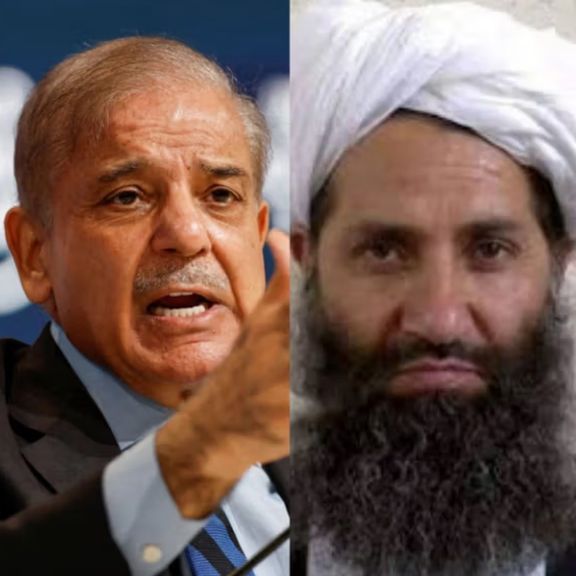
A Taliban spokesman warned Pakistan on Friday that threatening rhetoric from its leaders will make it harder to restrain the Tehreek-e-Taliban Pakistan (TTP).

Zabihullah Mujahid, spokesman for Taliban leader Hibatullah Akhundzada, accused Pakistani officials of using “warmongering” language and damaging relations between the two neighbours. “Before we speak in the media, spoil the atmosphere or take military action, a reasonable solution must be found,” he told a Pakistani think tank.

The remarks came a week after Pakistani Prime Minister Shehbaz Sharif warned that Islamabad would sever ties with the Afghan Taliban if it continued to back or host the TTP. He strsssed that the Afghan Taliban must choose between Islamabad and the TTP.

Mujahid said the Taliban are dissatisfied with the current situation, blaming both negative media campaigns and Pakistani threats. He insisted that Pakistan’s security problems are domestic matters. If Islamabad has intelligence that an attack is being planned from Afghan soil, he added, it should share it so the Taliban can act.

Pakistan’s security has sharply deteriorated since the Taliban seized power in Kabul in 2021, particularly in Khyber Pakhtunkhwa and Balochistan. TTP attacks have surged, targeting security forces, infrastructure and projects such as the China–Pakistan Economic Corridor.

Islamabad accuses the Afghan Taliban of harbouring TTP leaders and allowing deadly attacks to be planned across the border, charges the Taliban deny.

Most Viewed

Taliban Governors, Intelligence Chiefs Hold Security Meet In Northern Afghanistan
1

Taliban Governors, Intelligence Chiefs Hold Security Meet In Northern Afghanistan

2

Hazara Leader Accuses Taliban Of Escalating Pressure On Shia Community in Afghanistan

3

‘System Built On Oppression Cannot Survive’, Warns Taliban Chief Justice

4

Prominent Shia Cleric Calls On Taliban To End Detentions & ‘Humiliation Of Shias’

5

Taliban Minister Alleges Attempts to Undermine Ties With Russia

•
•
•

More Stories

Senior Taliban Spymaster Threatens Suicide Bombings After Trump’s Bagram Remarks

Sep 20, 2025, 13:54 GMT+1

A senior Taliban intelligence official has warned that the group could resume suicide bombings to defend its rule, a threat delivered shortly after US President Donald Trump said Washington is exploring a return to Bagram Air Base.

Taliban-run state television on Saturday broadcast an audio message attributed to Tajmir Jawad, deputy head of the group’s intelligence service and widely described as the “architect of suicide attacks.”

Jawad said Taliban fighters used suicide bombings to bring the group to power and would be prepared to use them again to preserve its control. He pledged to sacrifice himself “piece by piece” for the Taliban’s survival and branded opponents as “infidels and occupiers.”

The remarks followed Trump’s comments in London on Thursday that the United States wanted to return to Bagram, and his statement a day later at the White House confirming talks with the Taliban. Jawad did not name Trump directly, but the timing of his remarks was seen as a veiled response.

Jawad, a senior member of the Haqqani network, was appointed deputy intelligence chief after the Taliban’s 2021 takeover. The former Afghan government accused him of involvement in major attacks, including the 2020 assault on Kabul University that killed 22 students and wounded more than 40. Islamic State’s local affiliate claimed responsibility, but officials in Kabul said Jawad helped plan the attack.

He has also been linked to a suicide bombing at Kabul Bank in Nangarhar province that left dozens dead. In recent years, he has repeatedly signalled that suicide operations remain a tool the Taliban could use to safeguard its rule.

No Afghan Leader Can Negotiate Foreign Troop Presence, Says Former Taliban Envoy

Sep 20, 2025, 12:08 GMT+1

A former Taliban diplomat has warned that no Afghan leader has the right to negotiate the presence of foreign troops in the country, as debate grows over US efforts to regain access to Bagram Air Base.

Abdul Salam Zaeef, the Taliban’s former ambassador to Pakistan, said Saturday on X that President Donald Trump holds a “misguided perception” of Afghanistan. He argued that history shows no power has been able to shift Afghanistan from neutrality without leading the country toward “ruin and destruction.”

Zaeef claimed the United States is seeking to re-establish a foothold in Afghanistan as part of preparations for a potential global conflict. He said Washington is pursuing influence in Pakistan, Afghanistan and Azerbaijan to extend its military and intelligence reach, warning that the groundwork for such a confrontation could unfold by 2035.

Trump confirmed Friday that talks with the Taliban are under way to return US forces to Bagram, which was abandoned during the 2021 withdrawal. At a news conference a day earlier with British Prime Minister Keir Starmer, he said the base’s proximity to sites where China develops nuclear weapons makes it strategically vital.

The Wall Street Journal reported US officials are in the early stages of discussions with the Taliban about a limited counterterrorism deployment at the base.

Taliban Official Frames Trump’s Comments as Business Deal

Zakir Jalali, an aide to Taliban Foreign Minister Amir Khan Muttaqi, said Trump is “a successful trader and businessman” who raised Bagram in the context of a negotiation.

Writing on X, Jalali said Afghanistan and the United States should engage politically and economically on the basis of mutual respect and shared interests, but that any US military presence in Afghanistan is “unacceptable.”

He stressed that foreign forces have “never been accepted by Afghans” and were firmly rejected during the Doha talks, while noting that avenues for cooperation in other areas remain open.

South African Envoy Calls Taliban’s Treatment Of Afghan Women Crime Against Humanity

Sep 20, 2025, 10:05 GMT+1

South Africa’s High Commissioner to United Kingdom has described the Taliban’s treatment of Afghan women as “gender apartheid” and a crime against humanity.

Speaking at the Cambridge Afghanistan Series-IV, Jeremiah Kingsley Mamabolo said apartheid was not limited to racial segregation but also encompassed gender and economic discrimination. He praised Afghan women for their courage in continuing to fight for education and dignity despite severe restrictions.

Kingsley drew parallels with South Africa’s struggle against apartheid, noting that its eventual defeat required both internal resistance and international pressure, including sanctions and boycotts. He stressed that victory over apartheid would not have been possible without global solidarity built on shared values of justice, democracy and human rights.

He said South Africa’s post-apartheid constitution was rooted in those principles and a philosophy of Ubuntu, “you are because we are,” arguing such an approach could also help Afghanistan today.

Kingsley urged Afghans not to lose hope, stressing that unity at home and international support could pave the way to an inclusive future. He suggested institutions such as the Mandela Foundation share their reconciliation experience with Afghan civil society.

The High Commissioner also cited the resistance of Ahmad Shah Massoud, the late anti-Taliban commander assassinated in 2001, as an example of standing against extremism.

The annual Cambridge Conference, organised by Mosaic, gathered Afghan and international speakers to debate proposals for Afghanistan’s future. Organisers said they had merged 12 different roadmaps from various groups into a single comprehensive plan for discussion.

Iran Army Chief Inspects Afghan Frontier Border-Sealing Project

Sep 19, 2025, 17:10 GMT+1

Iran’s army chief, Gen. Amir Hatami, inspected progress this week on a project to seal parts of the country’s border with Afghanistan, state media reported.

The visit took place in Taybad, a district near the frontier. The project covers 300 kilometres of the eastern border, of which more than 135 kilometres have been completed. It includes concrete walls, fencing, barbed wire, watchtowers and electronic and optical surveillance systems.

Hatami praised Iranian border guards for their role in carrying out the plan.

Iran shares a 945-kilometre border with Afghanistan, spanning the provinces of Khorasan Razavi, South Khorasan and Sistan-Baluchestan. Military officials say the project is aimed at strengthening security and countering potential threats along the frontier.

Nearly 5 Million Mothers & Children Malnourished In Afghanistan, Says UN

Sep 19, 2025, 15:31 GMT+1

Nearly 5 million mothers and children in Afghanistan are suffering from malnutrition as the country’s hunger crisis deepens, the World Food Programme said Friday.

Rania Dagash, WFP’s deputy regional director, warned that overlapping crises have pushed millions of Afghans to the brink of collapse.

The agency has forecast that by 2025, acute malnutrition will reach its highest recorded level in Afghanistan, with more than 4.7 million children and women requiring urgent treatment. UN figures show that every 10 seconds a child in the country becomes malnourished.

Afghanistan’s health system collapsed after the Taliban takeover in 2021, with hundreds of clinics closing. The crisis has been compounded by cuts in US aid and repeated natural disasters, including floods and earthquakes, leaving millions without access to food and healthcare.

Humanitarian agencies have repeatedly appealed for sustained international support, warning that without immediate action, Afghanistan faces a worsening emergency that could claim countless young lives.