• العربية
  • پښتو
  • فارسی
Brand
  • Afghanistan
  • Sport
  • Markets
  • Afghanistan
  • Sport
  • Markets
  • Theme
  • Language
    • العربية
    • پښتو
    • فارسی
  • Afghanistan
  • Sport
  • Markets
All rights reserved for Volant Media UK Limited
volant media logo

Taliban Order Herat Broadcasters To Stop Airing Living Beings

Sep 23, 2025, 14:25 GMT+1

The Taliban’s Ministry for the Propagation of Virtue and Prevention of Vice has barred media outlets in Herat from broadcasting images of people or other living beings, local sources said Tuesday.
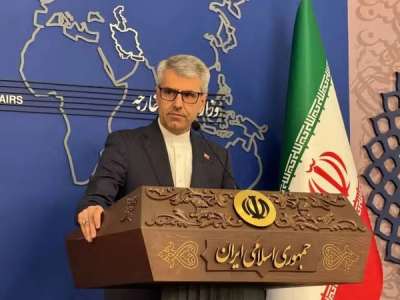
Officials from television stations and YouTube channels were summoned by the ministry and ordered to comply with the restriction, participants in the meeting told reporters.

Some media representatives argued that the ban should not apply to private outlets in Herat while Taliban-run state television in Kabul continues to air such content. YouTubers present at the meeting said their broadcasts primarily target audiences outside Afghanistan.

Despite the objections, Taliban officials insisted the ban on live broadcasting would be enforced. One Herat media source said local outlets would only accept the order if it were implemented uniformly across the country.

The Taliban have previously imposed similar restrictions in Kabul and other provinces. Herat is home to Afghanistan’s second-largest concentration of visual media outlets after the capital Kabul.

Most Viewed

Taliban Governors, Intelligence Chiefs Hold Security Meet In Northern Afghanistan
1

Taliban Governors, Intelligence Chiefs Hold Security Meet In Northern Afghanistan

2

Hazara Leader Accuses Taliban Of Escalating Pressure On Shia Community in Afghanistan

3

‘System Built On Oppression Cannot Survive’, Warns Taliban Chief Justice

4

Prominent Shia Cleric Calls On Taliban To End Detentions & ‘Humiliation Of Shias’

5

Taliban Minister Alleges Attempts to Undermine Ties With Russia

•
•
•

More Stories

Pakistan’s Imports From Afghanistan Jump 50 Precent In August

Sep 23, 2025, 12:11 GMT+1

Pakistan’s imports from Afghanistan surged by 50 percent in August, even as its own exports to the neighbouring country declined, official data show.

Trade between the two countries reached $143 million in August 2025, a 4 precent increase from July, according to figures reported by The Nation newspaper. Imports from Afghanistan rose from $37 million in July to $55 million in August, while Pakistan’s exports fell 13 precent, from $102 million to $88 million. Year-on-year, exports slipped 1 precent, from $89 million in August 2024 to $88 million this year.

Overall bilateral trade in the first two months of the 2025–26 financial year (July and August) totalled $282 million, up 1 precent from the same period a year earlier. Pakistan’s exports dipped slightly from $193 million to $190 million, while imports from Afghanistan increased from $85 million to $91 million.

The rise in imports was driven largely by agricultural products. Apricot imports jumped 382 precent, from $4.15 million to nearly $20 million. Imports of grapes rose 96 precent, tomatoes 46 precent and cucumbers 15 precent. By contrast, shipments of onions, spices, coal and cotton fell.

On the export side, Pakistan recorded gains in several sectors: fruit and vegetables climbed 227 precent, animal and vegetable oils 187 precent, aluminium 81 precent, cement 79 precent and pharmaceuticals 23 precent. Exports of rice, motorcycles, electrical appliances and processed food declined.

Analysts said that while the trade balance has shifted in Afghanistan’s favour, overall volumes have remained stable so far this financial year.

Separately, Iran announced Monday that its exports to Afghanistan grew by 30 percent in the first half of this year compared with the same period in 2024.

Internet Services In Herat Disrupted By Taliban's 12-Hour Blackout

Sep 23, 2025, 10:40 GMT+1

Taliban authorities ordered a 12-hour shutdown of all internet services in Herat province overnight, service providers said Tuesday.

Fixed internet connections were cut from 8 p.m. Monday until 8 a.m. Tuesday, sources at local providers told Afghanistan International. Services resumed in the morning, but the reason for the blackout was not immediately clear.

The move comes as the Taliban have blocked fibre-optic internet in several provinces over the past 10 days, prompting some areas, including Herat, to rely on DSL connections via landlines.

A Herat-based source said the outage did not appear linked to Taliban leader Hibatullah Akhundzada’s order to suspend fibre-optic internet nationwide and was likely imposed for security reasons.

It was the first time the Taliban had ordered a complete overnight internet shutdown in a province. Before returning to power in 2021, the group often pressured telecom companies in rural areas to cut service at night.

The Taliban’s wider curbs on internet access have drawn widespread criticism and caused severe disruption to daily life across Afghanistan.

Torkham Border Crossing Reopens After One-Day Closure

Sep 23, 2025, 09:47 GMT+1

The Torkham crossing on the Afghanistan-Pakistan border reopened Tuesday after a one-day closure that disrupted passenger travel and transit, Taliban officials said.

The governor’s office in Nangarhar province said late Monday that the closure was caused by an internet outage on the Pakistani side of the border.

On Monday, the crossing was restricted to deported migrants and transit traffic, while other travellers were turned away. Taliban officials initially cited an “unknown” reason for the shutdown before confirming that the disruption stemmed from Pakistan.

Pakistani authorities have not commented on the cause of the outage.

The Torkham crossing, one of the busiest border points between the two countries, has been repeatedly closed in recent years due to technical issues and border tensions.

Taliban Commander Killed In Northern Afghanistan, Says NRF

Sep 22, 2025, 18:02 GMT+1

The National Resistance Front said Monday its fighters killed a Taliban commander and three of his guards in an ambush in northern Afghanistan.

In a statement, the group said Mullah Hebat Khan, also known as Mullah Sangeen, the commander of the Taliban’s rapid reaction unit in Takhar province, was killed Sunday night in Baghlan-e-Markazi district of Baghlan province. Fighters reportedly attacked a Taliban vehicle on a main highway, destroying it completely.

The Taliban have not commented on the claim.

The resistance group’s operations have mostly been limited to sporadic attacks on Taliban checkpoints and military convoys, with little sign of a significant shift in its strength or capabilities over the past four years.

The United Nations Assistance Mission in Afghanistan said in a recent report that resistance groups carried out 56 attacks against Taliban targets across the country between 2 February and 30 April this year.

US Nightly Drone Flights in Afghanistan Signal Unending Occupation, Says Taliban Minister

Sep 22, 2025, 16:36 GMT+1

The Taliban’s education minister said US drones patrol Afghan skies nightly, proof that the country remains under foreign occupation, and warned that Afghanistan’s lack of modern sciences has left it unable to defend its airspace.

Speaking Sunday at the inauguration of a school in Paktia province, Habibullah Agha said reliance on “Kalashnikovs and swords” is inadequate in the modern era. “If we are not familiar with modern sciences, we cannot build drones, airplanes or bombs,” he said.

Agha stressed that only through learning modern sciences could Afghans counter US drones and secure the country’s sovereignty.

Although he did not directly reference Taliban leader Hibatullah Akhundzada or his restrictive decrees, the remarks were seen as a veiled criticism of the group’s leadership, which has imposed sweeping limits on education, particularly for girls.

Girls have been barred from schools and universities for nearly four years, and the Taliban have reshaped the curriculum by expanding religious subjects and opening hundreds of religious schools.

Two years ago, the Education Ministry said modern sciences would be included in the curriculum in a way consistent with “national and Islamic culture.” It also confirmed that subjects deemed contrary to “Sharia and culture” had been removed.