Torkham Border Crossing Reopens After One-Day Closure
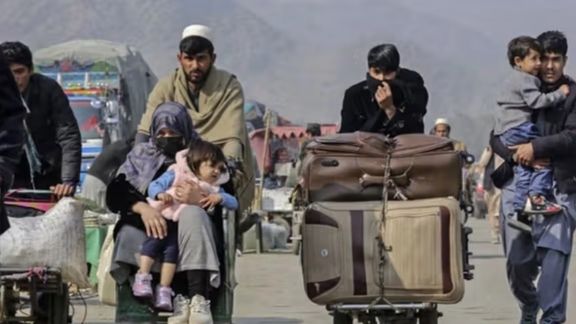
The Torkham crossing on the Afghanistan-Pakistan border reopened Tuesday after a one-day closure that disrupted passenger travel and transit, Taliban officials said.

The Torkham crossing on the Afghanistan-Pakistan border reopened Tuesday after a one-day closure that disrupted passenger travel and transit, Taliban officials said.
The governor’s office in Nangarhar province said late Monday that the closure was caused by an internet outage on the Pakistani side of the border.
On Monday, the crossing was restricted to deported migrants and transit traffic, while other travellers were turned away. Taliban officials initially cited an “unknown” reason for the shutdown before confirming that the disruption stemmed from Pakistan.
Pakistani authorities have not commented on the cause of the outage.
The Torkham crossing, one of the busiest border points between the two countries, has been repeatedly closed in recent years due to technical issues and border tensions.


The National Resistance Front said Monday its fighters killed a Taliban commander and three of his guards in an ambush in northern Afghanistan.
In a statement, the group said Mullah Hebat Khan, also known as Mullah Sangeen, the commander of the Taliban’s rapid reaction unit in Takhar province, was killed Sunday night in Baghlan-e-Markazi district of Baghlan province. Fighters reportedly attacked a Taliban vehicle on a main highway, destroying it completely.
The Taliban have not commented on the claim.
The resistance group’s operations have mostly been limited to sporadic attacks on Taliban checkpoints and military convoys, with little sign of a significant shift in its strength or capabilities over the past four years.
The United Nations Assistance Mission in Afghanistan said in a recent report that resistance groups carried out 56 attacks against Taliban targets across the country between 2 February and 30 April this year.

The Taliban’s education minister said US drones patrol Afghan skies nightly, proof that the country remains under foreign occupation, and warned that Afghanistan’s lack of modern sciences has left it unable to defend its airspace.
Speaking Sunday at the inauguration of a school in Paktia province, Habibullah Agha said reliance on “Kalashnikovs and swords” is inadequate in the modern era. “If we are not familiar with modern sciences, we cannot build drones, airplanes or bombs,” he said.
Agha stressed that only through learning modern sciences could Afghans counter US drones and secure the country’s sovereignty.
Although he did not directly reference Taliban leader Hibatullah Akhundzada or his restrictive decrees, the remarks were seen as a veiled criticism of the group’s leadership, which has imposed sweeping limits on education, particularly for girls.
Girls have been barred from schools and universities for nearly four years, and the Taliban have reshaped the curriculum by expanding religious subjects and opening hundreds of religious schools.
Two years ago, the Education Ministry said modern sciences would be included in the curriculum in a way consistent with “national and Islamic culture.” It also confirmed that subjects deemed contrary to “Sharia and culture” had been removed.

Fewer than 7 percent of female journalists in Afghanistan believe they are able to work freely, according to a new survey that highlights the mounting restrictions and threats facing women in the media.
The Afghanistan Journalists Support Organization (AJSO), which published its findings Monday, said women reporters face severe challenges and urged the international community to act decisively in their support.
The data, collected through an online questionnaire in late July and early August, surveyed 101 female journalists still based inside Afghanistan. The report found that 92 percent said they had been forced to alter or censor their reporting.
Only 6.9 percent of respondents said they were formally permitted to work. Another 35 percent said they continue working despite expanding restrictions, including rules requiring a male guardian at the workplace, bans on interviewing men and strict dress codes.
More than 55 percent of respondents reported facing personal threats, while 32 percent said they now work secretly, mainly for online outlets. Rising restrictions have forced 24 percent of female journalists to resign, and 54 percent reported losing their jobs.
Despite the risks, the organisation noted, many women continue their reporting quietly and in secret. It called on the international community to provide direct financial assistance and ensure access to online training in digital security and mental health.

Taliban leader Hibatullah Akhundzada has banned the use of smartphones and even regular mobile phones around his residence in Kandahar, deepening his push to restrict internet access nationwide, sources told Afghanistan International.
The reclusive leader, who rarely appears in public, is said to have grown increasingly distrustful of technology. He reportedly relies on a radio communication system instead of mobile or internet services.
Sources close to Akhundzada said Sunday that the ban on phone use followed his decision to block fibre-optic internet connections. A Kandahar-based source said Abdul Hakim Haqqani, the Taliban’s chief justice, met Akhundzada last week to argue against the measures, but the leader rejected the appeal. “I will accept no excuses. This is my order,” Akhundzada reportedly said.
According to telecom officials, Akhundzada has ordered that internet access be limited to a small number of Taliban-monitored WhatsApp accounts for businessmen and select individuals. He has also directed the creation of a new telecom company that would provide access only to the central bank, private banks and diplomatic missions.
Talks between the Taliban-run telecom regulator in Kabul and leaders in Kandahar have so far failed to halt the plan. Several senior Taliban ministers and officials travelled to Kandahar last week in an attempt to dissuade Akhundzada but were unsuccessful, sources said.

A little-known armed faction has claimed responsibility for an attack that killed two Taliban fighters in western Afghanistan, the group said Monday.
The Afghanistan People’s Liberation Movement said its fighters struck Taliban forces in Guzara district of Herat province on Sunday evening, around 9 p.m. local time. In a statement, the group said the attack took place near the UN mission’s office in Herat and targeted Taliban members linked to the Al-Farooq Corps training centre. It claimed the fighters seized weapons and equipment during the assault.
Local sources confirmed to Afghanistan International that clashes broke out in Guzara, though Taliban officials have not publicly commented.
The Afghanistan People’s Liberation Movement is a relatively unknown anti-Taliban group. It was recently mentioned in a report by the UN secretary-general, but little is known about its membership or operational capacity.