Taliban Appoints Mawlawi Ismail Ghaznawi As New Governor Of Badakhshan

The Taliban have appointed Mawlawi Ismail Ghaznawi as the new governor of Badakhshan province, the group’s Ministry of Interior announced on Saturday.

The Taliban have appointed Mawlawi Ismail Ghaznawi as the new governor of Badakhshan province, the group’s Ministry of Interior announced on Saturday.
Ministry spokesperson Abdul Matin Qane said Ghaznawi was introduced to local officials by Abdul Haq Mokhdom, the deputy minister for policy and strategy, during an official ceremony in the province.
Before his appointment, Ghaznawi served as deputy director for border inspections at the Taliban’s Ministry of Borders and Tribal Affairs and was also a member of the Commission for the Prevention of Land Grabbing.
He replaces Mohammad Ayub Khalid, who has been appointed commander of the 215 Al-Azm Army Corps, one of the Taliban’s key regional military units.
The Taliban statement provided no details about Ghaznawi’s educational background or professional expertise, but he is known to be a veteran battlefield commander with long-standing ties to the group.
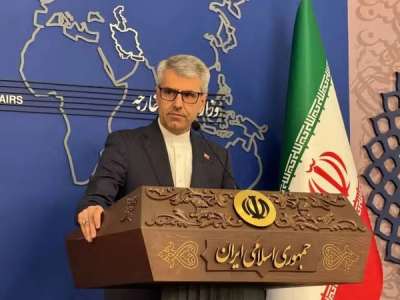
The Taliban’s Ministry of Public Works said on Saturday that Afghanistan, Türkiye, and Iran have agreed to expand cooperation in the railway sector, including plans to jointly launch the Herat–Mazar-e-Sharif railway project.
The initiative will draw on the financial, technical, and human resources of all three countries.
According to the ministry, Mohammad Ishaq Sahibzada, the Taliban’s deputy minister of public works, held talks with Turkish and Iranian officials on the sidelines of the 36th Regional Assembly of Middle East Railways in Türkiye.
The discussions focused on the strategic importance of linking Afghanistan, Iran, and Türkiye by rail, with the goal of facilitating regional trade and goods transit.
Turkish officials reportedly said the joint effort could eventually connect Türkiye’s and Iran’s rail networks to China via Afghanistan, creating a major new corridor for regional connectivity.
The meeting also underscored that extending the Khaf–Herat railway line to Mazar-e-Sharif would provide one of the most efficient transit routes linking the Middle East and Europe to East Asia, potentially transforming Afghanistan into a vital hub for regional trade and logistics.

Abdul Ghani Baradar, the Taliban’s deputy prime minister for economic affairs, met on Friday, 24 October, with Shaher Al-Taqi, CEO of Saudi Arabia’s Delta International, to discuss investment in Afghanistan’s oil and gas sector.
Photographs released by Baradar’s office showed Zalmay Khalilzad, the former US envoy to Afghanistan, also attending the meeting.
According to a statement from Baradar’s office, the talks focused on the exploration, extraction, and development of gas pipelines in Afghanistan. The statement said Al-Taqi expressed his company’s interest in investing in the oil and gas industry and pledged to share Delta International’s technical expertise with Afghan engineers.
Delta International, based in Jeddah, is a Saudi energy firm active in oil and gas exploration. It has previously taken part in major regional projects, including Azerbaijan’s “Contract of the Century” and the Turkmenistan gas pipeline consortium.
Khalilzad, who has been in Kabul since 22 October, has held several informal meetings with Taliban officials, according to sources. Although he currently holds no official role in the US government, he has in recent months travelled to Kabul as part of unofficial delegations, including visits alongside Adam Boehler, the US special envoy for hostage affairs.

The second round of talks between the Taliban and Pakistan began in Istanbul on Saturday, 25 October, with both sides expected to discuss security cooperation, cross-border militancy, and the ongoing ceasefire agreement.
Sources in Kabul told Afghanistan International that a six-member Taliban delegation, led by Rahmatullah Najib, the group’s deputy interior minister, is representing the Taliban administration. Other members include Suhail Shaheen, the Taliban’s representative in Qatar; Anas Haqqani, a senior Taliban figure; Noor Ahmad Noor, first political director at the Taliban’s Foreign Ministry; Noor Rahman Nusrat, head of operations at the Taliban Defence Ministry; and Abdul Qahar Balkhi, spokesperson for the Foreign Ministry.
The sources confirmed that the second phase of Taliban–Pakistan negotiations officially began on Saturday. The discussions are expected to focus on preventing the use of Afghan territory for attacks against Pakistan, intelligence sharing on militant groups, extension of the ceasefire, and mutual respect for territorial integrity and airspace.
According to sources, the Pakistani delegation includes senior diplomats and officials from the country’s intelligence agency.
The Istanbul round follows the first meeting held in Doha, where the defence ministers of both countries, Mohammad Yaqoob Mujahid from the Taliban and Khawaja Asif from Pakistan, signed a temporary ceasefire agreement. However, the full details of that accord remain unclear.
Pakistan has described the Doha agreement as confidential, while the Taliban maintain that it contains no secret provisions and has yet to be finalised.

Pakistan’s Foreign Ministry said on Friday that border crossings with Afghanistan will remain closed following recent clashes between the two countries, citing ongoing security concerns.
Foreign Ministry spokesperson Tahir Hussain Andrabi said the decision was made “in light of the current situation,” stressing that “the life of a common Pakistani is more valuable than trade or goods transport.”
Border skirmishes between Taliban and Pakistani forces erupted in early October, prompting the closure of most crossings along the frontier. Speaking at his first press briefing since taking office, Andrabi said the closures reflect the government’s priority of protecting lives over commerce.
The shutdown has left hundreds of trucks stranded at the Torkham and Chaman crossings, key trade routes between the two countries. Pakistani customs officials said around 495 transit trucks remain stuck awaiting clearance, leading to a sharp rise in food prices on both sides of the border, with tomato prices in Pakistan increasing fivefold.
Pakistan’s Ministry of Finance said customs clearance had been completed for 363 import trucks at the Torkham, Ghulam Khan, and Angur Ada crossings before trade was suspended, while 23 additional trucks remain in limbo at Torkham pending documentation.
Andrabi also confirmed that a ceasefire agreement was signed during the recent Doha talks between Taliban and Pakistani delegations. He added that the next round of negotiations between the two sides is scheduled to take place on 25 October in Istanbul, Türkiye.

Tajikistan’s President Emomali Rahmon has emphasised that stability in Afghanistan is a key factor for the security of Tajikistan and the wider region.
He warned that the spread of extremism and terrorism poses a growing threat to Commonwealth of Independent States (CIS) member countries.
Rahmon’s message was delivered on his behalf by Yusuf Rahmon, secretary of Tajikistan’s Security Council, during the third CIS conference on combating terrorism and extremism, held on Thursday, 23 October, in Dushanbe.
The Tajik president expressed concern about the spread of terrorist ideologies along CIS borders and called for joint and coordinated measures to counter extremist movements. He urged closer cooperation among intelligence and security agencies of member states to strengthen regional defences.
Rahmon also voiced alarm over the expanding narcotics trade, particularly the trafficking of synthetic drugs, which he said has become one of the main sources of financing for terrorist groups operating across the region.
The Commonwealth of Independent States (CIS) is a regional intergovernmental organisation established after the dissolution of the Soviet Union. Its permanent members include Russia, Moldova, Kazakhstan, Kyrgyzstan, Tajikistan, Belarus, Uzbekistan, Armenia, and Azerbaijan.
Rahmon’s remarks coincided with the visit of a Taliban delegation to Dushanbe. On the same day, Yousuf Wafa, the Taliban-appointed governor of Balkh province, travelled to Tajikistan and held discussions with Tajik officials on security cooperation and border management.
