Taliban Governor Of Balkh Visits Uzbekistan After Tajikistan Trip

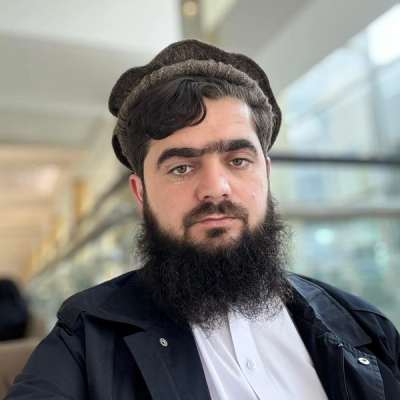
The Taliban’s governor of Balkh province, Yusuf Wafa, has travelled to Termez, Uzbekistan, along with a delegation, days after visiting Tajikistan.
The Taliban’s governor of Balkh province, Yusuf Wafa, has travelled to Termez, Uzbekistan, along with a delegation, days after visiting Tajikistan.
Haji Zaid, spokesperson for the Balkh governor, said in a statement on Monday, 27 October, that Wafa’s visit to Uzbekistan was official, releasing a video showing his motorcade driving through the streets of Termez.
Wafa, regarded as a close and trusted aide to Taliban leader Hibatullah Akhundzada, is seen in the footage travelling with a convoy of Taliban officials.
The purpose of the trip has not yet been disclosed, and Uzbek authorities and media outlets have so far issued no official comment.
Last week, on 23 October, Wafa led a Taliban delegation to Tajikistan, where he held talks with the head of the State Committee for National Security, Saimumin Yatimov, and other senior officials on border security and counterterrorism cooperation.
While Uzbekistan has not officially recognised the Taliban administration, it has maintained active diplomatic and trade relations with the group and has expanded economic engagement since the fall of the former Afghan republic in 2021.
The Taliban delegation denied the presence of Tehreek-e-Taliban Pakistan (TTP) and other militant groups in Afghanistan during the ongoing talks with Pakistan in Istanbul, according to informed sources familiar with the negotiations.
Nargis Horakhsh, Afghanistan International’s reporter in Istanbul, said that during the second day of talks, the Taliban delegation rejected Islamabad’s claims that TTP fighters operate from Afghan soil under Taliban protection.
However, Pakistani negotiators reportedly presented photographic evidence showing the bodies of slain militants carrying Afghan identity cards, along with documents indicating that some of the remains had been repatriated to Afghanistan.
According to Horakhsh, the Taliban delegation “had no response” to the evidence.
She added that mediators and hosts of the Istanbul talks also presented verifiable intelligence confirming the presence of terrorist groups in Afghanistan and urged the Taliban to end support for such organisations to ensure regional stability and good neighbourly relations.
Pakistan has repeatedly accused the Taliban of allowing TTP fighters to use Afghan territory as a base for cross-border attacks. Reports by the UN Security Council have also documented the presence of TTP commanders and fighters inside Afghanistan, allegations the Taliban continue to deny.
The second round of Taliban–Pakistan negotiations entered its third day on Monday, 27 October, in Istanbul. The first round, held in Doha on 17 October, took place at the level of defence ministers and intelligence chiefs from both countries and resulted in a ceasefire agreement.
The Taliban’s six-member delegation in Istanbul includes Rahmatullah Najib, Deputy Interior Minister; Suhail Shaheen, the group’s representative in Qatar; Anas Haqqani, senior Taliban member; Noor Ahmad Noor, First Political Director at the Foreign Ministry; Noor Rahman Nusrat, Director of Operations at the Defence Ministry; and Abdul Qahar Balkhi, Taliban Foreign Ministry spokesman.
The Pakistani delegation, composed of seven members, includes diplomats and senior officials from the country’s intelligence service.
The Taliban’s Minister of Higher Education, Neda Mohammad Nadeem, said on Monday that Afghanistan’s education curriculum has been revised to align with “Islamic and Afghan culture.”
Speaking during a visit to Helmand province, Nadeem claimed that the new curriculum enjoys the support of religious scholars and university professors, and that the Taliban-led ministry remains committed to fulfilling its “scientific responsibilities.”
State-run television, controlled by the Taliban, reported that Nadeem also announced plans to introduce new academic programmes aimed at “advancing education” under the Taliban.
The minister’s remarks come amid ongoing restrictions on female education, as girls’ schools and universities remain closed beyond the sixth grade.
Zabihullah Mujahid, the Taliban spokesperson, recently said the group could not specify when girls’ schools might reopen, reiterating that the issue remains under discussion.
Earlier this month, the Ministry of Higher Education banned 679 academic books and educational materials from use in public and private universities, saying the content was “inconsistent with Islamic values and national culture.”
Since returning to power in August 2021, the Taliban have imposed sweeping restrictions on women’s education and work, drawing international condemnation and accusations of gender apartheid.
The Taliban’s Ministry of Public Works announced on Monday that Afghanistan has received its first-ever diesel shipment via the Khaf–Herat railway, marking a new milestone in regional trade connectivity.
Mohammad Ashraf Haqshenas, spokesperson for the ministry, said that 1,120 tonnes of diesel fuel arrived at Rozanak station in Herat province on Sunday.
In a post on X, Haqshenas said the shipment comprised 20 wagons carrying Type-02 diesel fuel, totalling 1,120 tonnes.
While the official did not provide details about the importing company, he confirmed that the consignment belongs to a private firm.
The Taliban administration said the operation highlights the strategic importance of the Herat–Khaf railway, describing it as a vital corridor linking Asia and Europe through Afghanistan.
Earlier in March 2024, the Taliban governor’s office in Herat announced Afghanistan’s first export consignment through the same railway, a $1.2 million shipment of dried fruits bound for Türkiye and Europe.
The Khaf–Herat railway, a joint project between Afghanistan and Iran, is part of a broader initiative to enhance trade, transit, and energy cooperation between the two countries.
Pakistani security sources have accused the Taliban delegation of being “obstructive” and “uncooperative” during the third day of peace talks in Istanbul, according to a Reuters report on Monday.
One Pakistani security official said: "The Pakistani delegation has made it clear that no compromise is possible on our core demands on cross border terrorism.”
Negotiating teams from the Afghan Taliban and Pakistan met for a third consecutive day as part of the second round of peace talks mediated by Türkiye. The discussions aim to establish a long-term ceasefire, but sources say the two sides hold sharply different interpretations of the talks’ purpose and outcome.
Earlier, Pakistani officials told local media that the Taliban delegation’s arguments were “illogical” and “detached from ground realities.” On Monday, security sources alleged that the Taliban were creating hurdles in the negotiation process.
However, a Taliban representative present at the talks rejected Pakistan’s claims, telling Reuters: “Overall, the meeting is going well, and we discussed multiple issues in a friendly environment.”
Zabihullah Mujahid, the Taliban’s chief spokesperson, also reiterated on Monday that the Taliban supports dialogue and believes disputes “can and should be resolved through talks.”
Last week, Pakistan’s Defence Minister Khawaja Asif warned that if the Istanbul negotiations fail, the situation could escalate into an “open war.”
Meanwhile, US President Donald Trump, speaking on Sunday night at a regional summit in Kuala Lumpur, Malaysia, reiterated his willingness to mediate, saying: “I’ll get the Pakistan–Taliban war solved quickly.”
Tensions between Pakistan and the Taliban have intensified in recent weeks after Islamabad launched airstrikes on Kabul and Paktia provinces, claiming to target the leadership of Tehreek-e-Taliban Pakistan (TTP).
In response, Taliban forces reportedly attacked Pakistani military outposts along the border, sparking fierce clashes that ultimately led both sides to sign a ceasefire agreement on 19 October after several days of border fighting.
Pakistan accuses the Afghan Taliban of providing sanctuary to TTP fighters, allowing them to launch attacks across the border, allegations that Kabul firmly denies.
On Sunday, Pakistan’s military said five of its soldiers and 25 TTP militants were killed during weekend clashes near the Afghan border.
Iran’s Ministry of Labour and Social Welfare has launched a new social insurance programme for legal foreign workers, aiming to regulate employment and improve labour protections for migrants, most of whom are Afghan nationals.
Ali Bagheri, Director General of Foreign Nationals Affairs at the ministry, said on Sunday that about 400,000 foreign nationals are currently working legally in Iran, while many others remain undocumented.
Under the new policy, all legal foreign workers will now be covered by social insurance, with Iranian employers required to ensure their employees are insured before hiring.
According to IRNA, foreign workers in Iran are not limited to Afghans, though Afghan nationals constitute the majority of the country’s foreign workforce.
In Fars Province, Majid Ahmadi, Director General of Foreign Nationals and Migrants Affairs, announced the introduction of a new “Kafeel (Sponsor) Plan”, which regulates the entry and employment of Afghan workers. The plan allows Afghans to enter Iran only through the Iranian embassy in Afghanistan under a work visa sponsored by an Iranian employer.
Ahmadi said that Iranians wishing to employ Afghan workers must obtain an official work permit, adding that the new measures are designed to formalise and monitor migrant employment.
Bagheri explained that the policy requires employers to assume full responsibility for foreign workers in the event of workplace accidents. “Every Iranian who hires a foreign worker must take responsibility for them and ensure they are insured before employment,” he said.
Conditions for Work Visa Issuance
Bagheri said that previously, work visas were issued only to specialists, investors, and foreign company managers. However, following the departure of many Afghan workers which led to a labour shortage in certain service sectors the government decided to facilitate the legal return of skilled Afghan workers who are already familiar and trusted by employers.
He explained that Afghans without valid work visas must exit Iran legally, obtain a visa from Afghanistan, and re-enter for temporary employment. These nine-month work visas will not be extendable within Iran.
“At the end of this period, workers must leave the country,” Bagheri said. “After three months, employers may apply for their re-entry if required.”
He added that to prevent labour monopolies, employers may replace departing workers with Iranians or other authorised foreign employees, ensuring that employment continues transparently and competitively.