• العربية
  • پښتو
  • فارسی
Brand
  • Afghanistan
  • Sport
  • Markets
  • Afghanistan
  • Sport
  • Markets
  • Theme
  • Language
    • العربية
    • پښتو
    • فارسی
  • Afghanistan
  • Sport
  • Markets
All rights reserved for Volant Media UK Limited
volant media logo

Taliban Sheltering Anti-State Militants Under Cover Of Refugees, Says Pakistan
Nov 9, 2025, 15:31 GMT+0

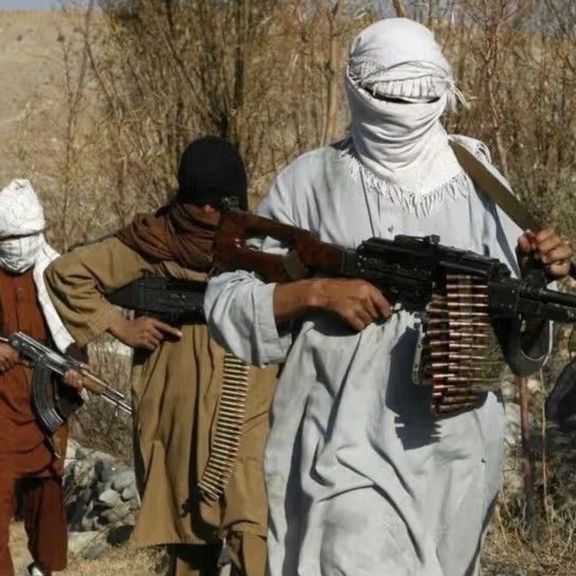
Pakistan’s Ministry of Foreign Affairs said in a detailed statement on Sunday that the Taliban in Afghanistan has been providing refuge to anti-Pakistan militant groups.

They include Tehreek-e-Taliban Pakistan (TTP) and Baloch separatists, and avoids any verifiable action against them, the statement said.

The statement, issued on 8 November in response to questions about the deadlock in the third round of Pakistan-Taliban talks in Istanbul, said that despite Islamabad’s repeated requests, the Taliban had failed to take steps that were tangible, measurable, and confirmable.

According to the ministry, militant attacks inside Pakistan have intensified since the Taliban seized power in Kabul in 2021. Officials said expectations that the Taliban would restrain such groups had not been met, and that instead, the regime had offered them protection under the guise of hosting refugees.

The foreign ministry said Pakistan had taken what it described as positive steps, including facilitating trade, providing humanitarian assistance, easing student and medical visas, and encouraging the international community to engage with the Taliban. It said the Taliban’s response amounted only to unfulfilled assurances.

The statement added that the Taliban had repeatedly attempted to dilute Pakistan’s central demand, action against groups targeting Pakistan, by linking it to what Islamabad viewed as irrelevant or hypothetical issues. This approach, the ministry said, appeared designed to create a narrative that freed the Taliban of responsibility toward both the international community and the Afghan people.

Pakistan reiterated that the TTP and Baloch separatists were declared enemies of the state and that any actor offering them refuge or financial support could not be considered a friend of Pakistan.

While the statement emphasised that diplomacy should remain the preferred approach, it said the Taliban had evaded earlier commitments throughout all three rounds of talks and seemed interested only in prolonging the temporary ceasefire rather than resolving core issues.

The ministry also accused the Taliban of trying to frame the presence of TTP and Baloch fighters in Afghanistan as a humanitarian problem. It said the TTP had fought alongside the Afghan Taliban for years and that Kabul was now offering these fighters and their families sanctuary as a reward for their loyalty. The statement further alleged that TTP training camps operate inside Afghanistan and are used to plan attacks against Pakistan.

The remarks came after Taliban spokesperson Zabihullah Mujahid acknowledged that tribal migrant families including some linked to Pakistani militants had been moved to central Afghanistan and housed in designated camps. Afghanistan International previously reported, through an investigative inquiry, that in January 2025 the Taliban had secretly relocated dozens of families affiliated with the TTP to Ghazni province.

Pakistan’s foreign ministry warned that what it described as the Taliban’s hollow assurances would no longer be sufficient and said that decisive measures were now required to safeguard Pakistani lives and national interests.

Most Viewed

Taliban Sends More Forces To Badakhshan, Says Sources
1

Taliban Sends More Forces To Badakhshan, Says Sources

2

Former Afghan Army General Detained Over Alleged Killing Of Two Women

3

Taliban Do Not Meet Conditions For UN Seat, Says Afghan Envoy

4

Russia & China Raise Alarm Over Terrorism Threat In Afghanistan

5

EU Parliament Approves Resolution Urging Sanctions Against Taliban Leaders

•
•
•

More Stories

Pakistan’s Stance Led To Deadlock In Istanbul Talks, Says Taliban FM

Nov 9, 2025, 13:27 GMT+0

The Taliban’s foreign minister, Amir Khan Muttaqi, said Pakistan’s delegation “refused to accept any responsibility” during the third round of talks in Istanbul, leading to the negotiations ending without progress.

He made the remarks during a phone conversation with Iranian Foreign Minister Abbas Araghchi, according to a statement issued on Sunday, 9 October, by the Taliban’s Ministry of Foreign Affairs.

The ministry said the two foreign ministers discussed bilateral relations between Afghanistan and Iran, as well as the recent Taliban-Pakistan negotiations. It added that Araghchi underscored the need for continued dialogue to resolve differences between Kabul and Islamabad and expressed Iran’s readiness to play a constructive mediating role.

Muttaqi said the Taliban delegation had attended the Istanbul talks with the full authority of their leadership and with “good intentions”, but claimed that the Pakistani side had declined to shoulder any responsibilities. The ministry did not clarify what specific responsibilities he was referring to.

He said the Taliban continues to prioritise diplomacy, understanding and dialogue in addressing disputes with Pakistan.

Before his call with Muttaqi, Araghchi had also spoken with Pakistan’s Foreign Minister Ishaq Dar and stressed the importance of continued engagement between Pakistan and the Taliban.

India Reviewing Role & Staffing Of Kabul Embassy, Says Foreign Ministry

Nov 9, 2025, 11:19 GMT+0

India’s Ministry of External Affairs said on Friday that New Delhi is reviewing the duties, responsibilities and staffing of its embassy in Kabul, with further details to be announced once a decision is finalised.

The ministry declined to comment on whether India is considering formal recognition of the Taliban.

Speaking at a press briefing on 7 November, ministry spokesperson Randhir Jaiswal said that following the recent visit of Taliban Foreign Minister Amir Khan Muttaqi to New Delhi, a series of exchanges had taken place between the two sides on development cooperation. He added that phone contacts had also been established between the foreign ministers of India and the Taliban.

When asked by a Business India reporter whether the Taliban intended to send an ambassador to New Delhi and if Afghanistan’s national flag would be replaced with the Taliban flag, Jaiswal did not answer directly. He said only that India’s mission in Afghanistan had already been upgraded to the level of an embassy and that work on its reorganisation was under way.

Relations between India and the Taliban have expanded in recent months. Earlier, the Taliban’s deputy agriculture minister travelled to New Delhi, which also hosted Muttaqi for bilateral talks. The increased contacts coincide with heightened tensions between the Taliban and Pakistan.

In October, the Indian Ministry of External Affairs announced that New Delhi had upgraded its technical mission in Kabul to the status of an embassy, a move Indian officials described as a sign of its commitment to broaden engagement with the Taliban. The upgrade took effect immediately.

Muttaqi’s visit to India took place as Pakistan launched airstrikes inside Afghanistan. The Taliban responded, triggering more than a week of border clashes. During the escalation, Pakistan’s Prime Minister Shehbaz Sharif accused the Taliban of attacking on India’s instructions, alleging that the assaults occurred while the Taliban foreign minister was in New Delhi.

US-Sanctioned Iranian Airline Launches Flights To Afghanistan

Nov 8, 2025, 16:36 GMT+0

The Taliban governor’s office in Balkh province announced on Saturday that Iran’s Meraj Airlines has begun operating flights to Mazar-e-Sharif, the provincial capital.

The United States sanctioned the airline in 2014 for allegedly transporting illicit cargo, including weapons, from Tehran to the Bashar al-Assad regime in Syria.

Meraj Airlines, which is also banned from flying to European Union member states, will operate one weekly flight from Iran to Balkh and three additional flights to Kabul, according to Haji Zaid, the spokesperson for the Taliban governor in Balkh.

Zaid said the first flight arrived in Balkh on Saturday carrying 120 passengers from Iran. He added that the airline plans to run four weekly flights from Iran to Afghanistan in the initial phase of operations.

Until now, only two domestic carriers, the semi-state-owned Ariana Afghan Airlines and the private airline Kam Air, were operating regular flights in Afghanistan.

Meraj Airlines, a private Iranian carrier headquartered in Tehran, began operations in 2010. In August 2014, the US Department of the Treasury sanctioned the company under Executive Order 13224, accusing it of transporting weapons and other illicit cargo from Iran to Syria.

Taliban Confirms Afghanistan International Report On Relocation Of Families Linked To TTP

Nov 8, 2025, 15:13 GMT+0

Taliban spokesperson Zabihullah Mujahid confirmed Afghanistan International’s investigative report that families of tribal migrants have been relocated to central Afghanistan.

Afghanistan International previously reported that in January 2025, the Taliban secretly transferred dozens of families linked to Tehreek-e-Taliban Pakistan (TTP) to Ghazni province.

Mujahid made the remarks during an online press conference following the collapse of Taliban–Pakistan talks in Istanbul, where he addressed relations with Islamabad and the security situation in Pakistan.

He said: “The Islamic Emirate relocated those tribal migrant families who were living near the Durand Line and feared persecution in Pakistan, moving them to central areas and constructing camps for them so they could be more easily and securely monitored.”

Mujahid added that “carrying weapons is completely prohibited for tribal migrants in Afghanistan.”

According to Afghanistan International’s investigation, the relocation took place in January 2025 after pressure and attacks from Pakistan prompted TTP leaders to conditionally agree to move some of their families.

The families were transferred from camps in Khost and Paktika, near the Pakistan border, to migrant camps in Ghazni province. Sources said the Taliban pledged not to fingerprint or photograph the families and to provide each household with monthly payments, relocation support, and housing expenses.

A source involved in the transfer said: “The families agreed to move on the condition of privacy and financial assistance.”

According to the source, the Taliban’s Refugees Commission, the Ministry of Interior, the Ministry of Tribes and Border Affairs, and the Ministry of Information and culture participated in the process. Each migrant family member was promised a $40 monthly stipend, $500 for relocation, and additional funding for rent and household needs in Ghazni.

A source close to the TTP told Afghanistan International that Waziristani families were registered under pseudonyms and that only identity cards issued by the TTP were recognised for access to benefits and services.

The Taliban administration has built three residential compounds for the families of Waziristani fighters and other foreign nationals in Ghazni: one in the Malakuddin area of Nawa district, another in the Bagh-e-Atar desert of Qarabagh district’s Gul Koh area, and a third in Dasht-e-Kabuli in Waghaz district.

These settlements comprise single-storey, fortified houses with plans for schools, religious seminaries, health centres, and water supply systems. Barbed wire fences have been installed around the compounds after some displaced Waziristani families initially refused to move there.

The relocation plan reportedly included families affiliated with Hafiz Gul Bahadur’s faction and the TTP from Khost and Paktika provinces. So far, only a small number of families from the Mehsud and Dawar tribes linked to the TTP have moved to the Qarabagh camp.

Security for the camps is being maintained by the TTP, which has deployed its own guards and established an internal administrative structure.

However, Afghanistan International’s latest findings from Ghazni indicate that some of these families have since returned to Khost and Paktika.

Nearly 2,000 Afghan Families Deported From Iran & Pakistan In Single Day

Nov 8, 2025, 13:49 GMT+0

The Taliban-controlled Bakhtar News Agency reported on Saturday that 1,744 Afghan refugee families were deported from Pakistan and 65 families from Iran within a 24-hour period.

According to the report, the returnees entered Afghanistan through the Torkham, Spin Boldak, Pul-e-Abrisham, and Islam Qala border crossings.

While Iran has slowed the pace of returning Afghan migrants, Pakistan has intensified deportations in recent months, expelling thousands of Afghans from its territory each day.

These actions have raised growing concern over the humanitarian and security situation facing returnees. The United Nations has warned that the mass deportations have deprived many refugees of access to essential protection and assistance.

Filippo Grandi, the UN High Commissioner for Refugees, said that while Iran and Pakistan have hosted Afghan refugees for many years, the current circumstances pose serious risks to their safety and livelihoods.