Russia Nearly Doubles LPG Exports To Afghanistan & Central Asia
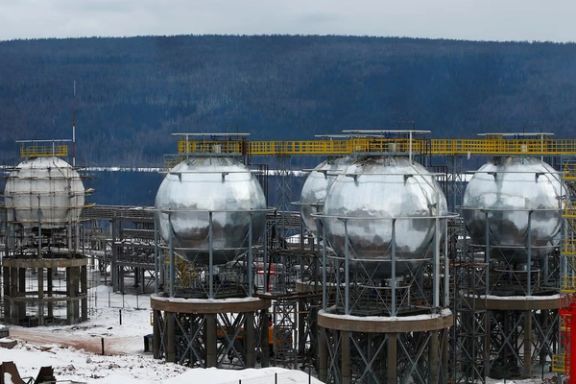
Russia has nearly doubled its exports of liquefied petroleum gas (LPG) to Afghanistan and Central Asian countries this year, according to sources cited by Reuters.
Russia has nearly doubled its exports of liquefied petroleum gas (LPG) to Afghanistan and Central Asian countries this year, according to sources cited by Reuters.
Between January and November 2025, Russia shipped more than one million tonnes of LPG to Afghanistan and the region, accounting for about 36 precent of its total LPG exports. This compares with 19 percent last year, highlighting a sharp increase in shipments.
Moscow has been forced to redirect supplies of LPG, including propane and butane, away from European markets after the European Union imposed restrictions on imports from Russia in December last year following the war in Ukraine.
LPG is widely used as vehicle fuel, for heating and in the production of petrochemical products. Traders said exports to Afghanistan, Kazakhstan, Kyrgyzstan, Tajikistan and Uzbekistan rose significantly in 2025 compared with the previous year.
Afghanistan has emerged as the largest buyer of Russian LPG in the region. In January, Russia accepted the credentials of the Taliban’s ambassador, becoming the first country to formally recognise the Taliban government.
According to Reuters, Russian LPG deliveries to Afghanistan, including supplies from the Russia–Kazakhstan joint venture KazRosGas, rose by about 50 precent in the first 11 months of the year to 418,000 tonnes.
Traders attributed the increase in Russian LPG exports to Afghanistan partly to a decline in Iranian supplies, caused by US sanctions that have constrained Iran’s export capacity.

Uzbekistan exported $1.3 billion worth of goods to Afghanistan between January and November 2025, according to the country’s National Statistics Committee.
In a statement, the committee said Uzbekistan’s total exports to global markets reached $30.9 billion during the 11-month period, marking a 26.2 percent increase compared with the same period last year.
Russia remained Uzbekistan’s largest export destination, followed by China, Afghanistan, Kazakhstan, Turkiye, France, the United Arab Emirates, Kyrgyzstan, Tajikistan and Pakistan.
The National Statistics Committee also said earlier this month that Afghans ranked first among foreign nationals entering Uzbekistan for business purposes this year. Data released on Thursday, December 18, showed that 339,585 Afghans travelled to Uzbekistan for commercial activities between January and October.
Following the closure of border crossings with Pakistan, the Taliban has sought alternative routes to sustain trade and economic ties with countries in the region.
Previously, the Taliban signed a memorandum of understanding with Uzbekistan on the transit of Afghan agricultural products. Under the agreement, Afghan produce will be exported by air via Uzbekistan to markets in Central Asia, South Asia and Europe.
Under a separate agreement, Afghanistan will export coal to Uzbekistan instead of Pakistan, while Uzbekistan will export high-quality cement and pharmaceuticals to Afghanistan.
Ikramuddin Sari, the former police commander of Takhar province, had been warned of serious threats to his life by several anti-Taliban leaders and commanders before his assassination in Tehran.
Credible sources have told Afghanistan International that similar threats also exist against a number of other anti-Taliban commanders.
According to these sources in Iran, one of the leaders of the anti-Taliban resistance shared credible intelligence with Sari about a month earlier and advised him to reduce long-distance travel.
At the same time, Salahuddin Kohistani, Sari’s brother, confirmed to Afghanistan International that his brother had repeatedly received threats by phone. He said friends and close associates had urged Sari to leave Iran and move to another country, but Sari chose to remain in Iran to assist former Afghan military personnel.
Ikramuddin Sari was assassinated on Wednesday evening in Tehran. One of his companions, Commander Almas, was also killed in the attack. The incident occurred at around 7 p.m. in the North Mofatteh area of Tehran, a busy district known for its night markets and access to public transport. Sari died after being taken to hospital.
A Point of Reference for Former Afghan Forces
Several sources told Afghanistan International that Sari was one of the few figures who, due to relatively good relations with Iranian officials, helped facilitate residency, presence and the resolution of administrative problems faced by former Afghan military personnel in Iran.
The sources said concerns increased this summer when the Islamic Republic intensified the deportation of hundreds of thousands of Afghans, raising fears that former members of Afghanistan’s army and police, who had fought the Taliban, could also be expelled.
According to the sources, resistance leaders persuaded Iranian officials to allow these former military personnel to remain in Iran, particularly in Tehran and Mashhad. Iran committed to issuing renewable six-month and one-year residence permits.
The sources said Sari was responsible for introducing former military personnel, especially those without official military identity cards, to Iranian authorities and served as the main link between Iran’s migration administration and former Afghan forces.
Rising Threats Against Anti-Taliban Figures in Iran
Credible sources in Iran told Afghanistan International that threats against anti-Taliban leaders and commanders have increased in recent months.
One informed source said that in the case of the assassination of Marouf Ghulami, a key commander under Mohammad Ismail Khan, evidence pointing to Taliban involvement was found. Iranian officials shared this information with Ghulami’s relatives but had no plans to make the findings public.
Ghulami was shot dead in September this year in his office on Mofatteh Street in Mashhad. An armed individual entered his office under the pretext of a meeting and killed him on the spot. The office, operating under the name “Council of Jihadi Commanders of Western Afghanistan,” lacked an official licence and was located in a residential building.
Sources said Ghulami and Sari played similar roles: Ghulami handled residency and administrative matters for anti-Taliban figures in Mashhad, while Sari performed the same function in Tehran.
Sources also said several prominent anti-Taliban figures in Iran have increased their security measures in recent months.
One individual close to Mohammad Ismail Khan told Afghanistan International that in the early months of his stay in Mashhad, Ismail Khan used to go hiking with local migrants on weekends. After becoming aware of serious threats, he stopped these activities and has largely remained at home over the past year.
The sources said other former jihadi commanders and senior anti-Taliban figures have also tightened security, while fear of assassination has spread among mid-level commanders in Iran.
One source said creating fear and intimidation among former jihadi commanders, police officers and members of Afghanistan’s former army is one of the Taliban’s main objectives in Iran and Tajikistan.
Iran’s Restrictions and Taliban Freedom of Action
Sources say Iran’s intelligence services and foreign policy establishment have adopted differing approaches toward the Taliban.
One source pointed to the killing of Ejbar Rustami, a Baloch political activist opposed to Iran, who was assassinated this year in Herat. According to the source, the incident received no media coverage and no explanation from the Taliban.
The source said the Taliban believe Rustami was killed by Iran and expect Tehran to remain silent if similar actions are carried out on Iranian soil.
According to the sources, Iran’s foreign policy establishment is neither seeking close alignment with the Taliban nor open confrontation. However, Iran’s intelligence institutions maintain closer ties with the group.
The sources said Iran does not allow political offices run by Taliban opponents to operate. They added that Tehran supports an entity known as the “Supreme Council for the Coordination of Afghan Armed Forces,” headed by Hafizullah Sultani, who is described as having close ties to Iranian intelligence while also maintaining relations with the Taliban. One source said Sari had previously criticised the creation of this body.
According to the sources, Iran has not allowed political offices for former military leaders or groups, including the National Resistance Front, to operate. They said the “Massoud Foundation,” active in Mashhad for years before the Taliban’s return to power, mainly conducts cultural activities and is one of the few remaining organisations linked to anti-Taliban movements in Iran.
The sources said Iran has adopted a dual policy toward the Taliban and their opponents. While Tehran does not appear to have been directly involved in the assassinations of Ghulami and Sari, they believe the space afforded to the Taliban has emboldened the group to carry out such operations on Iranian soil.
The National Resistance Front and the Afghanistan Freedom Front hold the Taliban responsible for the assassination of Ikramuddin Sari.
Social media users linked to the Taliban have sought to deflect blame from the group following widespread accusations over the killing of Ikramuddin Sari, a former Afghan police commander, in Tehran.
An investigation by Afghanistan International found that these users often operating under pseudonyms have consistently attributed the killing to internal disputes within anti-Taliban groups or to acts of personal revenge.
Sari and one of his companions were killed in an armed attack in Tehran on the evening of December 24. The incident prompted strong reactions. The National Resistance Front and the Afghanistan Freedom Front accused the Taliban of involvement, while several former Afghan officials called for an independent and transparent investigation. Some Iranian diplomats also said the killing should not be dismissed lightly.
The Iranian government has faced criticism over its close intelligence and political ties with the Taliban, with critics alleging that Tehran has turned a blind eye to the targeting of Taliban opponents. The Taliban has not issued an official response to the accusations.
Claims of Internal Disputes
Hindukush, a news website believed to be affiliated with Taliban intelligence, claimed the killing was “the result of internal disputes within the National Resistance Front.” The outlet, active on the X platform, described Sari as a prominent opponent of the Taliban.
The website published an audio file claiming that lists compiled by Sari of resistance members in Iran had reached Taliban intelligence leaders. However, credible sources told Afghanistan International that Sari maintained good relations with Iranian authorities and had worked to support Afghan refugee soldiers facing deportation.
Several Taliban-linked social media accounts also claimed the killing resulted from rivalries among resistance factions. A spokesperson for the National Resistance Front denied that Sari was a member of the group.
Sari was not affiliated with either of the two armed fronts opposing the Taliban. His activities focused primarily on assisting former Afghan military personnel in Iran.
Online Campaign
Other Taliban-linked users attributed the killing to personal revenge. Burhanuddin, identified as a Taliban media activist, claimed it was retaliation by relatives of victims of the former Afghan security forces. Another user raised ethnic grievances, alleging Sari had targeted members of a particular ethnic group during his service.
One Taliban-linked account warned that enemies of the “Islamic regime” would be targeted “anywhere in the world.”
A review of accounts sympathetic to the Taliban indicates a coordinated effort to promote the group’s preferred narrative and distance the Kabul authorities from the killing.
Organised Cyber Activity
Afghanistan International has previously reported that Taliban security and military institutions operate organised networks on social media. Sources said senior Taliban officials in Kabul have recruited dozens of individuals to defend the group and attack critics online.
These networks are reportedly linked to senior Taliban figures, including Sirajuddin Haqqani, Mohammad Yaqub Mujahid, and Abdul Haq Wasiq.
According to sources, members of these groups actively post on Facebook and X, defending Taliban leaders, rejecting criticism and promoting propaganda against opponents.
Iran has launched a biometric registration system for Afghan nationals at the Dogharoun border crossing, a senior provincial official said.
Amirollah Shamghadari, the deputy governor of Razavi Khorasan province for security and law enforcement affairs, said the system is intended to regulate the entry and exit of Afghan travellers to Iran.
According to the state-run Islamic Republic News Agency, biometric registration of Afghan travellers will also be introduced at Iran’s air borders in the near future.
Shamghadari said the new system records fingerprints, iris scans and facial images, and includes background checks on individuals entering or leaving the country.
He added that Iran continues to deport undocumented Afghan migrants through the Dogharoun border crossing.
The Embassy of the Islamic Republic of Afghanistan in Japan announced on Friday that it will suspend operations in Tokyo at the end of January 2026.
In a statement, the embassy said the decision was taken following consultations with Ministry of Foreign Affairs of Japan. It said that from January 31, 2026, all political, economic, cultural and consular activities will be halted until further notice.
Although the Taliban control many Afghan diplomatic missions in the region, the embassy in Tokyo continues to be run by the ambassador and diplomats appointed by the former Afghan government.
Shaida Mohammad Abdali currently serves as Afghanistan’s ambassador to Japan.
Japan maintains working relations with the Taliban, and the Japanese embassy in Kabul remains operational.