Taliban Flog Man & Woman In Takhar, Sentence Them To Prison

The Taliban Supreme Court said a primary court in Darqad district of Takhar province flogged a man and a woman on charges described as “running away from home and illicit relations.”

The Taliban Supreme Court said a primary court in Darqad district of Takhar province flogged a man and a woman on charges described as “running away from home and illicit relations.”
In a statement issued on Sunday, the court said both individuals were sentenced to 25 lashes and one year in prison. The punishment was carried out after receiving approval from the head of the Taliban Supreme Court.
The statement did not specify whether the flogging was carried out in public, although the Taliban typically enforce corporal punishments publicly.
The Taliban judiciary describes the flogging of individuals convicted by its courts as the implementation of what it calls “Islamic sharia.”
Despite repeated criticism from international human rights organisations over the use of corporal punishment and the treatment of detainees, the Taliban have continued to impose floggings and other punitive measures across the country.
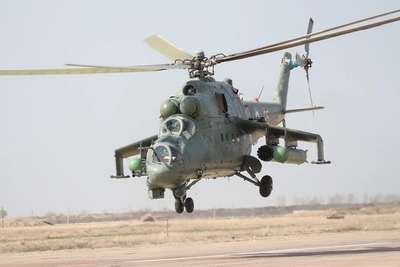

Eyewitnesses told Afghanistan International that Mawlawi Noman, an aide to Taliban intelligence chief, was killed in a targeted drone or rocket attack in Kabul.
The statement contradict earlier claims that his death was caused by a gas-cylinder explosion.
Sources close to the Taliban had initially said Mawlawi Noman died when a gas cylinder exploded at his home. However, an eyewitness living near the residence said a second-floor room of the house where Noman and a guest were present at the time was completely destroyed.
The eyewitness described the incident as “highly targeted and calculated,” adding that the force of the blast was inconsistent with a domestic accident.
According to the witness, the guest who was with Mawlawi Noman was also killed in the attack. No official information has been released about the identity of the guest.
The eyewitness further said Taliban forces arrived quickly at the scene and deleted images and videos recorded by residents and neighbours in the immediate aftermath of the incident.
Taliban officials have so far made no public comment on the incident. It remains unclear whether the intended target was Mawlawi Noman or the unidentified guest who was with him at the time of the attack.

The Afghanistan Journalists Center said that media freedom and journalists’ rights in Afghanistan are “severely constrained and repressive,” citing widespread censorship and intimidation under Taliban rule.
In its annual report, the centre said it documented at least 205 cases of violence against journalists and violations of media freedom over the past year. The report, published on Saturday, points to tight controls and systematic repression of media outlets and reporters.
According to the findings, at least two journalists were killed during the year in attacks attributed to Pakistan, while three others were wounded. The report also recorded more than 160 cases of threats against journalists and 34 instances of detention.
Despite these figures, a deputy at the Taliban Ministry of Information and Culture, one of the bodies overseeing censorship and media regulation, claimed in an interview with a Bangladeshi newspaper that the Taliban has no issues with the media and that no journalists are being held. This assertion contrasts with reports indicating that at least five Afghan journalists remain imprisoned.
The Afghanistan Journalists Center said incidents involving violations of media freedom and journalists’ rights rose by 13 percent compared with the previous year, attributing the increase to the Taliban’s increasingly restrictive policies.
The report cited the broadcast of forced confessions by detained journalists, bans on women journalists attending press conferences, and the censorship of women’s voices as evidence of a broader policy of intimidation, repression and severe gender discrimination.
It also highlighted the expansion of bans on publishing images of living beings in 23 provinces, a measure that has led to the closure of at least 20 television stations. The centre warned that the few remaining independent outlets face a serious risk of shutdown.
Expressing deep concern for the fundamental rights of journalists and media organisations, the watchdog said the future of media freedom and freedom of expression in Afghanistan faces grave and growing threats.

Hossein Khosh-Eghbal, the governor of Tehran, said authorities are investigating the assassination of Ikramuddin Sari, a former Afghan commander and outspoken opponent of the Taliban.
Speaking to Ensaf News, Khosh-Eghbal said the case is under review and that investigators have not yet reached a conclusion. He added that the findings are expected to be announced on Sunday.
Sari was killed in Tehran on Wednesday. Mohammad Amin Almas, a former battalion commander in the Afghan army, was also killed in the same attack.
No group has claimed responsibility for the assassination. However, anti-Taliban groups, including the Afghanistan Freedom Front and the National Resistance Front, have accused the Taliban of involvement.
The killing is the third assassination of military figures opposed to the Taliban on Iranian soil in the past four months. Earlier, a commander close to Ismail Khan, one of Afghanistan’s former jihadist leaders, was shot dead in Mashhad.
Iranian authorities remained silent for three days after the killing of the prominent anti-Taliban figure in the capital. Taliban opponents have since urged the Islamic Republic of Iran to conduct a serious and transparent investigation and to make the results public for the Afghan community.

A large number of Afghan migrants attended the funeral of Ikramuddin Sari, a former Afghan police commander and prominent opponent of the Taliban, in Tehran on Saturday.
Sari was assassinated in the Iranian capital on Wednesday, December 24. Mohammad Amin Almas, a former battalion commander in the Afghan army, was also killed in the attack.
The funeral ceremony was held on Saturday afternoon in the Chahardangeh area of Tehran, where mourners gathered in large numbers to pay their respects.
The killing marked the third assassination of Taliban opponents in Iran in the past four months. No group has claimed responsibility for the attack. However, anti-Taliban groups, including the Afghanistan Freedom Front and the National Resistance Front, have accused the Taliban of involvement.
So far, neither the Taliban nor the Islamic Republic of Iran has issued an official response to the killing.
Several Iranian media outlets have criticised the authorities’ silence over the assassinations of Taliban opponents, describing the group as an unreliable partner. Some newspapers have also questioned Iran’s decision to hand over Afghanistan’s embassy and consulates to the Taliban, arguing that the group has carried out assassination operations reaching as far as Tehran.
A number of Afghan political parties and factions have called on Iranian authorities to conduct a transparent investigation into the killings of Taliban opponents and to make the findings public.

Pakistan’s foreign minister has, for the first time, confirmed that talks between Islamabad and the Taliban were held in Saudi Arabia. He said that the negotiations failed to produce results, as did earlier rounds in Qatar and Turkiye.
Ishaq Dar said the Saudi talks collapsed without agreement, mirroring the outcome of the second and third rounds of negotiations previously held in Doha and Istanbul. Pakistani officials had earlier said they were unaware of such discussions.
Sources had previously told Afghanistan International that delegations from Pakistan and the Taliban met in Saudi Arabia but failed to reach any understanding.
Speaking at a press conference on Saturday marking the end of the 2025 calendar year, Dar welcomed a recent fatwa issued by Taliban clerics aimed at preventing the export of war beyond Afghanistan’s borders. However, he said attacks originating from Afghan soil were continuing and that Pakistani soldiers were being killed on a weekly basis in the country’s north.
Referring to the fatwa, Dar said it reflected Pakistan’s longstanding demands, adding that the key question was whether the Taliban would implement it in practice.
He also cited remarks made last week by Sirajuddin Haqqani, who said the Taliban remained committed to the Doha agreement and would not allow Afghan territory to be used against countries in the region or beyond. Dar said that if this commitment were implemented, Pakistan’s concerns would be resolved.
Pakistan, he stressed, has only one demand of the Taliban: that Afghan soil not be used to launch attacks against Pakistan.
Meanwhile, Amir Khan Muttaqi said on Saturday that tensions with Pakistan had been turned into an opportunity for Afghanistan. He said the Taliban had found new markets and reduced their dependence on Pakistan.
Earlier this month, Taliban clerics declared at a gathering in Kabul that using Afghan territory to wage war abroad is illegitimate and called on Taliban forces not to cross borders to fight. They also said resisting foreign aggression constitutes jihad.
Relations between the Taliban and Pakistan remain strained. Trade and transit between the two sides have been completely halted for the past two months.