Former Afghan Soldier Arrested By Taliban After Deportation From Iran
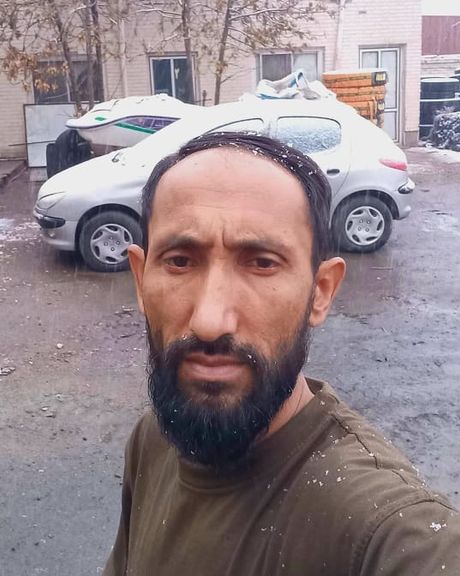
Reliable sources told Afghanistan International that the Taliban have arrested Azimullah Mohammadi, a former soldier in the Afghan army, in Kabul after his deportation from Iran.

Reliable sources told Afghanistan International that the Taliban have arrested Azimullah Mohammadi, a former soldier in the Afghan army, in Kabul after his deportation from Iran.
According to the sources, Mohammadi was deported from Iran about three months ago. An informed source said the arrest took place roughly two weeks ago. The Taliban have not commented on the reported detention.
Since the Taliban takeover in August 2021, former Afghan security personnel have faced arbitrary arrests, torture and extrajudicial killings. These threats are not confined to Afghanistan, and in recent months several assassinations of former security force members have also been reported in Iran.
Investigative findings by Afghanistan International show that former security personnel remain at risk of arrest and extrajudicial killings even after being deported from Iran. The report has documented at least six killings and 11 arrests of deported former security members, although the actual number of victims is believed to be higher.

The Taliban’s Supreme Court said a man and a woman were publicly flogged in the Sayed Khel district of Parwan province on charges of an extramarital relationship.
In a statement issued on Monday, the court said each was sentenced to 30 lashes and one year in prison. The punishment was carried out after approval by the the Supreme Court and in the presence of local officials and members of the public.
The flogging marks the second public application of corporal punishment by the Taliban in less than 24 hours. On Sunday, December 28, a man and a woman were flogged in Takhar province on charges described as “running away from home and illicit relations” and were also sentenced to one year in prison.
According to figures compiled by Afghanistan International, the Taliban have flogged more than 100 people nationwide over the past two weeks, including at least 15 women.
A recent United Nations report said that between August 1 and October 31, the Taliban flogged at least 215 people across several provinces, including 44 women and 171 men.
Despite repeated objections from international organisations to corporal punishment and the torture of suspects, the Taliban have continued to carry out public floggings. Human rights groups say the Taliban’s judicial system lacks due process and that defendants are denied fair trial guarantees, including access to legal counsel.

Yunus Qanuni, a former Afghan vice president, said Taliban intelligence was responsible for the assassination of Ikramuddin Sari, a former Afghan security commander, in Tehran. He added that there is no doubt the group’s intelligence bodies conduct cross-border operations.
Speaking on Sunday at an online memorial ceremony for Sari, Qanuni said the slain commander could have become a unifying figure for former officers and younger Afghans opposing the Taliban. “We, as comrades and friends, must act to prevent the repetition of such incidents,” he said.
Qanuni said the killing of Sari and his companion, Mohammad Amin Almas, in Tehran, the earlier assassination of Commander Marouf Gholami in Mashhad, and a recent incident in Tajikistan form a chain of targeted killings initiated by the Taliban.
According to Qanuni, the Taliban have demonstrated a new approach by eliminating figures capable of building unity and playing a role in challenging the group’s rule in Afghanistan.
General Ikramuddin Sari, a former Afghan police commander, and Almas, a former army commander, were killed on Wednesday evening in Tehran’s Valiasr area. Less than four months earlier, Gholami, a military commander close to Ismail Khan, was shot dead in Mashhad.
No group has claimed responsibility for the attacks, but Taliban opponents have blamed the group.
Hossein Khosh-Eghbal, Tehran’s governor, has said authorities are investigating Sari’s assassination. “We are investigating, but have not yet reached a conclusion,” he told Ensaf News, adding that findings would be announced on Sunday. Two days later, Tehran police had yet to release any information.
Ahmad Massoud, leader of the National Resistance Front, has called on the Islamic Republic of Iran to conduct a serious investigation into the killings of former Afghan military figures in Tehran. He compared Sari’s assassination to the killing of Hamas leader Ismail Haniya and said Iran must “cut off the hands of terrorists” from its territory.

The leader of the Afghanistan Freedom Front has said the killings of former Afghan military personnel will be pursued at multiple levels and that accountability will be sought for every victim.
General Yasin Zia said those responsible would one day be brought before courts by popular forces and punished for their actions.
Speaking at a memorial service for Ikramuddin Sari, Zia said accountability would be demanded for the blood of every person killed during what he described as the Taliban’s “period of occupation.”
The Afghanistan Freedom Front commander urged continued resistance to Afghanistan’s current situation, saying the assassinations have only increased the responsibility of anti-Taliban forces. He added that such killings strengthen the resolve of opposition groups and give them greater motivation to push for change.
General Ikramuddin Sari, a former Afghan police commander, and Mohammad Amin Almas, a former army commander, were assassinated on Wednesday evening in Tehran’s Vali Asr area. Less than four months earlier, a military commander close to Ismail Khan, identified as Marouf Ghulami, was also assassinated in Mashhad.
During an online memorial service on Sunday, Taliban opponents accused the group of planning the killings. The Taliban has not responded to the allegations.
Iranian police have said the incidents are under investigation, but no findings from the probes into any of the killings have been made public.
Meanwhile, Ahmad Massoud, the leader of Afghanistan’s National Resistance Front, called on the Islamic Republic of Iran to seriously investigate the assassinations of former Afghan military personnel in Tehran. Massoud compared the killing of General Sari to the assassination of Hamas leader Ismail Haniya and said Iran must “cut off the hands of terrorists” operating inside the country.

The Taliban’s High Commission for Migrant Affairs said Pakistan deported 2,628 Afghan migrants on Sunday, returning them to Afghanistan through the Torkham, Spin Boldak and Bahramcha border crossings.
According to figures released by the commission, Iran also deported 199 Afghan migrants on the same day. They were transferred to Afghanistan via the Islam Qala and Pul-e-Abrisham border crossings.
Taliban officials said all of the migrants deported from Pakistan and Iran lacked valid residence documents. Both countries detain and deport thousands of undocumented Afghan migrants on a daily basis as part of ongoing enforcement measures.
Last week, the spokesperson for the Taliban Ministry of Refugees said more than three million Afghan migrants have been deported from neighbouring countries and returned to Afghanistan during the current calendar year. Abdul Muttalib Haqqani said the majority were expelled from Pakistan and Iran.
Findings by Afghanistan International indicate that some Afghan returnees have faced arbitrary detention, torture and extrajudicial killings after being forcibly returned from Iran. Documented cases point to a recurring pattern of violence against returnees, with victims’ relatives holding the Taliban responsible.

Ahmad Massoud, the leader of the National Resistance Front, has urged Iran to conduct a serious investigation into the assassinations of former Afghan military figures in Tehran.
He also compared the killing of General Ikramuddin Sari to the assassination of Hamas leader Ismail Haniya, saying Iran must “cut off the hand of terrorists” from its territory.
Massoud made the remarks on Sunday, during an online memorial ceremony for General Sari. He attributed the assassinations of former Afghan military personnel in Iran to what he described as the Afghan people’s “well-known enemies.”
He said the killing of General Sari should be treated with the same seriousness as the assassination of Ismail Haniya, the former head of Hamas’s political bureau, in Tehran, adding that Afghans expect a comparable response from Iranian authorities. Massoud also reaffirmed his commitment to continued resistance against the Taliban until what he described as the “dawn of hope” emerges in Afghanistan.
General Ikramuddin Sari was assassinated in Tehran last Wednesday. Mohammad Amin Almas, a former battalion commander in the Afghan army, was also killed in the attack.
No group has claimed responsibility for the assassination, but anti-Taliban groups have accused the Taliban of involvement.
Hossein Khosh-Eghbal, the governor of Tehran, said on Saturday that authorities are investigating the killing of General Sari, a former Afghan police commander. “We are reviewing the case, but have not yet reached a conclusion,” he said. Speaking to Ensaf News, he added that the findings would be announced on Sunday.
However, Tehran police have not released any information on the investigation, despite earlier assurances.
