Taliban Publicly Flogs Two, Including Woman, in Parwan
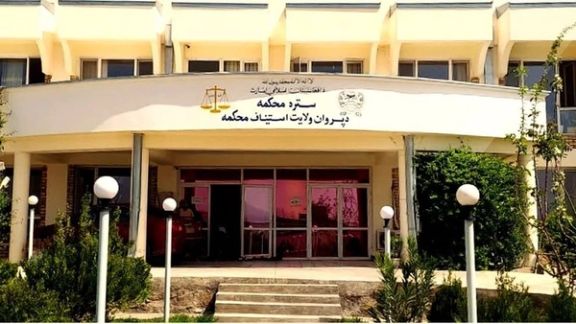
Taliban publicly flogged two people, including a woman, in Parwan province after convicting them of what the group described as an “extramarital relationship,” according to a court ruling.
Taliban publicly flogged two people, including a woman, in Parwan province after convicting them of what the group described as an “extramarital relationship,” according to a court ruling.
The primary court in Surkh Parsa district sentenced both defendants to 20 lashes. The male defendant was also sentenced to one year in prison, while the female defendant received a two-month prison term.
In a statement issued on Tuesday, the Taliban Supreme Court said the punishment was carried out in public in the presence of judicial officials, Taliban authorities and local residents.
The Taliban say such punishments constitute the enforcement of what they call Islamic sharia. Despite repeated objections from international organisations to corporal punishment, torture and intimidation, the group has continued to carry out public floggings.
According to a recent United Nations report, the Taliban flogged at least 215 people across Afghanistan between August 1 and October 31, including 44 women and 171 men, in a three-month period.

The United Nations Office for the Coordination of Humanitarian Affairs (OCHA) says the Taliban have ruled Afghanistan through at least 470 decrees since returning to power, including 79 measures that directly target women and girls.
In its latest report, released on Tuesday, OCHA said restrictions on Afghan women and girls intensified over the past year and have profoundly reshaped the country’s economic and social structures.
The report said Taliban policies banning women’s education and employment have also severely limited women’s participation in the economy and public life. OCHA warned that the enforcement of these measures has sharply reduced women’s access to livelihoods and basic services, while increasing the risks of gender-based violence, psychological harm and social pressure.
OCHA said Afghanistan is expected to remain one of the world’s most severe humanitarian crises in the coming year. In addition to the legacy of war, drought, food insecurity and the mass return of migrants, the systematic exclusion of women and girls from public life has pushed the country to the top tier of global humanitarian emergencies.
According to the report, women are bearing the brunt of economic exclusion, with continued restrictions deepening their social and economic marginalisation. The Taliban’s morality law has further entrenched existing bans and introduced stricter controls, further limiting women’s access to public spaces and participation in social and economic life.
OCHA estimates that women’s participation in the labour force stands at about 6 percent, with most women confined to informal, home-based or subsistence activities. Women who head households cited restrictions on movement, barriers to employment and aid, and a lack of income and housing as their most urgent unmet needs.
Women-Headed Households
The report said women, particularly female heads of households, face serious barriers to information and access. About 66 percent of female-headed households do not know how to access assistance, compared with male-headed households.
As a result, 79 percent of female-headed households face greater shortages of food and safe drinking water. OCHA said these gaps demonstrate how limited access and lack of information heighten vulnerability and undermine the effectiveness and accountability of humanitarian assistance.
Protection Crisis and Gendered Impact
OCHA warned that Afghanistan is facing a deepening protection crisis driven by large-scale forced returns, increasing restrictions especially on women and girls economic hardship and recurring climate-related disasters.
The agency said protection risks for women and girls have risen sharply as both formal and community-based protection systems have been weakened and access to services further restricted. Seventy-seven percent of respondents reported restrictions on women’s movement for cultural or political reasons, while 70 percent said they live in areas where women and girls feel unsafe.
In addition, 63 percent of respondents said they or people they know had been denied access to services because of social or legal restrictions.
OCHA said women and children face the most severe protection risks, including gender-based violence, child marriage, child labour, human trafficking, family separation and psychological distress.
The report said the protection situation for children has worsened compared with last year, with increases in both child labour and child marriage. Reported child marriages rose to 746 cases in 2025, up from 323 the previous year.
Maulana Fazlur Rehman, leader of Pakistan’s Jamiat Ulema-e-Islam, said he welcomed recent remarks by senior Taliban officials signalling a willingness to resolve differences with Islamabad through dialogue.
In a post on X, Fazlur Rehman said statements by the Taliban’s interior and foreign ministers were encouraging for Pakistan and urged Islamabad to pursue a similar approach. He was referring to a declaration issued on Monday by participants in a meeting of the “Majlis Ittehad-e-Ummat Pakistan” held in Karachi.
The JUI leader, who is widely seen as close to the Taliban, said the declaration had received a positive and appreciative response from Taliban Foreign Minister Amir Khan Muttaqi and Interior Minister Sirajuddin Haqqani.
“These messages are encouraging for Pakistan,” Fazlur Rehman said, expressing hope that Pakistani officials would also view the efforts of religious scholars and groups positively and take steps towards easing tensions and promoting peace between Kabul and Islamabad.
Taliban interior minister Sirajuddin Haqqani has previously said the Taliban leadership is seeking reasonable solutions to current problems and aims to address misunderstandings with the international community through dialogue. On Sunday, December 28, speaking at Kabul Municipality, he welcomed and thanked Pakistan’s Foreign Minister Ishaq Dar and several Pakistani clerics for what he described as their “positive statements” about Afghanistan, urging cooperation in rebuilding the country rather than pursuing confrontation.
A day earlier, Dar welcomed a fatwa issued by Taliban clerics calling for an end to the export of war beyond Afghanistan’s borders. In separate remarks, Muttaqi also praised the Karachi meeting, saying Pakistani religious scholars had offered “the best advice” to their system and that Afghanistan respects the constructive role of clerics in strengthening brotherhood and bringing the two countries closer.
Relations between Pakistan and the Taliban have been strained in recent months, with repeated clashes along the border. Pakistan has also carried out several airstrikes in and around Kabul and in southern and eastern Afghan provinces, though it has never officially claimed responsibility. Islamabad accuses the Taliban of supporting the Tehreek-e-Taliban Pakistan, an allegation the Taliban deny.
Delegations from both sides later held talks in Doha, resulting in an announcement of an immediate ceasefire. However, subsequent negotiations in Istanbul ended without a final agreement.
Esmail Baghaei said investigations are continuing into the assassination of two former Afghan military personnel in Tehran, speaking publicly five days after the killings.
At a press conference on Monday, Baghaei said Iran’s security agencies are investigating the deaths of Ikramuddin Sari and Mohammad Amin Almas, two Afghan citizens who were shot dead on Wednesday evening, December 24, in Tehran’s Vali-e Asr neighbourhood.
Without naming the victims or referring to their military backgrounds, Baghaei said: “The security of our own citizens and the security of anyone living in Iran, whether as a refugee, a traveller, or under any other status, is extremely important to us.”
He said Iran would respond decisively to any act that endangers public security. “Under no circumstances will we allow the security of society and of those living in our country to be undermined,” Baghaei said, expressing condolences to the families of the victims. He condemned the attack and added: “The diplomatic apparatus will intervene in this matter whenever necessary.”
The relatively prolonged silence of Iranian officials following the second assassination of former Afghan military personnel on Iranian soil had drawn criticism.
The killings came about four months after another former Afghan military commander close to Ismail Khan, identified as Marouf Gholami, was assassinated in Mashhad.
Iran maintains close relations with the Taliban. Officials from both sides regularly travel between the two countries, and Afghanistan’s diplomatic missions in Iran are under Taliban control.
No group has claimed responsibility for the attacks. However, Taliban opposition groups have accused the Taliban of being behind the killings.
Earlier, Tehran Governor Hossein Khosh-Eghbal said the results of the investigation would be announced by Sunday. As of Monday, Iranian authorities had yet to release any findings.
Richard Bennett, the United Nations special rapporteur on human rights in Afghanistan, has called for an independent investigation into the killing of former Afghan military personnel in Tehran.
In a post on X on Monday, Bennett said he was deeply concerned by the assassinations and stressed that those responsible for the killings of General Ikramuddin Sari and Mohammad Amin Almas must be identified and prosecuted.
Nearly five days after the killings, Iranian authorities have yet to publish the results of their investigation.
Sari, a former commander in Afghanistan’s police force, and Almas, a commander in the Afghan army, were shot dead late Wednesday in Tehran’s Vali-e Asr area. Less than four months earlier, Marouf Gholami, a military commander close to former jihadi leader Ismail Khan, was assassinated in the northeastern city of Mashhad.
The Taliban has not commented on the killings. Opponents of the Taliban have blamed the group for the assassinations of former Afghan military personnel in Tehran.
Iran’s Foreign Ministry spokesperson, Esmail Baghaei, addressed the incident five days after the killings, saying investigations by Iran’s security agencies were continuing and condemning the attack.
Earlier, Tehran Governor Hossein Khosh-Eghbal said authorities were reviewing the killing of General Sari and that findings would be announced on Sunday. However, despite that pledge, Tehran police had not released the results of their investigation as of two days later.
Reliable sources told Afghanistan International that the Taliban have arrested Azimullah Mohammadi, a former soldier in the Afghan army, in Kabul after his deportation from Iran.
According to the sources, Mohammadi was deported from Iran about three months ago. An informed source said the arrest took place roughly two weeks ago. The Taliban have not commented on the reported detention.
Since the Taliban takeover in August 2021, former Afghan security personnel have faced arbitrary arrests, torture and extrajudicial killings. These threats are not confined to Afghanistan, and in recent months several assassinations of former security force members have also been reported in Iran.
Investigative findings by Afghanistan International show that former security personnel remain at risk of arrest and extrajudicial killings even after being deported from Iran. The report has documented at least six killings and 11 arrests of deported former security members, although the actual number of victims is believed to be higher.