Taliban Publicly Flog 16 People In Four Afghan Provinces
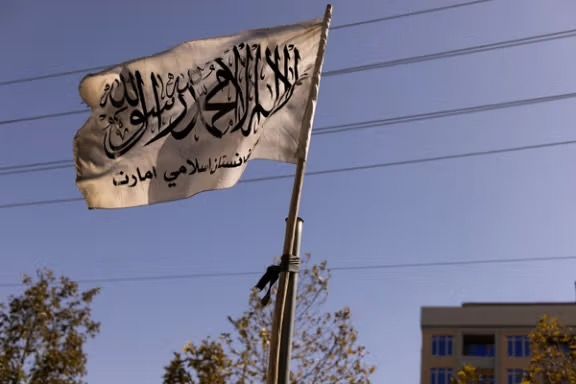
The Taliban’s Supreme Court said its primary courts have publicly flogged 16 people in the provinces of Parwan, Kabul, Kunar and Balkh, imposing corporal punishment alongside prison sentences.

The Taliban’s Supreme Court said its primary courts have publicly flogged 16 people in the provinces of Parwan, Kabul, Kunar and Balkh, imposing corporal punishment alongside prison sentences.
In statements issued on Monday, the Taliban Supreme Court said those punished received between 10 and 39 lashes each and were also sentenced to prison terms ranging from one year to three years and one month.
According to the court, 12 people in Parwan province were flogged on charges related to buying and selling drugs. In Kabul, one woman was punished on charges of extramarital relations, while one man in Balkh province received the same punishment on similar charges. In Kunar province, two people were flogged after being convicted of sexual relations between men.
Since returning to power in August 2021, the Taliban have reinstated public corporal punishment, including floggings and executions, under decrees attributed to their leader, Hibatullah Akhundzada.
Human rights organisations, the United Nations and several governments have repeatedly condemned the use of public corporal punishment in Afghanistan, describing it as a violation of international human rights standards.
The Taliban, however, defend the practice, saying the punishments are carried out in accordance with their interpretation of Islamic sharia law.


Protesters in northern Afghanistan set fire to gold mining equipment linked to the Taliban after clashes with security forces and company personnel escalated in Takhar province, local sources said.
The violence followed confrontations in the Samti area of Chah Ab district, where residents have opposed what they describe as unregulated gold mining by companies linked to the Taliban. Sources told Afghanistan International that at least three local residents and one Taliban member have been killed so far, while the number of injured has risen to 16.
Local sources said tensions between residents and Taliban-linked companies remain high and that the situation is rapidly deteriorating. Videos obtained by Afghanistan International show large plumes of smoke rising from areas where clashes were reported.
As protests spread and fighting intensified, officials associated with the mining companies fled the area and are now “on the run,” according to local sources. Residents said the number of casualties could continue to rise.
The protests were sparked by concerns over severe environmental damage and water shortages, which residents blame on unchecked excavation activities by the mining companies.
Residents of Chah Ab had already clashed on Friday with Taliban members who entered residential areas to begin gold extraction operations.
According to local sources, the companies involved are linked to Bashar Noorzai, a major drug trafficker and a key financial backer of the Taliban. Residents of Chah Ab say they are protesting the activities of at least three such companies operating in the district.
Taliban authorities have not publicly commented on the latest clashes or the reported casualties.

The foreign ministers of China and Pakistan have called for stronger measures to prevent terrorist organisations from using Afghan territory to carry out attacks against other countries.
They described militancy emanating from Afghanistan a serious threat to regional and global security.
In a joint statement, Wang Yi and Mohammad Ishaq Dar urged the adoption of “concrete and verifiable” steps to dismantle and eliminate all terrorist groups operating from Afghanistan.
The statement was issued following Dar’s visit to Beijing for the seventh round of the China–Pakistan foreign ministers’ strategic dialogue, held from January 3 to 5.
The two sides said they would maintain close communication and coordination on Afghanistan-related issues and work together to address shared security concerns.
China and Pakistan also said they would cooperate with the international community to encourage the Taliban to establish an inclusive political framework, pursue moderate policies, prioritise economic development and adhere to the principles of good neighbourliness.
China has maintained close engagement with the Taliban since their return to power in 2021. Relations between Islamabad and Kabul, however, have recently deteriorated, with Pakistan accusing the Afghan Taliban of providing sanctuary to fighters from Tehreek-e-Taliban Pakistan, or TTP.
The Taliban have repeatedly denied the allegations, saying they do not allow Afghan territory to be used to threaten other countries.

At least four people were killed during clashes between local residents and a Taliban-linked gold mining company in northern Takhar province, local sources said on Monday.
Three residents of the Samti area in Chah Ab district were killed in the fighting, the sources said. One guard working for the Taliban-affiliated mining company was also killed. At least five other people were wounded.
According to the sources, residents captured two guards employed by the company and stormed the compound of a Taliban-linked firm in the Dara-e-Fazel area. Protesters also seized buildings belonging to two Taliban-affiliated companies, forcing company staff to flee the area.
Information obtained by Afghanistan International indicates that residents have longstanding grievances against the mining firms. The companies are reportedly operating under contracts linked to Bashar Noorzai, a convicted drug trafficker widely regarded as one of the Taliban’s key financial backers.
Local residents said they are protesting environmental damage and water shortages caused by what they described as the companies’ “unrestrained” gold extraction activities.
The clashes follow similar unrest on Friday, when residents of Chah Ab district confronted Taliban members who had entered residential areas to begin gold mining operations.
The Taliban have placed growing emphasis on mining as a source of revenue since returning to power, but critics say the sector lacks transparency and has fuelled local tensions in several provinces, including Takhar.

Abdul Ghani Baradar says the Taliban believe that political and economic participation is essential for Afghanistan’s progress and claims that strong participation has existed during the group’s four years in power.
However, the Taliban’s deputy prime minister for economic affairs said the current political power structure is “stable and balanced” and that opposition movements have been eliminated.
Speaking on Sunday, at a turban-tying ceremony at a religious school in Kandahar, Mullah Abdul Ghani Baradar claimed that during four years of Taliban rule there has been “strong participation” and that public satisfaction has increased through administrative transparency, economic infrastructure development and the provision of public services. He said the current political authority has been kept “stable and balanced” and that parallel and opposing political groups have disappeared.
The Taliban official also said Afghanistan is now politically and economically a safe country for investment.
The remarks come despite the Taliban banning the activities of political parties and all forms of civil activism. Previously, the Taliban’s Ministry of Justice declared political activity under the name of parties illegal, and a day later dissolved the Political Parties Directorate within the ministry and dismissed its staff.
Before the fall of the previous government, more than 72 political parties were officially registered in Afghanistan.
Since returning to power, the Taliban have excluded political and social groups from the structure of power and allocated government positions to their own members. The group has accused former government officials and former jihadi leaders of collaborating with foreign forces, while claiming that its government is inclusive.
Critics say the suppression of dissenting voices, the absence of independent institutions and the arrest of political and civil activists show that there is no genuine space for political participation in the country. Over the past four years, reports have emerged of arrests, torture and mistreatment of media critics and human rights activists.
Alongside these restrictions, the Taliban have also largely excluded women from social life. The group has barred women and girls from secondary schools and universities, from working in many institutions and from participating in social and civic activities. These measures have drawn strong reactions from the international community and human rights organisations and are widely seen as excluding half of Afghan society from meaningful participation in the country’s future.

Sirajuddin Haqqani has ordered the redeployment of a number of Taliban forces previously transferred to “active reserve” status, sources within the Taliban’s Interior Ministry said, citing a growing shortage of personnel.
According to the sources, the decision reverses part of an earlier directive issued by the Taliban leader and reflects concerns over a lack of experienced and specialised staff within key departments.
An official letter, a copy of which was obtained by Afghanistan International, says the order was issued based on a verbal instruction from Mullah Hibatullah Akhundzada. The document states that personnel placed on active reserve may be reassigned to duty if operational needs arise.
The letter specifies that rehiring these individuals does not require approval from the security vetting commission. However, Haqqani stressed that redeployment is permitted only if the relevant department faces staffing shortages and requires skilled and experienced personnel.
The document outlines conditions for reinstatement, stating that individuals must have religious, modern or technical education and that their reappointment must not conflict with existing Taliban decrees and procedures. It adds that nominations must be based on assessed needs and made at the recommendation of the relevant authority.
The document further says those eligible for redeployment must not have committed any criminal offence during the period between being placed on active reserve and their reinstatement.
Responsibility for implementing the order has been assigned to the administrative deputy of the Taliban’s Interior Ministry, while the ministry’s general audit department has been tasked with overseeing compliance.
Sources said the Interior Ministry has faced serious staffing shortages after sidelining a number of professional personnel, prompting Taliban officials to reconsider earlier decisions.
Afghanistan International previously reported that the Taliban leader had ordered the removal of 20 precent of staff from the ministries of interior, defence and intelligence, transferring them to active reserve. That report was based on internal documents from the institutions.