• العربية
  • پښتو
  • فارسی
Brand
  • Afghanistan
  • Sport
  • Markets
  • Afghanistan
  • Sport
  • Markets
  • Theme
  • Language
    • العربية
    • پښتو
    • فارسی
  • Afghanistan
  • Sport
  • Markets
All rights reserved for Volant Media UK Limited
volant media logo

Taliban Education Minister Visits Oman To Expand Academic Ties
Jan 11, 2026, 10:22 GMT+0

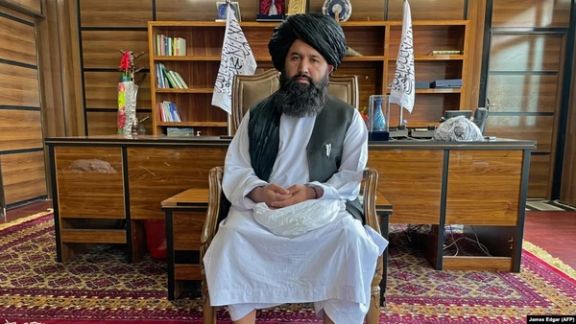
Neda Mohammad Nadeem, the Taliban’s minister of higher education, travelled to Oman on Sunday, the Taliban’s Ministry of Higher Education said.

In a statement, the ministry said the visit aims to hold talks with Omani officials and to “strengthen academic cooperation”. It added that Nadeem is also expected to visit universities and scientific institutions during his stay.

Visits by Taliban officials to Muscat have increased in recent months, reflecting expanding engagement between the two sides. Most recently, the Taliban’s minister of transport and civil aviation visited Oman, where agreements on transport cooperation were signed.

Amir Khan Muttaqi travelled to Muscat in March 2025. Oman formally handed over Afghanistan’s embassy in Muscat to the Taliban on September 11, 2024.

Earlier this month, Muttaqi held a telephone call with Oman’s foreign minister, Badr bin Hamad Al Busaidi, to discuss expanding bilateral relations. During the call, Muttaqi invited Al Busaidi to make an official visit to Kabul, an invitation the Omani minister said he would accept at an appropriate time.

Oman has maintained diplomatic engagement with the Taliban while avoiding formal recognition, positioning itself as a regional interlocutor on Afghanistan-related issues.

Most Viewed

Pakistan Hosts Regional Meet On Afghanistan Without Taliban
1

Pakistan Hosts Regional Meet On Afghanistan Without Taliban

2

Taliban Ignore Afghanistan’s Interests By Backing Militants, Says Pakistan Army Chief

3

Taliban Delegation Travels To Russia To Facilitate Medicine Imports

4

Germany’s Interior Minister Defends Deportations To Afghanistan

5

United Nations Delivers Education Kits To Four Million Afghan Children

•
•
•

More Stories

Taliban Detains Female Journalist In Kunduz, Says Media Watchdog

Jan 11, 2026, 09:19 GMT+0

The Afghanistan Media Support Organization said the Taliban have detained a female journalist in northern Afghanistan, calling for her immediate release.

The organisation said Nazera Rashidi, a local reporter in Kunduz, was arrested on Tuesday, January 6, and taken to an undisclosed location. It said she was detained without any official explanation.

According to the group, Rashidi’s family said she has been in Taliban custody for four days. The organisation urged the Taliban to disclose the reasons for her detention and to guarantee her safety and legal rights, stressing that women journalists are entitled to protection under international human rights standards.

In its statement, the group also called on international human rights bodies to closely monitor the case.

Local reports said Taliban intelligence agents detained Rashidi as she was leaving her home in Kunduz. Her relatives said she is the sole breadwinner for her family and the guardian of her younger siblings.

Women journalists in Afghanistan have faced increasing restrictions since the Taliban returned to power in 2021. According to media rights groups, only about 7 percent of women journalists say they are able to work freely.

Reports indicate that around 55 percent of women journalists face personal threats, while more than 32 percent work covertly, mainly for online and written media, amid fears of arrest or reprisals.

Rights Group Urges Pakistan To Halt Deportations Of Afghan Migrants

Jan 10, 2026, 16:58 GMT+0

Amnesty International has called on Pakistan to immediately halt the deportation of Afghan migrants, citing concerns over unlawful detention, harassment and forced returns.

In an open letter addressed to Prime Minister Shehbaz Sharif, Amnesty said it was deeply concerned about the treatment of Afghan refugees in Pakistan and urged authorities to respect their rights in line with international law.

On Friday, January 9, the rights group said in a post on X that Pakistani authorities must ensure the protection of Afghan refugees, stressing that people in need of international protection should be safeguarded in accordance with international human rights standards.

The appeal comes amid a sharp rise in the return of Afghan migrants from neighbouring countries. The UN High Commissioner for Refugees has said that at least 2.8 million Afghans returned to Afghanistan from Iran and Pakistan in 2025. Of that total, about 1.8 million were deported from Iran and 930,000 from Pakistan.

In its annual report released in December 2025, UNHCR said 67 percent of Afghan migrants were forcibly deported from the two countries, noting that deportations increased by 62 percent compared with 2024.

UNHCR has repeatedly warned that many Afghans returning to their country, particularly women and girls, face serious protection risks amid widespread human rights violations under Taliban rule.

Human rights organisations have urged Pakistan and other host countries to suspend forced returns and ensure that Afghan refugees are not sent back to conditions where they could face persecution or serious harm.

Taliban Continue Public Punishments With Flogging In Balkh

Jan 10, 2026, 09:55 GMT+0

The Taliban’s Supreme Court said two people were publicly flogged in northern Balkh province, continuing the group’s use of corporal punishment under its rule.

In a statement issued on Saturday, January 10, the court said the two individuals were convicted of smuggling alcoholic beverages and each received 39 lashes. The punishment was carried out in public in the presence of Taliban officials, clerics and local residents.

Despite repeated objections from international organisations to the use of corporal punishment and the torture of detainees, the Taliban have continued to conduct public floggings. Taliban authorities defend the practice as the implementation of their interpretation of “Islamic sharia”.

According to Taliban statements, six people were executed and 1,118 others flogged across Afghanistan in 2025 alone. Over the past four years, the group has also carried out at least 12 public executions, often in front of large crowds.

Human rights organisations say the Taliban lacks a standardised judicial system and that defendants are routinely denied basic fair trial guarantees, including access to legal representation and due process.

Anti-Taliban Council Urges Iran To Address Protesters’ Legitimate Demands

Jan 9, 2026, 16:28 GMT+0

The Supreme Council of National Resistance for the Salvation of Afghanistan said it is closely monitoring protests in Iran and urged the authorities to address citizens’ legitimate demands through dialogue.

In a statement released on Friday, January 9, the council emphasised the right to peaceful protest and said it expects the Iran’s Islamic Republic to engage with demonstrators and respond to public grievances in a constructive manner.

The council said it hopes conditions will be created for the Iranian people’s demands to be addressed through civic and peaceful means, warning that failure to do so could lead to further escalation and instability.

It also rejected and described as unacceptable any “interference, provocation or exploitation by foreign actors” of sensitive social situations and legitimate public demands.

“The bitter and costly experiences of various countries, especially what the people of Afghanistan have endured as a result of foreign interventions, clearly demonstrate that such interference has not brought stability or calm,” the statement said. “Instead, it has deepened crises, weakened national sovereignty and eroded social foundations.”

The council reiterated its call on Iranian authorities to respond to citizens’ demands with prudence and responsibility, based on constructive dialogue, and to avoid actions that could inflame tensions.

Demand For Health Services Rising In Afghanistan, Says UN

Jan 9, 2026, 15:50 GMT+0

The World Health Organization said health needs in Afghanistan have increased as winter conditions worsen, with growing demand for medical services across the country.

Tedros Adhanom Ghebreyesus, the WHO’s director-general, said on Friday that over the past three months the agency has distributed 223 metric tonnes of essential medicines and medical supplies to 193 health facilities in 25 provinces.

He said that with support from the European Union and the Japan International Cooperation Agency, more than 200,000 people are receiving assistance in areas where access to health care has been disrupted by heavy snowfall.

According to the WHO, the medicines and equipment are being used to treat respiratory infections, measles, malnutrition and other urgent health conditions. Tedros said the agency remains committed to working towards universal access to health care in Afghanistan.

Despite the additional aid, health needs remain acute. Reports indicate that current assistance is insufficient to sustain basic health services for millions of Afghans, with about one-quarter of the population lacking access to health facilities near their homes.

Assessments by humanitarian organisations cite a shortage of health centres in rural areas, a lack of doctors and health workers, and limited transport options as key barriers to accessing health care.

According to aid groups, more than half of Afghan families do not have access to basic health services, a gap that has put children’s health at particular risk, especially in remote and rural communities.