UNICEF Seeks $950m In Urgent Aid To Support 12m People In Afghanistan
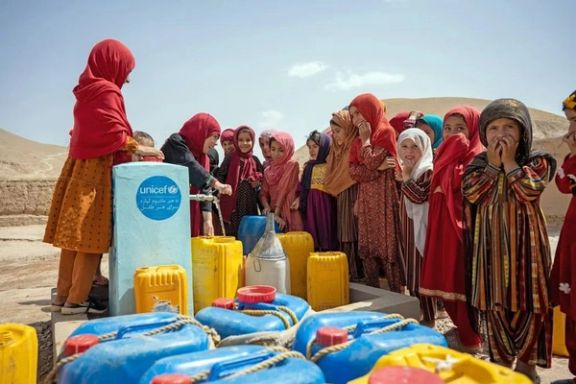
The UNICEF has called for $950 million in urgent funding to meet the basic and humanitarian needs of 12 million people in Afghanistan, including 6.5 million children.
The UNICEF has called for $950 million in urgent funding to meet the basic and humanitarian needs of 12 million people in Afghanistan, including 6.5 million children.
In a statement, UNICEF said the assistance is critical to the survival and well-being of children across the country, warning that needs are growing amid Afghanistan’s deepening, multidimensional crises.
The agency said communities are grappling with the combined impact of natural disasters, a fragile economy, limited access to basic services and recurring climate shocks.
According to humanitarian estimates, about 22 million people, including 11.6 million children, are expected to require assistance across Afghanistan in 2026.
UNICEF also warned of a worsening protection crisis, saying pregnant women, children, young people and marginalised groups face increasing risks.
The agency highlighted the systematic rights crisis affecting women and girls, noting that bans on education, restrictions on employment and daily limitations have weakened their resilience, with long-term consequences for future generations.
Citing the scale and urgency of the challenges, UNICEF appealed for $950 million to support vulnerable populations, particularly children and women, and urged donors to step up funding to prevent further deterioration of humanitarian conditions.

Pakistan has lifted restrictions on the transit of Afghan goods through its ports after months of suspension, the country’s commerce ministry said on Tuesday.
Pakistan Ministry of Commerce said Afghan transit cargo currently stranded at the ports of Karachi, Gwadar and other border crossings has been cleared for export through all Pakistani ports. The move follows a special exemption approved by the Federal Board of Revenue.
Taliban authorities have not yet issued an official response to the decision.
Pakistan closed all border crossings with Afghanistan in October 2025 following deadly clashes between Taliban forces and Pakistani security personnel. The shutdown, which lasted for about three months, caused significant economic losses on both sides of the border.
Pakistani traders had previously warned that the prolonged closure was costing them more than $4 million a day.
Under normal conditions, Afghanistan exports dried fruit, fresh produce, vegetables and coal to Pakistan, while importing cement, textiles, fruit, agricultural produce and other commercial goods from its neighbour.
A Taliban-appointed diplomat has begun work as the acting head of Afghanistan’s embassy in New Delhi, marking a further step in India’s engagement with the group despite the absence of formal recognition.
Noor Ahmad Noor met on Monday with Anand Prakash, head of the Afghanistan and Pakistan desk at India Ministry of External Affairs, according to a statement published by the Afghan embassy.
While New Delhi does not recognise the Taliban administration, it has allowed the group to assume control of Afghanistan’s embassy, reflecting expanding practical engagement between the two sides.
The ambassador of the former Afghan government announced in November 2023 that the embassy’s activities in New Delhi had been fully suspended, saying the Embassy of the Islamic Republic of Afghanistan had been permanently closed. India’s Foreign Ministry later said the embassy, along with Afghan consulates in Mumbai and Hyderabad, remained operational and continued to provide services to Afghan citizens.
In a bulletin posted on the embassy’s X account on Monday, officials said Noor and the Indian diplomat discussed bilateral political and economic relations, as well as the expansion of trade.
Noor urged the Indian government to ease visa issuance for Afghan traders and citizens and to address problems faced by Afghan traders, students and residents in India.
Noor accompanied Amir Khan Muttaqi during his visit to New Delhi three months ago. At the time, Muttaqi said India had agreed to accept a Taliban representative at Afghanistan’s embassy in the capital.
A former official at the Afghan embassy in New Delhi told Afghanistan International that India requires at least one Taliban diplomat at the mission to manage its current level of engagement with the group.
Relations between New Delhi and the Taliban have expanded following Muttaqi’s visit. Since then, Taliban ministers responsible for public health and commerce have also travelled to India, signalling a gradual widening of contacts between the two sides.
Afghanistan International has obtained a collection of official documents and internal reports from Taliban authorities that reveal the direct involvement of members of the group in extrajudicial killings in several Afghan provinces.
The documents show that these killings were not isolated incidents but part of a systematic pattern of violence carried out on the orders of Taliban intelligence and security officials, using state-issued weapons and conducted during official duty.
This report examines the details of several specific cases that further illustrate the scale and nature of this deadly pattern. Afghanistan International obtained the videos and documents through sources inside Taliban institutions in Herat, Samangan and Baghlan.
At least five videos containing confessions by perpetrators of targeted killings were reviewed, along with a set of official documents and internal reports from Taliban authorities relating to these murders.
The orders for the killings were issued by Taliban intelligence and security officials, and the perpetrators carried out the murders using government-issued weapons while on official duty.
Video confessions show that many victims were killed without proper investigation, often based solely on rumours, accusations of “espionage” or financial motives.
The investigation also shows that even in cases where perpetrators from within Taliban ranks were identified and detained, the authorities concealed the cases and failed to provide transparent information to the public.
In several cases, the killers were released after arrest without a fair trial, following pressure on victims’ families to sign forgiveness letters and accept blood money.
These cases demonstrate that the pattern of targeted killings continues amid the absence of justice, widespread impunity and the collapse of an independent judicial process in Taliban-run Afghanistan, while the authorities fail to explain these crimes to the public.
Three Taliban Members Kill a Money Changer in Herat
Afghanistan International has obtained videos showing two Taliban members confessing to the killing of Ahmad Shah Noori, a money changer who was murdered about 40 days earlier in Herat.
On Wednesday, December 3, 2025, Noori was travelling with his family in his car on the Herat–Gulran district road when two armed men on a motorcycle stopped the vehicle, forced him out and shot him dead.
The killing took place in front of his family members.
Taliban Intelligence Officer Ordered the Killing
Findings by Afghanistan International show that the order to kill was issued by Gul Agha, head of a Taliban intelligence unit in Badghis province.
Documents from Taliban authorities indicate that at least three Taliban members were involved in planning and carrying out the assassination: Gul Agha issued the order, while two others, identified as Aziz Nusrat and Najmuddin, carried out the operation using government-issued weapons.
Forty days after the killing, Afghanistan International obtained videos showing the planner of the attack and one of the perpetrators confessing to the murder.
In the first video, Gul Agha, son of Nasruddin and a resident of Omarzai village in Badghis, admits that “five or six months earlier” he planned the killing of Ahmad Shah with Aziz Nusrat, a Taliban intelligence employee. Speaking in Pashto, he says he provided Aziz Nusrat with a motorcycle to carry out the killing.
He adds: “Now I confess that Ahmad Shah has been killed.”
He also says he promised Aziz Nusrat one million Afghanis as a reward, to be paid 20 days after the killing.
Aziz Nusrat determined that Ahmad Shah Noori frequently travelled in Gulran district of Herat. He then selected a Taliban soldier named Najmuddin, officially stationed at the Kamarkalagh checkpoint at the Herat–Gulran gate, to carry out the killing.
Statement of the Shooter
In a video confession, Najmuddin says Aziz Nusrat called him to discuss the assassination of the Herat money changer.
Najmuddin says Aziz Nusrat told him at the prison office that Ahmad Shah Noori had previously attacked the Taliban and that he had officially received an order from the Taliban administration to kill him. He offered Najmuddin 300,000 Afghanis to carry out the murder.
Najmuddin says he and Aziz Nusrat ambushed the victim along the road and killed him.
“We stood in a flat area. Then they [Ahmad Shah and his family] passed by us in their car. We followed them from behind on the motorcycle, and finally I killed him,” he said.
Najmuddin said he fired three or four bullets at Ahmad Shah Noori.
He confirmed that he killed Noori with his own weapon while serving as a Taliban security officer at the Kamarkalagh checkpoint during official working hours.
Killing of a Tribal Elder in Samangan
A tribal elder from Khuram wa Sarbagh district of Samangan province, Mohammad Akbar Niazi, was abducted on Thursday, May 8, 2025, from Aybak, the provincial capital.
Niazi left his home after receiving a phone call. Four armed men abducted him from outside his house, and he never returned. He was the head of a local council and a well-known horse breeder in Samangan.
Two days later, on Saturday evening, May 19, 2025, his bullet-riddled body was found in the Kipna-Garcha mountains of Samangan.
Friends and relatives told Afghanistan International that the armed men lured Niazi out of his home under the pretext of attending a meeting.
They said at least six bullets struck his body and that signs of torture were visible.
Relatives said he had no personal enemies. He had served as a local council head and neighbourhood representative under the previous government, and one of his sons had worked in the provincial finance office.
Trail Leads to Taliban Intelligence
Afghanistan International obtained an official letter from the Taliban Ministry of Interior’s crime department showing that Niazi was killed with a pistol belonging to a Taliban member.
Following the incident, the Taliban detained at least three of their members in connection with the killing: two intelligence officers, Ghulam Sakhi (known as Osama) and Abdul Saboor Sirat, and Naqibullah, head of the Taliban police workshop in Samangan.
Official documents show that Taliban intelligence seized a Makarov pistol with serial number XAM3998, along with magazines, ammunition and personal items belonging to Ghulam Sakhi.
Ballistic examinations confirmed that all recovered casings and bullets were fired from the same seized pistol and that the weapon had been previously used.
The final conclusion of the Taliban Interior Ministry’s criminal department stated that all evidence proved the shooting was carried out with the Makarov pistol bearing serial number XAM3998, which was used to kill Mohammad Akbar Niazi.
Two Killed in Baghlan, Killers Later Released
In the August, two members of a family in Baghlan province, Hikmatullah and Gul Mohammad, uncle and nephew, were shot dead.
Sources said a Taliban member named Mawlawi Majid had ordered the killing of another individual, but the Taliban members assigned to carry out the assassination mistakenly killed the two men instead.
Afghanistan International reviewed graphic images of the victims’ bodies and at least three additional videos in which Taliban members confessed to the killings.
Hamdullah’s Confession
Hamdullah, also known as Moatasem, son of Mohammadullah and a Taliban commander in Baghlan, confessed in a video that he was involved in the killing of Hikmatullah. He said he participated in the killing, but others were responsible for killing Gul Mohammad.
During the video, he states that he carried out the killing “with the permission of Mawlawi Sahib and the commission.”
He said the order came from individuals named Musa and Mawlawi Majid in the Taliban commission and that they asked him to carry out the killing secretly so no one would find out.
He added that he fired three bullets at Hikmatullah and said, “I didn’t know afterward whether he survived or died.”
He also said he was not involved in the killing of Gul Mohammad.
A voice of another Taliban member is heard in the video, stating that witnesses confirmed Hamdullah’s involvement in Hikmatullah’s killing.
“I Participated in the Killing to Earn Merit”
Hanzala, son of Shamsuddin and a resident of Pul-e-Khumri in Baghlan province, confessed to killing Gul Mohammad.
A Taliban commander armed with two weapons and leading three men, Hanzala said he received the weapons from someone named Akhundzada Majid.
He said: “I was assigned to kill Gul. I fired at the first person but missed. Later, Musa held him firmly, and I shot him.”
Regarding his motive, Hanzala said he had heard the victim was a “spy.” According to him, “Two Mujahideen named Musa and Hamdullah told me these were security personnel. Come, let’s kill him. I asked if they had witnesses or documentation. They said Mawlawi Majid from the commission told them to kill them, but it must be done secretly so that no one finds out.”
Hanzala emphasized that he took part in the killing to “earn religious merit.”
In a separate video, Hamdullah accused a member of the Taliban Purge Commission in Baghlan of ordering the killing. He said Mawlawi Musa told him to kill the person but keep it secret so no one would know or accuse him of murder. Musa denied issuing the order, saying: “One is permission, one is advice!”
Hamdullah said Musa told him at a madrasa that the person was a spy and should be killed secretly so no one would find out. He said he was ready to swear on the Quran. Musa claimed Hamdullah killed the victim for personal reasons.
Sources in Baghlan said Musa managed to escape after these accusations, and the Taliban have not provided information about his arrest.
Taliban Negotiate Pardon With the Victim’s Family
Afghanistan International obtained information showing that the Taliban released those involved in the killings of Hikmatullah and Gul Mohammad.
Sources said the Taliban asked the victims’ families to sign a pardon letter in exchange for blood money and reportedly threatened them not to speak to the media.
Radio Television Afghanistan reported that the dispute was resolved in a public gathering through “peace and reconciliation” and that the killer’s family paid 2.5 million Afghanis as compensation.
According to the report, Mullah Mohammad Yunus Mokhles, an adviser to Interior Minister Sirajuddin Haqqani, facilitated the pardon. He said he tried to persuade the victims’ children, but they were unwilling. Elders later decided that Hanzala’s family would pay the compensation. Abdulmatin, a member of Hanzala’s family, thanked the adviser for facilitating Hanzala’s release.
Conclusion
This report shows that targeted assassinations after August 2021 were not isolated incidents but part of a systematic pattern of violence, abuse of power and secrecy within the Taliban, an approach that has led to widespread human rights violations and heightened fear in society.
The intervention of senior Taliban officials to free killers, replacing judicial trials with jirgas and monetary settlements, and eliminating legal processes reflects the institutionalisation of impunity.
Targeted and retaliatory killings since August 2021 are among the most serious and persistent human rights violations in Afghanistan. These killings often occurred secretly, without transparent legal accountability and in an environment of fear and impunity.
Former Afghan security personnel, ethnic and religious minorities such as Ismailis, residents of Panjshir, local leaders, civil society activists, journalists and Taliban opponents have been primary victims. In many cases, victims were killed after prior threats or summons to Taliban institutions.
Human rights organisations and victims’ families consider the Taliban the main actor or directly responsible for these killings. The United Nations has repeatedly stated that the Taliban violated the “general amnesty” decree issued by their leader, Hibatullah Akhundzada, with members involved in retaliatory killings, arbitrary detention, torture and enforced disappearances.
The absence of an independent judicial system, severe media restrictions and threats against journalists have prevented many of these killings from being documented or investigated. Victims’ families often do not report cases publicly due to fear of retaliation or pressure.
No precise statistics exist on the total number of targeted killings since the Taliban takeover. However, media reports and international investigations suggest the death toll likely reaches thousands. Human rights organisations warn that the continuation of this situation reinforces a culture of impunity and deepens Afghanistan’s human rights crisis.
The Taliban have consistently denied organised involvement in these killings, but no transparent, independent and credible investigation has been conducted, and those responsible have not been held accountable.
A former Afghan finance minister has warned that deepening poverty, unemployment and the concentration of power under Taliban rule could eventually spark popular unrest in Afghanistan.
Anwar-ul-Haq Ahady, a member of the Switzerland-based Fund for Afghan People, said the persistence of economic hardship and political exclusion could fuel public anger against the Taliban.
“People hold the government responsible for their welfare, not God,” Ahady said.
Speaking on Sunday in an interview with Afghanistan International, Ahady discussed the protests in Iran, the drivers of revolutions and the role of poverty and economic crises. He said similar pressures in Afghanistan could, over time, push people to demand action from those in power.
Ahady said unemployment and widespread poverty could lead Afghans to mobilise against the ruling authorities, potentially resulting in popular movements akin to those seen in Iran.
However, he said an immediate uprising in Afghanistan remains unlikely. “For now, people are unlikely to rise up against the Taliban due to fear of the group and the normalisation of poverty and hunger,” he said, adding that many Afghans nonetheless hold the Taliban responsible for the country’s economic collapse and expect accountability for livelihoods.
Ahady warned that if protests similar to those in Iran were to erupt in Afghanistan, the authorities could respond with even harsher measures.
He also pointed to the absence of credible political alternatives and the weakness of resistance fronts as key factors allowing the Taliban to retain power.
“If the Taliban do not change their policies,” Ahady said, “there is a real possibility that protests similar to those in Iran and even armed opposition could emerge in Afghanistan.”
The Taliban police command in Kunduz has confirmed the detention of a female journalist in the province but claimed her arrest was unrelated to her professional activities.
In a statement issued on Monday, January 12, the media office of the Taliban police command in Kunduz said a woman named Nazera Rashidi, who previously worked for a local radio station, was detained along with four other women on charges described as “criminal offences”.
The statement said the arrest had “no connection to the journalist’s media activities”, but did not provide further details about the specific allegations against her.
The confirmation followed an earlier report by the Afghanistan Media Support Organization, which said Rashidi was arrested on Tuesday, January 6, and taken to an undisclosed location. Her family told the organisation she is innocent and has not engaged in any illegal activity, and it called for her immediate release.
According to reports, Taliban intelligence agents detained Rashidi as she was leaving her home in the city of Kunduz. Relatives said she is the sole breadwinner for her family and the guardian of her younger siblings.
The case has drawn renewed attention to the situation of journalists in Afghanistan, particularly women. Previously, Muhajir Farahi, the Taliban’s deputy minister for publications at the Ministry of Information and Culture, said there were “no journalists imprisoned in Afghanistan”.
Media rights groups dispute that claim, noting increasing pressure on journalists since the Taliban returned to power in 2021.
Women journalists face particularly severe restrictions. According to recent surveys, only about 7 percent of women journalists say they are able to work freely in Afghanistan. Around 55 precent report facing personal threats, while more than 32 precent work covertly, mainly for online and written media, due to fears of arrest or reprisals.