Afghanistan Needs Legitimate Governance, Says Jalali
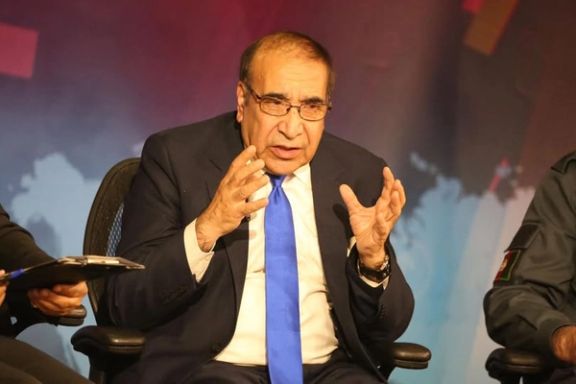
Ali Ahmad Jalali, Afghanistan’s former interior minister, says efforts to shape the country’s future must begin with the establishment of a legitimate government.
Ali Ahmad Jalali, Afghanistan’s former interior minister, says efforts to shape the country’s future must begin with the establishment of a legitimate government.
He argued that debates over constitutions and state structures are meaningless without political legitimacy.
Speaking online at a two-day conference titled Future Outlook: Political System, Social Justice, Sustainable Development, and Afghanistan’s Position in the Region and the World, Jalali said Afghanistan’s crisis has reached such depth that politicians, academics and the public must first pursue fundamental political change.
He said the legitimacy of institutions flows from the legitimacy of the state itself, stressing that Afghans must be able to form a system grounded in the will of the people.
Jalali described Afghanistan as being ruled by a totalitarian system that, he said, derives its authority not from popular consent but from its own interpretations and definitions imposed on society.
The academic conference, organised by the Trust and Stability Movement of Afghanistan, was held over two days, January 17–18, in Frankfurt.
Mohammad Asif Zaeefi, head of the Trust and Stability Movement of Afghanistan, said the conference aimed to diagnose the country’s political, economic and social crises, as well as Afghanistan’s position in the region and the wider world.
Zaeefi said the movement has developed a four-stage roadmap focused on achieving national consensus, followed by regional and international consensus, and ultimately a transition toward state-building. He said Afghanistan currently suffers from deep conceptual and definitional ambiguity, both domestically and in its relations with the international system.
Parviz Arzu, a member of the movement’s executive committee, said neutrality could help remove Afghanistan from regional and global rivalries, benefiting both the country and the wider region.
He said such a process must begin with domestic consensus and then be pursued through diplomatic engagement with regional states and major powers, with the involvement of the UN Security Council.
Conference organisers said the aim of the gathering was to provide space for dialogue and academic reflection on Afghanistan’s future political system, social justice, sustainable development, and regional and global standing.
They added that a plan for Afghanistan’s future was presented at the conclusion of the conference, noting that imported models of governance had failed in the past and that any viable solution must be rooted in the country’s domestic realities.
