• العربية
  • پښتو
  • فارسی
Brand
  • Afghanistan
  • Sport
  • Markets
  • Afghanistan
  • Sport
  • Markets
  • Theme
  • Language
    • العربية
    • پښتو
    • فارسی
  • Afghanistan
  • Sport
  • Markets
All rights reserved for Volant Media UK Limited
volant media logo

Seven killed In A Week As Armed Violence Rises In Herat
Jan 25, 2026, 16:59 GMT+0

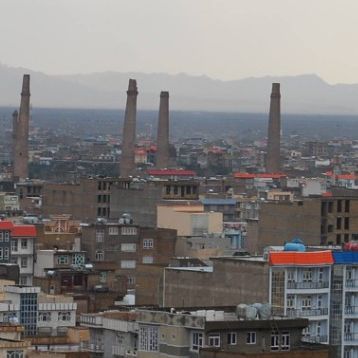
At least seven people have been killed in separate incidents in western city of Herat over the past week, according to information obtained by Afghanistan International.

The victims include a mobile money changer, two young men on the Herat–Karukh road, a teenage street vendor, a man in District 11 and a middle-aged man in a targeted shooting in the city centre. The most recent killing occurred Sunday near Majidi Road, sources said.

Taliban authorities rarely comment on such incidents and do not routinely provide details to the media. In one of the cases, however, local Taliban police issued a statement.

In the first incident, the body of a young man identified as Naqibullah was found in Herat. Sources said he had been abducted near the Khorasan currency exchange market and that his body was later discovered in the Jebrael area of the city. He was carrying cash when he left the exchange shop, and his relatives had searched for him for about a week. Naqibullah, originally from Ghor province, worked as a mobile money changer. His body was found Wednesday, January 21.

In a separate case, a young man named Qadir, a resident of the Shaalbafan area of Herat, was killed after going on a recreational trip with friends to Karukh district. He went missing while returning, and his body was discovered three days later, on Monday, January 19. Sources said two people have been arrested on suspicion of involvement.

Another victim, Faiz Ahmad Afzali from Injil district, was shot dead while returning from the Pashdan Dam on the Herat–Karukh road. Sources described the incident as an armed robbery. Afzali, the second child in his family, is survived by a three-year-old son and a six-month-old daughter. His brother had previously died in a traffic accident. Some of his friends were reportedly detained by the Taliban, though there has been no official comment.

In a fourth incident, a young man who had been taken by unidentified armed motorcyclists to the village of Imam Shash Noor in Injil district was killed while attempting to escape, local sources said. The attack occurred Friday night. The gunmen reportedly fired at him as he tried to flee and then left the scene. The village is about 10 kilometres from Herat city centre, and the shooting took place near a Taliban security post, sources said.

In another case, the body of a teenage street vendor was found hanging Saturday along a road known locally as Lelami Road, in a busy central area near Herat’s Grand Mosque. An informed source said Taliban authorities had not determined whether the death was a suicide or involved other people. The teenager’s identity has not been released.

In District 11, a man was killed Saturday in an incident the Taliban described as involving an armed robber. Herat police said the man encountered residents while committing a theft and, after resisting, faced what the statement called a “serious and timely reaction from the public.” His body was transferred to a provincial hospital.

The seventh incident involved a middle-aged man identified as Ismail, who was shot dead in what sources described as a targeted attack in central Herat on Sunday evening. The shooting took place on Ferqa Road, near the start of Majidi Road. Sources said he had links to Taliban intelligence institutions. Video obtained by Afghanistan International showed Taliban officers at the scene. The motive remains unclear.

Herat has seen a series of deadly incidents in recent weeks. Armed robberies and killings aimed at seizing valuables such as mobile phones, cars and motorcycles have been cited as key factors. Residents and observers also point to poverty and worsening economic conditions as contributing to the rise in violence.

Most Viewed

Pakistan Hosts Regional Meet On Afghanistan Without Taliban
1

Pakistan Hosts Regional Meet On Afghanistan Without Taliban

2

Taliban Ignore Afghanistan’s Interests By Backing Militants, Says Pakistan Army Chief

3

United Nations Delivers Education Kits To Four Million Afghan Children

4

European Parliament To Review Petition On Gender Apartheid, Taliban Status

5

Afghan Deportations Is Strategic Mistake, Says European Parliament Member

•
•
•

More Stories

Austria Deports Third Afghan Refugee Convicted Of Crimes

Jan 25, 2026, 15:17 GMT+0

Austria has deported an Afghan man to Kabul after he completed a prison sentence, the Interior Ministry said, marking the third such removal of an Afghan national in recent months.

The 33-year-old was expelled early Sunday via Istanbul, the ministry said. Interior Minister Gerhard Karner said deportations would continue and that criminal nationals from Syria and Afghanistan would be expelled gradually.

According to the ministry, the man arrived in Austria in July 2015 and was convicted six times by Austrian courts, including for serious violent offences. A total of nine criminal offences were recorded against him. Authorities described him as a dangerous criminal who spent about five of his 10 years in Austria in prison.

The Interior Ministry said he was among individuals identified by a Taliban delegation in Vienna, which issued him a travel document for return to Afghanistan.

A Taliban delegation travelled to Vienna in September 2025 for talks on the deportation of Afghan nationals. Austrian authorities have not announced how many Afghans are expected to be deported.

One Afghan was deported on October 21, 2025, and another on November 9, 2025, according to official statements.

Austria deported more than 14,000 people convicted of crimes or found to have irregular residency status in 2025, official figures show, in what authorities describe as an unprecedented level of removals.

Pakistan Ulema Council Calls Taliban Penal Code ‘Un-Islamic’

Jan 25, 2026, 13:43 GMT+0

The Pakistan Ulema Council has said the Taliban’s newly endorsed penal code is not based on Islamic teachings and contradicts the Quran and Sunnah, describing it as offensive to human dignity and not representative of Islamic law.

In a statement issued Sunday, January 25, the council said it does not consider the Taliban administration’s penal code to be consistent with Islamic principles, adding that parts of it resemble what it described as Hindu teachings. The statement did not elaborate on that comparison.

The council also criticised what it described as the division of society into “slaves” and “free people” in the name of Islamic law, calling it deeply concerning.

According to the statement, the Taliban, which presents itself as a legitimate Islamic government, must clarify its position to the international community and avoid reimposing laws and customs from the pre-Islamic era under the name of Islam.

Taliban leader Hibatullah Akhundzada recently endorsed the penal code, which consists of 10 chapters and 119 articles. Following his approval, the code has been distributed to provinces for implementation within Taliban judicial institutions.

According to Taliban officials, the code forms the legal basis for judicial rulings in courts under their administration. A spokesperson for the Taliban Supreme Court, Abdul Rahim Rashid, previously confirmed the contents of the code and said Afghan citizens who commit discretionary crimes could face different punishments based on social classification, though he said this does not apply in cases involving retribution punishments.

Provisions cited in the code include language stating that Muslims who witness a “sin” being committed may take action against those involved. Taliban authorities say the code is based on their interpretation of Islamic law.

The penal code marks the first time the Taliban’s interpretation of such judicial rules has been formally approved and signed by their leader as an official legal document.

Exports To Afghanistan Fall 56 Percent, Says Pakistan Central Bank

Jan 25, 2026, 12:50 GMT+0

Pakistan’s exports to Afghanistan fell by about 56 percent in the first half of the 2026 fiscal year, the State Bank of Pakistan said in its latest report.

The value of exports to Afghanistan during the period stood at $219.489 million, down from $505.818 million in the same period a year earlier, according to the central bank. Imports from Afghanistan were reported at $6.321 million, also lower than in the previous fiscal year.

Pakistan and the Taliban in Afghanistan suspended trade activities following deadly border clashes in October 2025. Pakistan has halted all commercial activity, including exports, with Afghanistan since October 10, 2025.

Data from the State Bank of Pakistan showed the country’s trade deficit with nine neighbouring countries rose by 44 precent to $7.683 billion in the July–December period of the 2026 fiscal year.

The report said Pakistan’s exports to Afghanistan, China, Bangladesh, Sri Lanka, India, Iran, Nepal, Bhutan and the Maldives declined by 18.56 precent to $1.965 billion during the six-month period, compared with $2.413 billion in the same period last year. The sharpest drop in exports was recorded to China, followed by Afghanistan and Bangladesh.

Relations between Pakistan and the Taliban authorities became strained in October 2025 following Pakistani airstrikes on Kabul and border areas of Afghanistan.

Traders in both countries, particularly in Pakistan, have repeatedly called for the reopening of border trade. Pakistani officials, however, say trade routes will remain closed until security concerns are addressed.

UN Deputy Chief Meets Iran’s Ambassador In Kabul

Jan 25, 2026, 11:29 GMT+0

Rosemary DiCarlo, the United Nations under-secretary-general for political and peacebuilding affairs, met Sunday with Alireza Begdeli, Iran’s ambassador to Afghanistan, during her visit to Kabul.

Iran’s embassy in Kabul said the meeting focused on the activities of the UN Assistance Mission in Afghanistan (UNAMA) and cooperation between the Islamic Republic of Iran and the UN mission. The talks were held at the Iranian embassy, and no further details were released.

DiCarlo arrived in Kabul on Saturday, coinciding with the International Day of Education. UN Secretary-General spokesperson Stéphane Dujarric said earlier that her trip was aimed at following up on the Doha process, a UN-led diplomatic effort on Afghanistan.

The UN Assistance Mission in Afghanistan established the first working group on counter-narcotics under the Doha process in November 2024. A second working group focused on economic issues was formed in January 2025 to help coordinate economic assistance to Afghanistan under Taliban rule.

The United Nations has said a fourth round of Doha talks would be held following the establishment of these two working groups. The Taliban have recently announced that the next meeting of the Doha process working groups will take place in Kabul.

During her visit, DiCarlo has also met Taliban Foreign Minister Amir Khan Muttaqi and Interior Minister Sirajuddin Haqqani.

Next Doha Process Working Group Meet To Be held In Kabul, Says Taliban

Jan 25, 2026, 10:23 GMT+0

Rosemary DiCarlo, the United Nations under-secretary-general for political and peacebuilding affairs, met Sirajuddin Haqqani, the Taliban’s interior minister, in Kabul, according to a Taliban statement.

The Taliban Interior Ministry said early Sunday that the meeting focused on engagement between the Taliban and the international community, cooperation in counter-narcotics efforts, economic stability, easing restrictions on the private sector and the effectiveness of UN humanitarian assistance.

Haqqani told DiCarlo that efforts to combat drug production and trafficking in Afghanistan had produced positive results, the statement said.

The ministry said DiCarlo assured Haqqani that the United Nations would continue its humanitarian assistance to Afghanistan. The UN delegation, led by DiCarlo, also stressed the need for “continued engagement”, according to the statement.

Quoting the UN official, the ministry said that as part of the third phase of the UN-led Doha process, working groups have been formed and are expected to hold their next meeting in Kabul.

DiCarlo arrived in Kabul on Saturday and also held talks with Taliban Foreign Minister Amir Khan Muttaqi on the Doha process.

The US diplomat has served as UN under-secretary-general for political and peacebuilding affairs since 2018.

The UN-led Doha process was launched to create a political framework and dialogue among the international community, regional countries and the Taliban to address Afghanistan’s political, security and humanitarian crises. Three rounds of talks have been held so far, with the most recent led by DiCarlo. Taliban representatives took part in the latest meeting.