Austria Deports Third Afghan Refugee Convicted Of Crimes

Austria has deported an Afghan man to Kabul after he completed a prison sentence, the Interior Ministry said, marking the third such removal of an Afghan national in recent months.

Austria has deported an Afghan man to Kabul after he completed a prison sentence, the Interior Ministry said, marking the third such removal of an Afghan national in recent months.
The 33-year-old was expelled early Sunday via Istanbul, the ministry said. Interior Minister Gerhard Karner said deportations would continue and that criminal nationals from Syria and Afghanistan would be expelled gradually.
According to the ministry, the man arrived in Austria in July 2015 and was convicted six times by Austrian courts, including for serious violent offences. A total of nine criminal offences were recorded against him. Authorities described him as a dangerous criminal who spent about five of his 10 years in Austria in prison.
The Interior Ministry said he was among individuals identified by a Taliban delegation in Vienna, which issued him a travel document for return to Afghanistan.
A Taliban delegation travelled to Vienna in September 2025 for talks on the deportation of Afghan nationals. Austrian authorities have not announced how many Afghans are expected to be deported.
One Afghan was deported on October 21, 2025, and another on November 9, 2025, according to official statements.
Austria deported more than 14,000 people convicted of crimes or found to have irregular residency status in 2025, official figures show, in what authorities describe as an unprecedented level of removals.
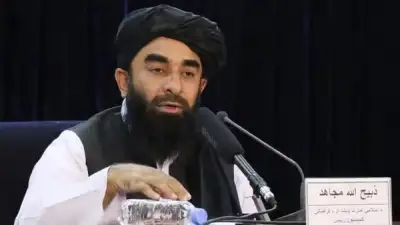

The Pakistan Ulema Council has said the Taliban’s newly endorsed penal code is not based on Islamic teachings and contradicts the Quran and Sunnah, describing it as offensive to human dignity and not representative of Islamic law.
In a statement issued Sunday, January 25, the council said it does not consider the Taliban administration’s penal code to be consistent with Islamic principles, adding that parts of it resemble what it described as Hindu teachings. The statement did not elaborate on that comparison.
The council also criticised what it described as the division of society into “slaves” and “free people” in the name of Islamic law, calling it deeply concerning.
According to the statement, the Taliban, which presents itself as a legitimate Islamic government, must clarify its position to the international community and avoid reimposing laws and customs from the pre-Islamic era under the name of Islam.
Taliban leader Hibatullah Akhundzada recently endorsed the penal code, which consists of 10 chapters and 119 articles. Following his approval, the code has been distributed to provinces for implementation within Taliban judicial institutions.
According to Taliban officials, the code forms the legal basis for judicial rulings in courts under their administration. A spokesperson for the Taliban Supreme Court, Abdul Rahim Rashid, previously confirmed the contents of the code and said Afghan citizens who commit discretionary crimes could face different punishments based on social classification, though he said this does not apply in cases involving retribution punishments.
Provisions cited in the code include language stating that Muslims who witness a “sin” being committed may take action against those involved. Taliban authorities say the code is based on their interpretation of Islamic law.
The penal code marks the first time the Taliban’s interpretation of such judicial rules has been formally approved and signed by their leader as an official legal document.

Pakistan’s exports to Afghanistan fell by about 56 percent in the first half of the 2026 fiscal year, the State Bank of Pakistan said in its latest report.
The value of exports to Afghanistan during the period stood at $219.489 million, down from $505.818 million in the same period a year earlier, according to the central bank. Imports from Afghanistan were reported at $6.321 million, also lower than in the previous fiscal year.
Pakistan and the Taliban in Afghanistan suspended trade activities following deadly border clashes in October 2025. Pakistan has halted all commercial activity, including exports, with Afghanistan since October 10, 2025.
Data from the State Bank of Pakistan showed the country’s trade deficit with nine neighbouring countries rose by 44 precent to $7.683 billion in the July–December period of the 2026 fiscal year.
The report said Pakistan’s exports to Afghanistan, China, Bangladesh, Sri Lanka, India, Iran, Nepal, Bhutan and the Maldives declined by 18.56 precent to $1.965 billion during the six-month period, compared with $2.413 billion in the same period last year. The sharpest drop in exports was recorded to China, followed by Afghanistan and Bangladesh.
Relations between Pakistan and the Taliban authorities became strained in October 2025 following Pakistani airstrikes on Kabul and border areas of Afghanistan.
Traders in both countries, particularly in Pakistan, have repeatedly called for the reopening of border trade. Pakistani officials, however, say trade routes will remain closed until security concerns are addressed.

Rosemary DiCarlo, the United Nations under-secretary-general for political and peacebuilding affairs, met Sunday with Alireza Begdeli, Iran’s ambassador to Afghanistan, during her visit to Kabul.
Iran’s embassy in Kabul said the meeting focused on the activities of the UN Assistance Mission in Afghanistan (UNAMA) and cooperation between the Islamic Republic of Iran and the UN mission. The talks were held at the Iranian embassy, and no further details were released.
DiCarlo arrived in Kabul on Saturday, coinciding with the International Day of Education. UN Secretary-General spokesperson Stéphane Dujarric said earlier that her trip was aimed at following up on the Doha process, a UN-led diplomatic effort on Afghanistan.
The UN Assistance Mission in Afghanistan established the first working group on counter-narcotics under the Doha process in November 2024. A second working group focused on economic issues was formed in January 2025 to help coordinate economic assistance to Afghanistan under Taliban rule.
The United Nations has said a fourth round of Doha talks would be held following the establishment of these two working groups. The Taliban have recently announced that the next meeting of the Doha process working groups will take place in Kabul.
During her visit, DiCarlo has also met Taliban Foreign Minister Amir Khan Muttaqi and Interior Minister Sirajuddin Haqqani.

Rosemary DiCarlo, the United Nations under-secretary-general for political and peacebuilding affairs, met Sirajuddin Haqqani, the Taliban’s interior minister, in Kabul, according to a Taliban statement.
The Taliban Interior Ministry said early Sunday that the meeting focused on engagement between the Taliban and the international community, cooperation in counter-narcotics efforts, economic stability, easing restrictions on the private sector and the effectiveness of UN humanitarian assistance.
Haqqani told DiCarlo that efforts to combat drug production and trafficking in Afghanistan had produced positive results, the statement said.
The ministry said DiCarlo assured Haqqani that the United Nations would continue its humanitarian assistance to Afghanistan. The UN delegation, led by DiCarlo, also stressed the need for “continued engagement”, according to the statement.
Quoting the UN official, the ministry said that as part of the third phase of the UN-led Doha process, working groups have been formed and are expected to hold their next meeting in Kabul.
DiCarlo arrived in Kabul on Saturday and also held talks with Taliban Foreign Minister Amir Khan Muttaqi on the Doha process.
The US diplomat has served as UN under-secretary-general for political and peacebuilding affairs since 2018.
The UN-led Doha process was launched to create a political framework and dialogue among the international community, regional countries and the Taliban to address Afghanistan’s political, security and humanitarian crises. Three rounds of talks have been held so far, with the most recent led by DiCarlo. Taliban representatives took part in the latest meeting.

Rosemary DiCarlo, the United Nations under-secretary-general for political and peacebuilding affairs, met Taliban Foreign Minister Amir Khan Muttaqi in Kabul on Saturday to discuss the UN-led Doha process, the Taliban Foreign Ministry said.
In a statement, the ministry said the two sides held extensive talks on engagement and coordination between the Taliban administration and the United Nations, as well as on Doha process meetings. Discussions also covered counter-narcotics efforts, support for the private sector and the return of migrants.
Muttaqi called on the UN official to help lift banking sanctions on Afghanistan and to facilitate the release of the country’s central bank assets, according to the statement.
He also raised concerns about drug cultivation in some countries in the region, warning that production outside Afghanistan would harm not only Afghanistan but also the wider region and the world. He did not name any country, although Taliban officials have previously alleged that drugs are cultivated in Pakistan.
DiCarlo emphasised cooperation within the framework of the Doha process working groups and described the continuation of the Doha meetings as beneficial for all sides, the statement said.
The United Nations and the Taliban have previously discussed counter-narcotics and private sector support during Doha talks and have established technical working groups in those areas.
The UN has sought to create conditions for meaningful dialogue between the Taliban authorities, regional representatives and Afghan stakeholders, including women, civil society members and human rights activists. The Taliban, however, have shown little interest in talks with their opponents.
According to the Taliban statement, DiCarlo also expressed hope that joint cooperation could be strengthened through the Doha process.
The UN Assistance Mission in Afghanistan established the first counter-narcotics working group under the Doha process in November 2024. A second working group focused on economic issues was later formed to help coordinate economic assistance to Afghanistan under Taliban rule.
The United Nations has said a fourth Doha meeting would be held following the establishment of these two working groups.
At the third Doha meeting, held on July 1 and 2, 2025, with the participation of countries’ special envoys for Afghanistan, Taliban representatives attended, but women, civil society and political opponents were excluded, drawing widespread criticism.
At the time, the United Nations said the meeting aimed to increase international engagement with Afghanistan in a coherent and structured manner.