Taliban Claims Dozens Of Pakistani Soldiers Killed Or Wounded

The Taliban’s Defence Ministry said its forces attacked Pakistani border troops in Kandahar Province overnight.

The Taliban’s Defence Ministry said its forces attacked Pakistani border troops in Kandahar Province overnight.
The ministry claimed that dozens of Pakistani soldiers were killed or wounded in the operation and that seven Pakistani border posts were captured.
Pakistan has not yet commented on the Taliban’s claim.
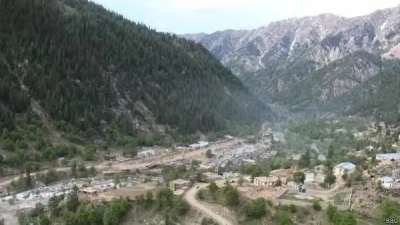
Sources say Pakistani border forces have attacked Taliban checkpoints along the frontier in Zabul Province.
According to the sources, the assaults caused casualties among Taliban fighters and destroyed several of the group’s border posts.
Zabul province in southern Afghanistan shares a border with Balochistan in Pakistan.
The Taliban have not yet commented officially on the clashes in the area. Earlier, Pakistani media reported that fighting had erupted between the two sides along the border in the Mohmand District region.
The violence has displaced a number of local residents.
The Pakistan Army has intensified airstrikes on Taliban positions and forces, while the Taliban have attempted to respond to the aerial attacks along border areas.
The United Nations has warned that about 200,000 additional Afghan children are expected to suffer acute malnutrition this year as foreign aid declines and tensions escalate along the border with Pakistan.
John Aylieff, head of the World Food Programme in Afghanistan, said 3.7 million Afghan children are projected to require treatment for malnutrition in 2026.
Speaking at a meeting in Geneva on Tuesday, Aylieff said acute malnutrition among children is rising rapidly. Funding cuts, he said, have left the WFP able to treat only one in four children in need.
He said some children are unable to reach health clinics, while others are stranded in remote mountainous areas because of heavy snowfall.
Aylieff said most child deaths in Afghanistan occur quietly at home during the winter. He warned that when snow melts in late March or April, it may reveal that child mortality in rural areas has been far higher than expected.
He added that deportation policies in neighbouring Iran and Pakistan have led to the return of more than 5 million people to Afghanistan since late 2023, placing further strain on limited resources.
Many returnees have settled near areas of recent clashes between Pakistani and Afghan forces, forcing the World Food Programme to suspend some services. Aylieff warned that acute malnutrition is likely to worsen as fighting disrupts access to health care, putting tens of thousands of children at risk.
Afghanistan has ranked last among 181 countries in the latest Women, Peace and Security Index published by the Georgetown Institute for Women, Peace and Security, recording the poorest performance on women’s rights.
Denmark ranked first.
According to the report, one in five women in the 10 lowest-ranked countries, including Afghanistan, has experienced violence by an intimate partner.
Countries such as South Sudan, Democratic Republic of the Congo, Syria, Central African Republic and Yemen ranked just above Afghanistan.
The index analyses 13 indicators measuring women’s status worldwide. In the lowest-ranked countries, more than half of women say they do not feel safe in their communities.
Nearly three in four women in those countries live close to armed conflict. New data show that about one in six people globally is exposed to conflict.
The report says setbacks in women’s rights have coincided with a rise in conflict and violence. In 2024, more than 676 million women worldwide were living near conflict, a 74% increase compared with 2010 and the highest number and proportion recorded to date.
Armed conflict disproportionately affects women and vulnerable groups, worsening violence and reversing gains in women’s rights.
Proximity to conflict also undermines women’s wellbeing. Countries that perform worst on the index, including Afghanistan, also score poorly on other indicators.
On average, those countries rank lowest for access to justice and record a maternal mortality ratio of 226 deaths per 100,000 live births, worse than the global average.
Levels of targeted political violence against women in these countries, including Afghanistan, are three times the global average, the report said.
Attaullah Tarar, Pakistan’s information minister, said that by Tuesday, 3 March, 464 members of the Taliban had been killed and more than 665 wounded in Operation “Ghazab-ul-Haq”.
In a post on X, Tarar said Pakistani forces had destroyed 188 posts and captured 31 others.
He added that 192 tanks, armoured vehicles and artillery pieces had been destroyed and that airstrikes had targeted 56 locations across Afghanistan.
The Taliban have not yet responded to the figures.
Hamdullah Fitrat, deputy spokesperson for the Taliban, said on Tuesday that Russia, China, the European Union and the United Kingdom had contacted the group in efforts to end the war.
Fitrat warned, however, that as long as Pakistan continues its attacks on Afghan territory, Taliban operations would also continue.
He described Pakistan as the initiator of the conflict, saying the war was not the Taliban’s choice and that Pakistan had begun the aggression.
Fitrat said regional countries should press Pakistan to bring the war to an end.
He also called on international human rights organisations to condemn Pakistan’s military strikes.