• العربية
  • پښتو
  • فارسی
Brand
  • Afghanistan
  • Sport
  • Analysis
  • Markets
  • Afghanistan
  • Sport
  • Analysis
  • Markets
  • Theme
  • Language
    • العربية
    • پښتو
    • فارسی
  • Afghanistan
  • Sport
  • Analysis
  • Markets
All rights reserved for Volant Media UK Limited
volant media logo

Now Is Not The Time To Recognise the Taliban, Says Former Afghan President

Aug 21, 2026, 16:36 GMT+1

Former Afghan President Hamid Karzai says Taliban recognition and legitimacy depend on meeting specific conditions, including allowing girls to return to school and women to work.

Speaking to Bloomberg on Friday, 21 August, Karzai said the international community and the United Nations had repeatedly called on the Taliban to lift restrictions imposed on women and girls.

He stressed that the Taliban must allow girls to return to school and women to resume work if it wants to gain legitimacy and international recognition.

Karzai said this was not merely his personal position, but a demand repeatedly raised by the international community and the United Nations.

Asked whether he supported beginning a process of normalising relations with the Taliban under the current circumstances, Karzai said he wanted a process in which Afghans could come together and find a solution for the country’s future, one in which all people felt included, had a sense of belonging and enjoyed their rights.

He said the goal should be to build a country in which all Afghans could live, work and make progress towards their future inside Afghanistan.

Russia is the only country to have formally recognised the Taliban administration. The international community and regional countries have set conditions for recognition, including respect for human rights, the formation of an inclusive government involving ethnic groups and women, counter-terrorism measures and compliance with international obligations.

The Taliban has rejected these demands, describing them as interference in Afghanistan’s internal affairs.

Karzai said in another part of the interview that he remained in contact with several Taliban leaders and had discussed with them the importance of girls’ education and women returning to work.

He said some Taliban officials who met him understood the importance of the issue and agreed with his position.

The former Afghan president also said that despite the ban on girls’ education beyond the sixth grade and sweeping restrictions on women’s employment, he was not willing to send his daughters abroad to continue their education.

He added that, as an Afghan citizen, he felt responsible for working to create conditions in which girls could study inside the country.

Karzai said sending his daughters abroad for education would amount to accepting the current situation, something he said he would never do.

Most Viewed

NRF Confirm Death Of Its Senior Commander Hasib Panjshiri
1

NRF Confirm Death Of Its Senior Commander Hasib Panjshiri

2

Iran Executes Afghan National Over Alleged Role In Protests

3

Taliban Turns To Iran & Central Asia As Western Engagement Declines

4

Four Taliban Members Killed In Faizabad Attack, Says AFF

5

Taliban Expands Recruitment In Badakhshan Districts Along Pakistan Border

•
•
•

More Stories

Afghan Opposition Figures Mourn NRF Commander Hasib Panjshiri, Vow Continued Resistance

Aug 21, 2026, 11:29 GMT+1
100%

Afghan political figures, including Abdul Rashid Dostum, Salahuddin Rabbani, Atta Mohammad Noor, Mohammad Mohaqiq, Karim Khalili, and Sarwar Danish have reacted to the killing of senior NRF commander Hasib Panjshiri.

The Taliban said on Thursday, 20 August, that Hasib Panjshiri had been killed during what it described as a complex operation by special forces.

Karim Khalili, leader of the Islamic Unity Party of Afghanistan mourned the death of the senior NRF commander, describing him as a symbol for many Afghans of courage, resistance, sacrifice and determination in defence of freedom, dignity and human dignity.

Mohammad Mohaqiq, leader of the People’s Islamic Unity Party of Afghanistan, described Hasib Panjshiri as one of the influential figures of the National Resistance Front and offered condolences to his family, comrades and supporters.

At the same time, the Afghanistan Justice and Freedom Party, led by Sarwar Danish, issued a statement saying that Panjshiri's death came at a time when Afghanistan was under what it described as authoritarianism, monopoly of power and repression of civil and political freedoms of the Taliban, adding that his death highlighted the heavy price being paid for defending freedom and the people’s right to determine their future.

Marshal Abdul Rashid Dostum, leader of the National Islamic Movement of Afghanistan, said the “fire of resistance” against the Taliban would not be extinguished by Hasib Panjshiri’s death in direct fighting with the group.

Dostum said the path of resistance had become clearer and expressed hope that what he called the Taliban’s “rule of oppression and tyranny” would eventually be removed from Afghanistan.

Salahuddin Rabbani, leader of Jamiat-e Islami Afghanistan, said in response to Hasib Panjshiri’s death that by killing and threatening opponents, the Taliban was strengthening the determination of Afghans to build a dignified and law-based future.

Rabbani said history had shown that no oppressor has ever prevailed against the will of the people, adding that Afghanistan was no exception.

He described Hasib Panjshiri as someone who had “stood courageously against oppression and tyranny” and lost his life while defending Afghanistan.

Sami Sadat, head of the United Front of Afghanistan, also offered condolences to Panjshiri’s family and comrades, describing him as a proud fighter for freedom.

Sadat said fighters of the United Front of Afghanistan would ensure that Panjshiri’s place on the battlefield did not remain vacant.

Atta Mohammad Noor, a senior figure in Jamiat-e Islami Afghanistan, also issued a message referring to Panjshiri as the “Eagle of the Hindu Kush”. Noor described his death as a painful and irreparable loss.

Khalid Amiri, a commander of the National Resistance Front, described Panjshiri as loyal, sincere, honourable, courageous and steadfast.

Amiri said Panjshiri had been not only a comrade-in-arms but also a brother, a companion through difficult years and a man of the toughest battlefields.

He said Hasib Panjshiri’s absence from the ranks of the National Resistance Front would always be felt, but added that his “blood would never go unanswered” and that the path he had followed until his final moments would continue with “even greater determination than before”.

Hasib Panjshiri was a prominent commander of the National Resistance Front. Before the fall of the former republic order in Afghanistan, he joined the National Directorate of Security’s special units after completing military training and took part in various operations.

After the Taliban entered Kabul in August 2021, Panjshiri went to Panjshir and continued fighting against the group. In recent years, several images and videos had also emerged showing him alongside NRF forces in the foothills of the Hindu Kush region in Afghanistan.

Iran Executes Afghan National Over Alleged Role In Protests

Aug 20, 2026, 15:32 GMT+1
100%

Mizan, the Iranian judiciary’s news agency, reported that Afghan national Qaem Hosseini was executed over the 8 January 2026 protests in Isfahan in a case known as the “Alikhani Square” case.

Mizan said Hosseini had been charged with drawing a weapon and creating fear and terror, acting against individuals’ physical safety and national security.

According to the judiciary-affiliated agency, Hosseini was executed at dawn on Thursday, 20 August. He had been accused in connection with the killing of four Iranian police officers in Alikhani Square in Isfahan during nationwide protests.

The Iranian judiciary’s media outlet claimed Hosseini had confessed during questioning to taking part in the protests and carrying a bladed weapon. Reports have previously accused the Iranian authorities of extracting forced confessions from defendants in protest-related cases.

Mizan wrote that four members of the Isfahan police special units were attacked and killed in Alikhani Square during protests on 8 January 2026. The judiciary accused Hosseini of taking part in the incident and kicking the bodies of the officers.

According to reports, four other protesters, Erfan Esfandiyari, Gol Mohammad Mohammadi, Amirhossein Safari and Abolfazl Sepahi, had previously been executed over alleged involvement in the same case.

Mizan wrote that Hosseini had gone to the scene wearing a jacket, hat and mask to avoid identification and had switched off his mobile phone to prevent tracking.

Iran’s judiciary has so far executed dozens of people linked to the January protests.

Human rights organisations have accused the Iranian judiciary of unfair trials, forced confessions and brought fabricated charges in cases involving protesters.

Afghan National and Relative of Another Executed Defendant

No independent account from Hosseini’s family or lawyer has yet been published regarding the allegations, judicial process or evidence in the case.

There is also no independent information about the circumstances of his presence at the scene, including whether he was taking part in the protest or was simply in the area at the time.

The judiciary also accused Hosseini of taking part in setting fire to the Amir al-Momenin charity in Isfahan’s Malekshahr district and removing and burning property belonging to the organisation.

Mizan said his court hearings were held in the presence of a lawyer and that police intelligence and security reports, a reconstruction of the scene and statements from other defendants were among the evidence used in the case.

Iran International previously reported that Hosseini, along with Amirhossein Maleki and Ali Dashti, two other protesters detained during the Isfahan protests, was at imminent risk of execution.

Citing an informed source, the report said Hosseini was the maternal cousin of Gol Mohammad Mohammadi, an Afghan national who had previously been executed in connection with the same case.

The judiciary-affiliated media outlet said on 19 July that indictments had been issued against 16 people in the Alikhani Square case.

Iran International also reported on 8 July that the death sentences of 12 defendants in the case had been upheld by Iran’s Supreme Court on 5 July and that the case had been referred to the enforcement branch of the Isfahan Revolutionary Court.

According to the report, 59 people were initially arrested in connection with the protests in Alikhani Square, 23 of whom were sentenced to prison terms ranging from five to 10 years.

The defendants were reportedly denied the right to choose independent lawyers at the initial stage of proceedings, while their lawyers were also denied access to the case files.

Taliban Turns To Iran & Central Asia As Western Engagement Declines

Aug 20, 2026, 10:59 GMT+1
100%

A new study shows that as the Taliban has increasingly turned towards regional powers, engagement with Western countries has fallen to its lowest level since the group returned to power.

According to the report, Iran, China, Türkiye, Qatar, Uzbekistan and India have become the Taliban’s main diplomatic partners.

A new study by the Washington Institute for Near East Policy found that over the past five years, from 15 August 2021 to 15 August 2026, the Taliban had a total of 3,651 diplomatic interactions with 103 countries and international organisations.

Although most countries still refuse to recognise the Taliban government, the group has expanded ties with neighbouring states and several regional powers during this period.

Western Engagement Declines

According to the study, the share of Taliban diplomatic interactions involving Western countries has fallen sharply over the past five years.

In the first year after the Taliban returned to power, Western countries accounted for 16 per cent of the group’s diplomatic interactions. By the fifth year, that figure had fallen to five per cent.

The study said the decline in Western engagement was linked to the Taliban’s sweeping restrictions on women and girls, including the ban on education. The situation has also limited Western governments’ access to key Taliban decision-makers.

At the same time, issues such as human rights, women’s education and counterterrorism have become less prominent in diplomatic meetings with the Taliban, while economic and trade issues have gained greater importance.

Aaron Zelin, a researcher at the Washington Institute, said Russia and China still discuss the threat posed by Islamic State Khorasan Province with the Taliban, but issues such as al-Qaeda, Tehreek-e-Taliban Pakistan and cross-border terrorism, which have been priorities for Western countries, appear less frequently on the Taliban’s diplomatic agenda.

According to Zelin, the Taliban has learned that it can gain significant international concessions without backing down on major security and human rights issues.

However, he said Washington still retains tools that could be used to pressure the Taliban on sensitive issues, including Afghanistan’s seat at the United Nations, US Treasury exemptions and funding for projects in Central Asia.

Russia’s Recognition of the Taliban

Russia’s formal recognition of the Taliban government in July 2025 was the group’s most significant diplomatic achievement over the past five years.

Russia was the first, and remains the only, country to formally recognise the Taliban government.

Following recognition, Taliban representatives attended the Moscow Format meeting at ministerial level, and in May 2026 the two sides signed an agreement on military and technical cooperation.

Iran Leads as Engagement by China and Qatar Falls

According to the study, Iran had the highest number of diplomatic interactions with the Taliban over the five-year period, with 494 contacts.

China followed with 432 interactions, Turkey with 394, Qatar with 347 and Uzbekistan with 316.

However, engagement by China and Qatar has declined in recent years.

China’s interactions with the Taliban fell from 135 in the third year to 46 in the fifth year, while Qatar’s contacts dropped from 160 in the first year to 41 in the fifth.

India, by contrast, has gradually increased its contacts with the Taliban despite having been a strong opponent of the group before the collapse of the former regime.

New Delhi’s interactions with the Taliban rose from just two in the early years to 39 in the fifth year.

Relations between the Taliban and Pakistan have followed a different pattern from those with other neighbouring countries.

Interactions between the two sides rose to 86 in the fourth year but fell to 33 in the fifth year amid worsening security disputes and border clashes.

The Washington Institute report said Pakistan had shifted over the five-year period from being one of the Taliban’s main supporters to becoming a regional rival.

According to the report’s author, what stands out across these relationships is that access to the new Afghanistan depends less on ideological affinity than on geographic proximity and material interests.

Countries that engage most frequently with the Taliban, he said, are also those least inclined to raise issues that remain important to the United States and its allies.

Focus Shifts to Maintaining Existing Relationships

The study shows that the pace at which the Taliban established new relationships with other countries has slowed.

In its first and second years in power, the Taliban established contacts with 35 and 37 new countries respectively. In the fifth year, only three new countries were added to its list of diplomatic interactions.

The trend suggests that the Taliban is now more focused on maintaining and consolidating existing relationships than on expanding its diplomatic network.

Over the same period, the share of consular issues in Taliban diplomatic engagement rose from two per cent to 14 per cent.

Trade and investment issues now appear in more than 40 per cent of the group’s diplomatic reports.

Comparison With Syria

In one part of the study, the Washington Institute compared Taliban diplomacy with that of Syria’s new government.

According to the data, Syria’s new government recorded more than 4,000 diplomatic interactions in 20 months.

The pace of Syria’s diplomatic engagement was more than three times that of the Taliban administration.

Syria has also rapidly expanded relations with major Western countries, particularly the United States, something the Taliban has failed to achieve.

Taliban Still Needs the West

Despite expanding relations with regional countries, the Taliban still needs Western assistance and cooperation to address Afghanistan’s economic problems.

More than half of Afghanistan’s population of 45 million depends on humanitarian assistance, millions of migrants have returned to the country, and billions of dollars in Afghan foreign reserves remain blocked in the United States.

Taliban Foreign Minister Amir Khan Muttaqi recently told The New York Times that the United States could reopen its embassy in Kabul and invest in major economic projects in Afghanistan.

However, the Taliban has so far shown no sign of being willing to change its policies on women’s rights, girls’ education or relations with extremist groups in exchange for improved ties with the West.

The United States and other countries, meanwhile, continue to call on the Taliban to cut ties with terrorist groups and respect human rights.

Opposition Groups Feature Prominently In Taliban Leaders’ Speeches

Aug 19, 2026, 12:55 GMT+1
100%

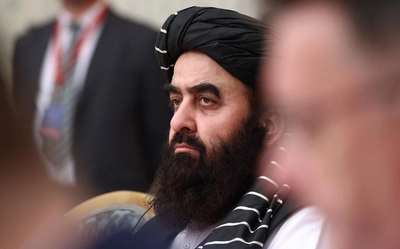
Top Taliban leaders, including the group’s economic and administrative deputy prime ministers, interior and foreign ministers and army chief, devoted a significant part of their Independence Day speeches to opponents, urging them to end fighting & activities against the Taliban.

Mullah Baradar, the Taliban deputy prime minister for economic affairs, described opponents as destructive and malicious elements and called on them to stand with the Taliban, leave Afghanistan’s suffering people in peace and refrain from fuelling “civil war”.

Abdul Salam Hanafi, the Taliban deputy prime minister for administrative affairs, warned against what he called ethnic, linguistic and regional prejudice, saying such divisions could harm the unity of “Muslims and mujahideen”.

Hanafi claimed that “the world’s intelligence agencies” were fuelling ethnic and linguistic divisions in Afghanistan through cultural and economic activities.

Taliban Interior Minister Sirajuddin Haqqani said Afghanistan was the “common home” of all and that everyone should consider themselves part of the Taliban system.

Haqqani urged Taliban opponents living abroad to stop fighting, saying their actions were harming both themselves and the Afghan people.

Fasihuddin Fitrat, the Taliban army chief, said opponents could not challenge the group and urged them to return to the country instead of what he described as “plotting” against the Taliban.

He said the Taliban’s “arms are open” to opponents and that they could return to Afghanistan and enjoy protection but warned that anyone disrupting order and security would face a “decisive, serious and crushing” response.

Taliban Foreign Minister Amir Khan Muttaqi called on opponents to refrain from actions that, in his view, could pave the way for instability in the country.

Muttaqi said Taliban opponents had failed, despite five years of preparation, to take control of any part of Afghanistan.

He also warned regional countries not to allow their territory to be used for pursuing war in Afghanistan.

The remarks come despite the Taliban previously rejecting negotiations and political participation with opposition groups.

The repeated emphasis by senior Taliban leaders on their opponents reflects concern over the rise in armed activity in the country.

Armed groups opposing the Taliban have increased their attacks against the group in recent months to an unprecedented level.

The Afghanistan Freedom Front, National Resistance Front, Sepahiyan-e Mihan Front, United Front of Afghanistan and Republican Front are among the groups that have recently targeted Taliban forces in different provinces.

The Sepahiyan-e Mihan Front recently seized Yaftal district in Badakhshan from Taliban control for the first time and disarmed Taliban fighters there.

The Afghanistan Freedom Front has also recently engaged Taliban forces in frontline fighting in Zebak district of Badakhshan, where intense clashes have taken place.

The United Front of Afghanistan has meanwhile organised and carried out attacks against the Taliban in several provinces.

Engagement With Taliban Has Gained Momentum, Says India

Aug 19, 2026, 11:46 GMT+1
100%

India’s Foreign Ministry defended the presence of an official at a Taliban takeover anniversary event at the Afghan embassy in Delhi, saying India’s engagement with the Taliban has gained momentum over the past year.

Randhir Jaiswal, spokesman for the ministry, said India’s engagement with the Taliban remained focused on humanitarian assistance and development cooperation with Afghanistan.

Speaking at a press briefing on Tuesday, 18 August, Jaiswal confirmed that Anand Prakash, head of the Pakistan, Afghanistan and Iran division at India’s Foreign Ministry, attended what he described as Afghanistan’s victory day event on behalf of the Indian government.

“Afghanistan organised its Victory Day here yesterday, in which our Joint Secretary, who looks after Afghanistan, as you mentioned, his presence was there from our side, on behalf of the Government of India.,” he said.

The Indian Foreign Ministry spokesperson said India had long-standing ties with the Afghan people.

Jaiswal said India had expanded its engagement with Afghanistan over the past year, including through diplomatic contacts, humanitarian aid and development assistance.

He said the level and nature of India’s engagement with Taliban-ruled Afghanistan would continue to be guided by those priorities.

He also said New Delhi upgraded its diplomatic representation in Kabul in October 2025, converting its technical mission back into an embassy. According to him, an acting head of mission has also been appointed.

He stressed that the change did not amount to an upgrade in India’s formal relations with the Taliban administration.

Asked about the situation of women in Afghanistan, Jaiswal said several women had also attended Monday’s event at the Afghan embassy in New Delhi.

Without elaborating on Taliban restrictions on women, he said India’s position on the issue had already been made clear.

Noor Ahmad Noor, the Taliban chargé d’affaires in New Delhi, called on Monday for greater political trust and expanded economic cooperation between Afghanistan and India.

India’s contacts with the Taliban have increased as relations between the Taliban and Pakistan have become more strained.

Pakistan has accused both the Taliban and India of supporting armed groups opposed to Islamabad, allegations both sides have rejected.