• العربية
  • پښتو
  • فارسی
BrandBrand
  • Afghanistan
  • Sport
  • Analysis
  • Markets
  • Afghanistan
  • Sport
  • Analysis
  • Markets
  • Theme
  • Language
    • العربية
    • پښتو
    • فارسی
  • Afghanistan
  • Sport
  • Analysis
  • Markets
All rights reserved for Volant Media UK Limited
volant media logo

Taliban Foreign Minister & Russian Envoy Discuss Expanding Bilateral Ties

Nov 10, 2026, 14:11 GMT+0

Taliban Foreign Minister Amir Khan Muttaqi met Zamir Kabulov, Russia's Special Envoy for Afghanistan, in Kabul on Tuesday. They discussed bilateral relations, trade, counter-narcotics efforts and recent developments.

The Taliban's Foreign Ministry said on Tuesday, 10 November, that Muttaqi had emphasised the importance of strengthening relations with Russia and called for both countries to benefit from each other's economic and trade opportunities.

According to the Taliban, Kabulov praised the group's efforts to combat narcotics and said reports by some international organisations did not reflect the reality in Afghanistan.

Recently, the United Nations Office on Drugs and Crime (UNODC) reported that opium production in Afghanistan had increased fivefold.

According to the report, Afghanistan's total opium production rose from approximately 300 tonnes in 2025 to nearly 1,500 tonnes in 2026. The increase was attributed to both an expansion in cultivation areas and higher crop yields resulting from improved rainfall conditions.

The UNODC reported that Afghanistan's ban on narcotics appeared to have weakened in 2026.

The Russian official's praise for the Taliban's counter-narcotics efforts comes despite the United States placing Afghanistan on its list of countries failing to comply with international counter-narcotics agreements last year.

Russia had also previously expressed concern about the consequences of drug trafficking from Afghanistan.

During Tuesday's meeting with Kabulov in Kabul, Muttaqi reiterated the Taliban's commitment to combating the cultivation, production and trafficking of narcotics.

Zamir Kabulov, Russia's Special Envoy for Afghanistan, had also travelled to Kabul in April to meet senior Taliban officials.

Russia is the only country to have formally recognised the Taliban government.

Over the past five years, Russian officials have repeatedly held discussions with Taliban representatives on bilateral cooperation in political, economic, cultural and humanitarian affairs.

Most Viewed

Managing Millions Of Afghan Returnees Is A Major Challenge, Says UN Envoy
1

Managing Millions Of Afghan Returnees Is A Major Challenge, Says UN Envoy

2

Trade With Afghanistan Will Remain Suspended Until Attacks Stop, Says Pakistan

3

Commander Arrested By Taliban Was Our Member, Says Afghanistan United Front

4

Former Afghan Police Chief Appears In Confession Video After Reported Taliban Arrest

5

Taliban Detains Hazara Elders In Kabul Township Facing Eviction Orders

•
•
•

More Stories

US Democrats Seek Vote on Bill to Protect Afghans From Deportation

Nov 10, 2026, 12:01 GMT+0
100%

Democratic Representatives Jason Crow and Sam Liccardo announced on Monday that they would seek a House vote on legislation to prevent the deportation of Afghan refugees. Several Republican lawmakers have also backed the proposal.

The two lawmakers aim to collect 218 signatures to bring the bill to a vote without the approval of Republican leaders.

If passed and signed into law, the legislation would restore Temporary Protected Status (TPS) for eligible Afghans, allowing them to remain in the United States until July 2029.

The Trump administration revoked TPS for Afghan refugees who were evacuated to the United States following the fall of Kabul and has taken steps to deport them. However, several federal courts have blocked the deportation of Afghan refugees to Afghanistan and Pakistan.

Crow and Liccardo need the support of all current Democratic representatives and several Republicans to secure the required signatures. If at least 218 lawmakers sign their petition, they can force Republican House leaders to hold a vote.

The two representatives had taken an initial procedural step on 1 October, allowing them to begin collecting signatures immediately after submitting the new petition.

Their bill, introduced this summer, requires a majority vote in the House of Representatives to pass.

Jason Crow, a US military veteran who served in Afghanistan, said Afghans who worked alongside American forces had risked their lives to protect US service members.

He said he was working to bring legislation protecting Afghans living in the US to a vote because he would not allow his country to abandon those brave Afghans.

Sam Liccardo also said thousands of Afghans had risked their lives alongside US forces because the US had promised not to leave them behind.

He warned that they now faced the risk of being returned to Taliban rule.

Liccardo stressed that action on the issue should not be delayed until Democrats regain a majority in the House of Representatives.

So far, four Republican lawmakers have supported the legislation: Don Bacon of Nebraska, Maria Elvira Salazar of Florida, Joe Wilson of South Carolina and Morgan Luttrell of Texas.

Kevin Kiley, a representative from California who was previously a Republican and now serves as an independent, has also backed the proposal.

More than 50 organisations, including Iraq and Afghanistan Veterans of America, Veterans of Foreign Wars and Amnesty International USA, have expressed support for the legislation.

The US Congress established the TPS programme in 1990 to allow migrants who cannot safely return to their home countries because of war or crises to remain and work in the United States for a designated period. This protection can be extended.

The Biden administration extended these protections to Afghans in 2022, but the Trump administration announced in May 2025 that it would terminate them.

Kristi Noem, who was serving as US Secretary of Homeland Security at the time, said the programme had been created to provide temporary protection to migrants and should remain temporary.

She claimed that security conditions in Afghanistan had improved, its economy had stabilised and Afghan nationals could return to their country.

EU Talks With Taliban Undermine European Values, Says French MEP

Nov 10, 2026, 10:13 GMT+0
100%

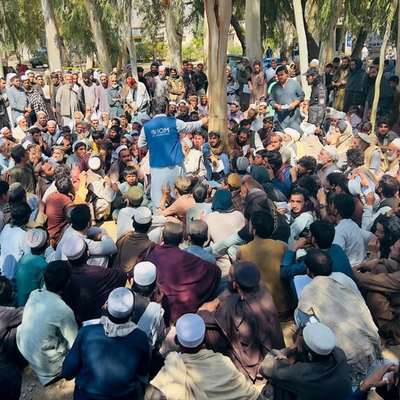
French member of European Parliament Mounir Satouri said negotiations with the Taliban over the return of Afghan migrants contradict Europe's democratic principles and fundamental values.

He argued that the talks also conflict with the EU's official policy of not recognising the Taliban.

In an article published on the Europe Écologie website, Satouri wrote that no change to this position had been discussed by the EU Foreign Affairs Council or approved by the European Parliament.

He added that, in exchange for cooperation on migrant returns, the Taliban had demanded permission to station their representatives in European embassies and the resumption of economic assistance.

The French MEP stressed that intense anti-immigration sentiment was no longer confined to right-wing and far-right governments but had also spread to other administrations.

Satouri cited the Social Democratic government of Mette Frederiksen in Denmark and the coalition government of Friedrich Merz in Germany, which includes the Social Democrats, as examples.

He argued that this trend had led these governments, and subsequently the European Commission, to undermine fundamental principles that had long been central to the development of a democratic Europe.

Satouri wrote that if European governments were willing to negotiate with the Taliban to return Afghan migrants despite the group's widespread human rights violations, they might apply the same logic to other countries in the future.

He argued that the same approach could eventually lead European governments to negotiate with Vladimir Putin or Iran's leadership over the return of Russian and Iranian nationals, a prospect he described as deeply contradictory.

Satouri said that, for this reason, he had asked Johannes Luchner, Deputy Director-General responsible for migration at the European Commission and organiser of the Brussels meeting, to explain the negotiations during a 5 November session of the European Parliament's Subcommittee on Human Rights.

He said Richard Bennett, the UN Special Rapporteur about human rights in Afghanistan, a representative of the UN High Commissioner for Refugees and Amnesty International's South Asia specialist also attended the session.

According to Satouri, the other participants could do little more than acknowledge the catastrophic human rights situation in Afghanistan, particularly the conditions facing women, five years after the Taliban returned to power.

Referring to the human rights situation in Afghanistan, he said the Taliban had promised in 2021 to respect the right of women and girls to education but had failed to fulfil that commitment.

The French MEP also highlighted the forced return of six million Afghan migrants from Iran and Pakistan since 2023, arguing that returning Afghan asylum seekers from Europe to a country facing a human rights crisis and severe restrictions on women was irresponsible and inhumane.

Satouri described engagement with the Taliban as contradictory and incompatible with Europe's democratic and human rights values.

He stressed that the European Parliament must stand against what he described as European governments' and the European Commission's departure from the EU's democratic principles.

Managing Millions Of Afghan Returnees Is A Major Challenge, Says UN Envoy

Nov 9, 2026, 09:44 GMT+0
100%

Abdul Salam Hanafi, the Taliban's Deputy Prime Minister, discussed the challenges facing Afghan returnees and efforts to support them with Rabab Fatima, head of UNAMA and the UN Secretary-General's Special Representative for Afghanistan.

In a statement issued on Monday, 9 November, the Taliban's Presidential Palace said Fatima had described managing the challenges facing returnees in Afghanistan as a major concern.

According to the statement, Abdul Salam Hanafi said the Taliban were making efforts to address the problems facing more than eight million people who had returned to Afghanistan and were committed to full cooperation in this regard.

He added that relevant organisations should also work together to protect the rights of returnees, create employment opportunities and provide them with shelter.

According to the Taliban, Rabab Fatima expressed hope that efforts to promote Afghanistan's economic development and reconstruction would continue.

UNAMA has not yet commented on the meeting or issued a statement about it. The Taliban have also not released any photographs or videos of the meeting.

Previously, Mawlawi Kabir, the Taliban's Minister of Refugees and Repatriation, had also discussed humanitarian assistance for Afghan returnees with Rabab Fatima.

According to the International Organization for Migration (IOM), approximately 6.5 million Afghans returned to the country from Iran and Pakistan between mid-September 2023 and 31 August 2026. The figure includes both voluntary returnees and those deported from the two countries.

On 30 October 2026, the IOM announced that more than 1.3 million Afghans had returned from Iran and Pakistan during the current calendar year alone.

According to the organisation's figures, more than 6.6 million returns from the two countries have been recorded since September 2023.

The IOM said approximately 2.9 million Afghans returned to the country in 2025 alone.

The large-scale return of Afghans, particularly the deportation of migrants from Iran and Pakistan, has placed considerable pressure on Afghanistan's resources, public services, labour market and shelter facilities.

24 Nations Gather in Samarkand to Combat Terrorist Use of AI

Nov 7, 2026, 17:33 GMT+0
100%

The first Shanghai Plus security experts' meeting was held in Samarkand, bringing together more than 180 representatives from 24 countries and international organisations. Participants warned of terrorist groups misusing AI and digital platforms.

Participants emphasised the need to develop joint strategies to counter security threats in the digital age.

Uzbek President Shavkat Mirziyoyev, in a message to the meeting's participants, stressed the importance of information security, protecting critical infrastructure and strengthening countries' resilience against emerging forms of threats.

According to Mirziyoyev, while digital technologies have created new opportunities for development, they have also introduced new vulnerabilities that require a coordinated regional response.

During the meeting, held on Friday, 6 November, representatives of participating countries shared their national experiences in countering terrorist activities and examined measures to prevent the spread of extremism online.

Discussions focused on how terrorist groups use artificial intelligence, digital platforms and other technological tools for propaganda, recruitment and the coordination of illegal activities.

At the meeting, heads of delegations issued a joint statement agreeing to conduct research into the changing nature of terrorist threats driven by emerging technologies, exchange experiences in preventive measures and organise specialised training programmes.

The Taliban's intelligence chief, who attended the meeting, called on technology companies, including Telegram and TikTok, to cooperate with the Taliban administration in combating ISIS.

Abdul Haq Wasiq claimed that Islamic State Khorasan Province (ISIS-K) uses these companies' platforms for communication, financing and ideological propaganda.

On the same day, another meeting between Central Asian leaders and the King of Jordan was held in Astana, the capital of Kazakhstan.

The meeting, which marked the first Aqaba Process gathering in Central Asia, focused on ensuring security in the field of artificial intelligence, preventing its use for terrorist and extremist purposes, and strengthening regional and international cooperation against threats posed by emerging technologies.

700 Health Centres Closed In Afghanistan In One Year, Says UN

Nov 7, 2026, 11:59 GMT+0
100%

Bruno Lemarquis, the UN Deputy Special Representative for Afghanistan, said more than 700 health facilities, accounting for 40% of the country's primary healthcare centres, have closed between 2025 and 2026 due to cuts in international funding.

Speaking at a press briefing in New York on Friday, 6 November, Lemarquis said the Taliban's restrictions on women and girls had severely limited their access to education, employment, public services and participation in social life.

He said the Taliban's continued restrictions on the fundamental rights of women and girls had further deepened Afghanistan's international isolation.

The UN Deputy Special Representative added that the ban on Afghan female employees entering UN premises, imposed in September 2025, remained in place and had also affected the organisation's operations.

Lemarquis warned that declining international funding had made Afghanistan's humanitarian situation increasingly difficult. According to him, humanitarian assistance funding had fallen from $2 billion in 2023 to $570 million in 2026.

He said that although the number of people requiring assistance was expected to decline next year, the severity of humanitarian needs would increase by approximately 30%.

According to Lemarquis, around 6.7 million people have returned to Afghanistan from neighbouring countries, particularly Iran and Pakistan, since 2023, placing considerable pressure on the economy, public services and host communities.

He stressed that returnees needed identity documents, shelter, employment opportunities and access to essential services.

Addressing the economic situation of farmers, Bruno Lemarquis said reductions in poppy cultivation would not be sustainable without providing alternative livelihood opportunities.

He warned that some farmers might return to poppy cultivation because of insufficient economic support and inadequate income from alternative crops.

The UN Deputy Special Representative also cautioned that rising poverty, weak public services and failures to reintegrate returnees could have consequences beyond Afghanistan's borders, affecting security, regional stability and migration patterns.

He emphasised that the international community must not abandon Afghanistan under the current circumstances and that international assistance should continue.