• العربية
  • پښتو
  • فارسی
BrandBrand
  • Afghanistan
  • Sport
  • Analysis
  • Markets
  • Afghanistan
  • Sport
  • Analysis
  • Markets
  • Theme
  • Language
    • العربية
    • پښتو
    • فارسی
  • Afghanistan
  • Sport
  • Analysis
  • Markets
All rights reserved for Volant Media UK Limited
volant media logo

Taliban Press Afghan Journalists To Promote Their 'Achievements'

Nov 24, 2026, 11:48 GMT+0

The Taliban’s Ministry of Information and Culture says officials in Ghor and Kunduz provinces have urged local media representatives and journalists to highlight the group’s “achievements” and activities.

In a statement issued on Tuesday, 24 November, the ministry said the training seminars had been organised in cooperation with the provincial directorates of information and culture in Ghor and Kunduz and the United Nations Assistance Mission in Afghanistan (UNAMA).

The Taliban’s provincial directorates said the seminars aimed to improve access to information and strengthen coordination between media outlets and Taliban institutions.

According to the statement, officials from the two directorates urged journalists to highlight the Taliban’s achievements and publicise them through their respective media outlets.

“Now that more facilities and opportunities are available for media outlets and journalists than ever before, journalists need to effectively highlight the achievements and activities of the Islamic system through the media,” the statement said.

It added that officials had emphasised the importance of journalists and media outlets in strengthening communication between the public and the government, urging journalists to fulfil their professional and media responsibilities effectively.

According to the statement, UNAMA press officers also briefed participants on journalism, media operations, professional standards and journalists’ responsibilities during the seminars.

Organisations supporting journalists and media freedom have repeatedly criticised the Taliban’s treatment of the media and their widespread use of media outlets as instruments of propaganda.

These organisations have described the use of media outlets for propaganda purposes as contrary to professional journalistic standards and media laws.

In its latest monthly report, the Afghanistan Media Support Organisation (AMSO) said the Taliban had intensified pressure on journalists, adding that in some areas, journalists were being encouraged to publish the Taliban’s views on political and military issues.

Most Viewed

What Happened At The Afghan Women's Summit In Madrid
1

What Happened At The Afghan Women's Summit In Madrid

2

Taliban Transfer 105 Prisoners, Mostly Former Soldiers, To Kabul, Say Sources

3

Afghan Activists In France Call For Recognition Of Gender Apartheid In Afghanistan

4

Taliban Show No Signs Of Easing Restrictions On Women, Says UN Envoy

5

Spain Will Never Recognise Taliban Government, Says Foreign Minister

•
•
•

More Stories

How Secure Is The Taliban's Grip On Afghanistan?

Nov 24, 2026, 10:12 GMT+0
100%

More than five years after returning to power in Afghanistan, the Taliban continue to exercise control across the country. However, the group faces a series of challenges that could shape the future of its rule.

The geographical expansion of armed opposition activities, the concentration of power in Kandahar, the economic crisis, the exclusion of women and the absence of meaningful political participation are among the most significant challenges.

This article examines the durability of Taliban rule, the capabilities of opposition groups and the factors that could determine Afghanistan’s political future.

Shahzaib Khan, a lecturer at the University of Sindh and an international relations researcher, has examined the geographical expansion of armed opposition to the Taliban in an article published by Eurasia Review. He argues that these developments have challenged the Taliban’s narrative of complete control over Afghanistan.

Political Significance Of The Fall Of Yaftal-e Payan

The brief capture of the district centre of Yaftal-e Payan in Badakhshan province by armed opponents of the Taliban was arguably more significant politically than militarily.

According to Khan, the incident did not alter the balance of power in Afghanistan, but it undermined the Taliban’s narrative of complete control over the country.

In recent years, armed opposition to the Taliban has largely been associated with Panjshir, the Andarab valleys of Baghlan and parts of northeastern Afghanistan.

The Taliban have portrayed their armed opponents as fragmented groups incapable of establishing a nationwide organisational structure. However, reports of opposition activity in Badakhshan, Kapisa, Parwan and Kabul have challenged that narrative.

The incident in Yaftal-e Payan also exposed potential vulnerabilities in the Taliban’s district-level administration.

Khan argues that control over provincial capitals and major highways does not necessarily mean that the Taliban have an equal capacity to maintain security across every district.

The Proliferation Of Anti-Taliban Opposition Groups

The emergence of new opposition groups presents both political opportunities and challenges.

The central question is whether these groups can overcome their differences and agree on a viable national political programme.

Opposition to the Taliban’s repressive policies alone is insufficient to earn the trust of the Afghan people. Citizens need to understand where opposition groups stand on the country’s future political system, women’s rights, the protection of ethnic and religious minorities, institutional transparency and preventing a recurrence of the corruption that plagued the former government.

Afghanistan’s experience of decades of conflict and violent transfers of power places an even greater political responsibility on the Taliban’s opponents.

The manner in which power would be transferred, the prevention of civil war, judicial independence and guarantees for citizens’ rights are among the issues on which opposition groups must offer clear answers.

Policies That Fuel Opposition

Through their own policies, the Taliban are creating conditions that could fuel growing opposition to their rule.

In reports published this year, the United Nations has highlighted continuing restrictions on women’s education and employment, arbitrary detention, corporal punishment and mounting pressure on civil and religious freedoms.

Depriving half the population of fundamental rights, suppressing dissent and preventing citizens from participating in political life restrict the peaceful avenues through which grievances can be expressed.

Repression may reduce visible public protests in the short term, but it should not be mistaken for the disappearance of public discontent.

The Economy And The Durability Of Taliban Rule

Alongside security and political challenges, Afghanistan’s economic situation is another important factor in assessing the future of Taliban rule.

Declining international aid, the large-scale return of Afghan migrants, restrictions on women’s employment and limited job opportunities have placed additional pressure on households across the country.

More than five years after the Taliban returned to power, their responsibility for the country’s economic conditions and the quality of public services has grown.

As time passes, it will become increasingly difficult for the Taliban to attribute Afghanistan’s current economic problems to the failures of the former government.

Has Afghanistan Really Achieved Stability?

Defining stability solely in terms of the absence of large-scale warfare or clearly established front lines fails to provide a complete picture of Afghanistan’s situation.

Control over government buildings and administrative centres does not necessarily translate into public acceptance of those in power.

Afghanistan continues to face restrictions on political participation, the suppression of dissent and the denial of fundamental rights to a substantial proportion of its population.

Two Potential Miscalculations

The international community must avoid two potential miscalculations when assessing the situation in Afghanistan.

The first is to exaggerate the capabilities of armed opposition groups and interpret every security incident as a sign that Taliban rule is approaching collapse.

The second is to overlook the underlying political and social grievances that threaten long-term stability.

Any international effort to resolve Afghanistan’s crisis that disregards repression, political exclusion and the need for an inclusive political system risks delaying the achievement of lasting stability.

The expansion of the Taliban’s diplomatic relations with regional countries should not be equated with growing domestic legitimacy.

Foreign governments conduct their relations on the basis of national interests and security and economic considerations. The extent to which a political system enjoys acceptance among its own population is a separate question.

The Future Of Taliban Rule

It remains unclear whether fragmented opposition groups can evolve into a cohesive national movement with an effective organisational structure and a political programme that commands public support.

The Taliban continue to control Afghanistan’s formal state institutions, but they have been unable to eliminate opposition to their rule. Growing discontent across different parts of the country could increase the cost of maintaining power.

Beyond these challenges, the concentration of authority in the hands of Taliban leader Hibatullah Akhundzada and the absence of a clear mechanism for the transfer of power raise further questions about the future of the group’s political structure.

Even if armed opposition groups remain weak, uncertainty over the succession of the Taliban’s leader, potential internal divisions, economic difficulties and social discontent could all shape the future of Taliban rule.

Pakistan Should Pursue Dialogue With Taliban, Not Military Action, Says Former Envoy

Nov 24, 2026, 07:20 GMT+0
100%

Pakistan’s former ambassador to Afghanistan has said military action is not the solution to disputes between Islamabad and the Taliban, urging both sides to address their security concerns through dialogue and engagement.

Mansoor Ahmad Khan called for the establishment of a joint security mechanism, the reopening of border crossings and the expansion of bilateral trade.

In an interview with a Pakistani media outlet, Khan said efforts to resolve security disputes had stalled after Pakistan reverted to a military approach.

He stressed that security concerns, including the activities of Tehreek-e-Taliban Pakistan (TTP) and the Baloch Liberation Army (BLA), should be addressed through constructive engagement with the Taliban.

Khan said the two sides had previously discussed establishing a verifiable security mechanism but had failed to reach an agreement. He added that Türkiye, Qatar, Saudi Arabia and China had also sought to bridge differences between the two sides.

The former ambassador proposed establishing a joint intelligence-sharing mechanism through which both sides could immediately exchange verified information about terrorist attacks and plots.

He stressed that Pakistan should also address the Taliban’s security concerns.

Khan said implementing such a mechanism for one to three years could help build mutual trust between the two countries.

He also called for the immediate reopening of border crossings, saying their continued closure had exacerbated hardships for ordinary people and brought bilateral trade to a standstill.

According to Khan, trade between Pakistan and Afghanistan, which has the potential to reach between $3 billion and $7 billion, has fallen to around $500 million, with some trade being redirected through Iran and other countries in the region.

Khan stressed that decades-long disputes between the two countries could not be resolved through military action, but instead required political engagement, practical solutions and economic cooperation.

His remarks come as relations between Islamabad and the Taliban remain strained following cross-border and air strikes, disputes over TTP activities and the continued closure of border crossings.

Taliban Transfer 105 Prisoners, Mostly Former Soldiers, To Kabul, Say Sources

Nov 23, 2026, 14:49 GMT+0
100%

The Taliban have transferred 105 prisoners from Kunduz, Takhar and Badakhshan provinces to Pul-e-Charkhi Prison in Kabul, according to sources.

Most are former members of Afghanistan's security forces detained over alleged links to anti-Taliban resistance groups.

Sources told Afghanistan International that the transfers took place on 16 and 17 November, involving 40 prisoners from Takhar, 40 from Badakhshan and 25 from Kunduz.

Some of the prisoners have been sentenced to more than 10 years in prison, the sources said.

The transfers have raised concerns among detainees' families, some of whom say they have been unable to establish the whereabouts of their relatives.

Relatives of Azim Warsaji, a former member of Afghanistan's security forces previously held in Kunduz, told Afghanistan International that they had received no information about his condition or whereabouts since his transfer to Kabul.

They said his family had spent the past week searching for him at Bagram and Pul-e-Charkhi prisons without success.

His relatives expressed fears that Warsaji could face reprisals from Taliban officials.

According to the family, Mohammad Aka, a Taliban commander in Kunduz and former commander of the group's 217th Omari Army Corps, accompanied Warsaji during his transfer from prison.

Warsaji was detained on suspicion of attacking forces under Mohammad Aka's command, his relatives said.

The Taliban have accused him of killing at least 11 of their fighters in an attack in 2022 in the Hawz-e Wighnan area of Warsaj district, Takhar province.

His relatives have appealed to international organisations to help establish his whereabouts, clarify his condition and ensure that his family can obtain information about where he is being held.

Sources attributed the prisoner transfers to Taliban concerns over increased activity by armed resistance groups and the possibility of attacks or unrest in provincial prisons.

They said these concerns had prompted the Taliban to move prisoners to Bagram and Pul-e-Charkhi prisons.

Meanwhile, a former detainee at a Taliban-run prison in Takhar described conditions there as dire, saying the facility was severely overcrowded.

The former prisoner told Afghanistan International that more than 2,000 people were being held at the prison, many of whom did not know why they had been detained.

According to the source, prisoners often spend months in detention without knowing when their cases will be reviewed.

Relatives of prisoners transferred from Badakhshan have also expressed concern, saying the move to Kabul has made it more difficult to visit detainees and obtain information about their welfare.

They said families had previously been able to visit provincial prisons more easily, but the distance to Kabul and the cost of travel now posed significant obstacles.

Most of those transferred are former members of Afghanistan's security forces, whose families are already struggling with severe financial hardship.

What Happened At The Afghan Women's Summit In Madrid

Nov 23, 2026, 13:21 GMT+0
100%

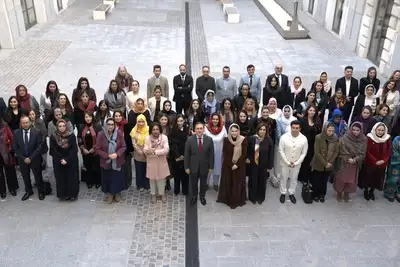
The fourth HearUs Summit brought together Afghan women leaders, United Nations officials, diplomats and civil society representatives in Madrid to discuss accountability for the Taliban, the protection of Afghan women's rights and international mechanisms for achieving justice.

The two-day gathering, held on Sunday and Monday, 22 and 23 November, at Spain's Ministry of Foreign Affairs was organised in partnership with Women for Afghanistan.

Held under the theme "Afghan Women's Leadership in Achieving Justice and Peace through Accountability", the summit brought together around 70 participants, including Afghan women and men, UN officials, diplomats, researchers, religious scholars and civil society representatives.

Why Was The Summit Held?

The fourth HearUs Summit took place more than five years after the Taliban returned to power in Afghanistan, where women and girls continue to face sweeping restrictions on education, employment, freedom of movement and participation in political and public life.

Organisers said the gathering aimed to strengthen efforts to hold the Taliban accountable for human rights violations, promote women's participation in political and peace processes, and improve coordination among governments, international organisations and civil society.

Participants stressed that lasting peace and stability in Afghanistan could not be achieved without meaningful participation by women and accountability for human rights abuses.

They urged the international community to maintain its support for justice, women's rights and international accountability mechanisms relating to Afghanistan.

What Did The Speakers Say?

Spanish Foreign Minister José Manuel Albares Bueno reaffirmed that his country would not recognise the Taliban government and stressed that Afghan women's rights must not become a bargaining chip in political negotiations.

He also expressed support for recognising gender apartheid under international law and called for investigations into abuses committed against Afghan women.

Pramila Patten, the UN Secretary-General's Special Representative on Sexual Violence in Conflict, warned that there were no signs of improvement in the Taliban's treatment of women and girls.

Referring to reports of forced marriage, sexual violence and increasingly severe restrictions, she called for stronger international efforts to document abuses and preserve evidence for future accountability.

Patten also warned that funding shortages were undermining programmes intended to support Afghan women.

Another speaker, Navanethem "Navi" Pillay, a South African jurist and former UN High Commissioner for Human Rights, addressed the summit in a video message.

Drawing parallels with the struggle against racial apartheid in South Africa, Pillay expressed confidence that efforts to end what she described as gender apartheid in Afghanistan would ultimately succeed.

She supported international efforts to hold Taliban leaders accountable and stressed the importance of pursuing justice for victims of human rights violations.

Fawzia Koofi, chair of the board of Women for Afghanistan and a former member of Afghanistan's parliament, described the situation in Afghanistan as one of the world's most severe human rights crises.

She criticised the Taliban's exclusionary system of government, describing it as a government "of the Taliban, by the Taliban and for the Taliban".

Koofi urged the international community to move beyond expressions of sympathy and take concrete steps towards accountability.

One Million Signatures Campaign

One of the summit's key initiatives was the launch of the One Million Signatures campaign, aimed at mobilising international support for the recognition of gender apartheid and increasing pressure on the Taliban to restore women's rights.

The initiative was presented by Katrín Jakobsdóttir, Iceland's former prime minister. Spanish Foreign Minister José Manuel Albares also expressed support for the campaign.

The campaign, known as "One Million Voices for the Women and Girls of Afghanistan", calls on the United Nations and governments worldwide to refrain from recognising the Taliban and take concrete action to restore the rights of Afghan women and girls.

It also advocates women's meaningful participation in political decision-making concerning Afghanistan's future.

The organisers of the fourth HearUs Summit prepared the campaign statement and launched the initiative to collect one million signatures in support of Afghan women's and girls' rights.

On the sidelines of the summit, a women's rights activist presented Albares with photographs of Bibi Sediqa and Mozhda Uzbek, two women reportedly detained by the Taliban, along with letters from their families, and urged him to help secure their release.

In response, Albares described the situation facing Afghan women as completely unacceptable and reaffirmed Spain's commitment to supporting their freedom and security and pursuing accountability for abuses committed by the Taliban.

Panel Discussions And Specialist Sessions

Following the opening ceremony, participants took part in four specialist panel discussions covering education and women's resilience, employment and economic empowerment, accountability and justice, women's rights in Islam, and women, peace and security.

The summit programme also included plans to present an accountability framework for Afghanistan, intended to coordinate legal, political and international efforts to hold perpetrators of human rights violations accountable.

The discussions focused on strengthening cooperation among Afghan women leaders, international institutions and governments, and identifying practical measures to advance women's rights and participation in Afghanistan's future.

Spain's Support For Afghan Women

The HearUs initiative was launched in February 2022 to amplify Afghan women's voices in international forums and promote their meaningful participation in decisions affecting their country.

The fourth summit was held more than five years after the Taliban's return to power in August 2021, with restrictions on Afghan women and girls remaining in place.

Spain adopted a feminist foreign policy approach in 2021, placing gender equality, women's political participation and the protection of women's rights among its foreign policy priorities.

Under this approach, Madrid has become a prominent international supporter of Afghan women's rights, hosting successive HearUs conferences and advocating access to education, employment and political participation for women and girls in Afghanistan.

Taliban Show No Signs Of Easing Restrictions On Women, Says UN Envoy

Nov 23, 2026, 11:12 GMT+0
100%

Pramila Patten, the UN Special Representative on Sexual Violence in Conflict, warned at the fourth HearUs Summit in Madrid on Monday that the Taliban's restrictions on Afghan women and girls continued to deepen, calling for stronger international action to ensure accountability.

Addressing the gathering on 23 November, Patten condemned the systematic discrimination faced by women and girls in Afghanistan and stressed the need to document violations and preserve evidence for future legal proceedings.

She said no other country had imposed such comprehensive and systematic restrictions on half its population solely on the basis of gender.

Patten warned that the violations taking place in Afghanistan could amount to crimes against humanity and urged the international community to recognise their gravity.

Her remarks came against a backdrop of documented sexual violence under Taliban rule. In its 2026 report on conflict-related sexual violence, the United Nations recorded cases of rape, gang rape, forced marriage and other abuses attributed to Taliban de facto officials, including security personnel.

Afghan women and girls also continue to face severe restrictions on education, employment, freedom of movement and participation in public life.

Patten stressed that accountability required credible evidence of violations and efforts to identify those responsible.

She argued that holding perpetrators accountable was not an act of revenge but a refusal to accept that anyone could remain above the law.

The UN representative also highlighted the importance of the independent investigative mechanism established by the UN Human Rights Council in October 2025 to collect, consolidate, preserve and analyse evidence of serious violations of international law in Afghanistan.

She said the mechanism's effectiveness would depend on political will, sustained international support and adequate resources.

Patten warned against praising the courage of Afghan women while failing to provide them with the protection and resources they needed.

Funding shortages have already affected services for survivors of gender-based violence in Afghanistan. The United Nations has reported the closure of hundreds of health facilities and support centres, further limiting access to assistance.

The UN envoy urged continued international support for Afghan women and stressed that evidence of abuses and networks providing assistance must be protected.