• العربية
  • پښتو
  • فارسی
BrandBrand
  • Afghanistan
  • Sport
  • Analysis
  • Markets
  • Afghanistan
  • Sport
  • Analysis
  • Markets
  • Theme
  • Language
    • العربية
    • پښتو
    • فارسی
  • Afghanistan
  • Sport
  • Analysis
  • Markets
All rights reserved for Volant Media UK Limited
volant media logo

Australia Proposes Adding ‘Gender Apartheid’ To Crimes Against Humanity Convention

Nov 27, 2026, 15:22 GMT+0

Australia’s Foreign Ministry told Afghanistan International that Canberra has proposed formally including gender apartheid as a crime in the Convention on Crimes Against Humanity, which is currently under negotiation.

A spokesperson for Australia’s Foreign Ministry said the country condemns the Taliban’s disregard for the human rights and fundamental freedoms of women and girls in Afghanistan, as well as the group’s sustained and systematic campaign to oppress them and exclude women from public life.

The spokesperson stressed to Afghanistan International that the human rights of women and girls are universal and belong to all women and girls, wherever they are in the world.

The spokesperson said Australia was aware that UN experts and civil society organisations had described the Taliban’s treatment of women and girls as ‘gender apartheid’ to highlight the severity of their human rights situation in Afghanistan.

The Australian official added that Canberra remains committed to working with civil society and international partners to hold perpetrators of women’s rights violations accountable and ensure Afghan women and girls participate in shaping their country’s future.

The spokesperson said Australia had proposed formally including the crime of gender apartheid in the Convention on Crimes Against Humanity, which is currently being negotiated.

Australia, alongside Canada, Germany and the Netherlands, is pursuing separate legal action to ensure accountability for violations of the Convention on the Elimination of All Forms of Discrimination against Women (CEDAW).

Australia has received concerns that international law does not adequately address situations in which a state-designed system institutionalises gender discrimination across political, economic, legal, cultural and social spheres.

For this reason, Australia has proposed formally incorporating the crime of gender apartheid into the Convention on Crimes Against Humanity to ensure international law can address the most serious and systematic forms of discrimination and oppression anywhere in the world.

Australia’s proposal on gender apartheid and the joint initiative concerning CEDAW are two separate actions, both reflecting the country’s commitment to holding those responsible for the systematic oppression of women and girls accountable.

Efforts by several countries and human rights advocates to secure recognition of gender apartheid in Afghanistan have intensified.

Spain and France have described the Taliban’s policies towards Afghan women and girls as gender apartheid. The European Parliament has also said the Taliban has institutionalised gender apartheid in Afghanistan.

Britain says it is exploring the possibility of developing international law to address gender apartheid, while Germany has said violations of women’s rights in Afghanistan may amount to crimes against humanity.

Switzerland has also condemned the systematic repression of Afghan women and their exclusion from education, employment and public life.

Despite these efforts, gender apartheid has yet to be recognised as a distinct crime under international law.

Most Viewed

Taliban Opponents Propose Elected Council To Draft Afghanistan’s New Constitution
1

Taliban Opponents Propose Elected Council To Draft Afghanistan’s New Constitution

2

Qatar To Serve As Canada’s Protecting Power In Afghanistan

3

Trapped In Abusive Marriages: Afghan Women Struggle For Divorce Under Taliban Rule

4

Russia Praises Taliban’s Role In Maintaining Central Asian Security

5

Taliban Delegations Could Visit Russia Soon For Economic Talks, Says Kabulov

•
•
•

More Stories

Taliban Forces Kill Six Young Men From Panjshir After They Fail To Stop At Checkpoint

Nov 27, 2026, 13:07 GMT+0
100%

Informed sources told Afghanistan International that Taliban forces shot and killed six young men from Panjshir in Kabul’s Karte Naw neighbourhood after they failed to stop at a checkpoint.

A Taliban police spokesperson in Kabul had earlier claimed that six alleged robbers had been killed in an armed confrontation with the group’s forces.

Speaking on condition of anonymity on Friday, 27 November, sources said the six men were originally from Panjshir province and were related to one another. They were returning from a wedding when Taliban forces killed them in Kabul’s eighth police district after they failed to stop at a checkpoint.

According to the sources, one of the men was carrying a pistol, and the group avoided stopping at the checkpoint for fear of being found in possession of a firearm. Taliban forces reportedly opened fire on their vehicle after it failed to stop.

A relative of the victims said the vehicle was powered by gas and that gunfire caused its gas cylinder to explode, setting the vehicle ablaze. The relative alleged that Taliban forces also shot at occupants as they attempted to get out of the vehicle.

Eyewitnesses said the victims’ bodies were burnt and bore gunshot wounds.

Khalid Zadran, spokesperson for the Taliban’s police command in Kabul, claimed on Wednesday that the group’s forces had recovered three pistols and two knives from the men following an armed confrontation. Without disclosing their identities, he alleged that they had repeatedly ignored police orders to stop.

According to information obtained by Afghanistan International, the incident occurred in the Sar-e Tapa area of Karte Naw, in Kabul’s eighth police district, in the early hours of Wednesday.

A relative said the six men were friends and relatives. He identified five of the victims as Feroz, 22, from Bagh-e Surkh village; Farzad Ayoubi, a father of two from Darkhil village in Rokha district; Khodadad, from Gulabkhil village in Abshar district; Zubair, from Manjhor village in Bazarak; and Nawaz, from Badqol village.

A relative of the victims said the Taliban withheld their bodies from their families for 24 hours. He further alleged that the Taliban had required the families to pledge not to speak to the media about the incident.

In a statement, the Panjshir Studies Centre condemned the incident, describing it as a targeted killing. The organisation stressed that no accusation could justify killing individuals without a fair trial.

Taliban Call For Regular Freight Transport Links With Russia Via Turkmenistan

Nov 27, 2026, 11:59 GMT+0
100%

The Taliban’s ambassador to Russia has called for the establishment of regular freight transport links between Afghanistan, Russia and Turkmenistan.

Gul Hassan made the proposal at the fourth Astrakhan International Forum, entitled “International North–South Transport Corridor: New Horizons and Opportunities”.

The ambassador called for broader cooperation in transport and logistics, including the development of multimodal transport services, closer cooperation between freight transport companies and the establishment of commercial and logistics hubs.

He also called for increased trade in agricultural and food products, saying Afghanistan sought to expand exports of fresh and dried fruit and other agricultural produce to Russia while importing grain, vegetable oils and other commodities.

He added that Afghanistan was interested in attracting Russian investment in textile manufacturing, agricultural processing, construction materials production and mineral extraction.

**Relations Between Russia And The Taliban**

Relations between Moscow and the Taliban have gradually expanded in recent years. Following the Taliban’s return to power in August 2021, Russia maintained diplomatic and economic contacts with the group despite having designated it a terrorist organisation.

On 3 July 2025, Russia became the first country to formally recognise the Taliban government. The decision followed a ruling by Russia’s Supreme Court in April that year suspending the ban on the Taliban’s activities. Moscow said the move could pave the way for broader bilateral cooperation, particularly in trade and counterterrorism.

Russia has also emphasised the importance of expanding security, economic and trade cooperation with the Taliban in recent months.

In May 2026, Sergei Shoigu, secretary of Russia’s Security Council, said Moscow was working towards establishing a comprehensive partnership with the Taliban, with discussions covering security, trade, cultural and humanitarian cooperation.

As part of these efforts, Russian Deputy Prime Minister Alexei Overchuk visited Kabul on 12 November 2026, accompanied by a delegation of more than 70 Russian business representatives.

During the visit, Taliban officials invited Russian companies to invest in mining, infrastructure, agriculture, transport and manufacturing. They also called on Moscow to facilitate access for Afghan products to Russian markets and help reduce transport and transit costs.

According to Overchuk, bilateral trade more than doubled in the first eight months of 2026 compared with the same period a year earlier, exceeding $349 million.

The two sides have also expressed interest in expanding cooperation in freight transport, logistics, agriculture and the establishment of fertiliser production facilities in Afghanistan.

Despite the expansion of these relations, Russia remains the only country to have formally recognised the Taliban government. Alongside its economic interests, Moscow regards security cooperation and efforts to counter militant groups, particularly Islamic State’s Khorasan Province (ISIS-K), as important elements of its engagement with the Taliban.

The fourth Astrakhan International Forum began on Wednesday, 25 November, and runs until Friday, 27 November. The event aims to facilitate Russian companies’ access to markets in Iran, Iraq, Afghanistan, the Middle East, East Africa and India.

Violations Of Afghan Women’s Rights May Constitute Crimes Against Humanity, Says Germany

Nov 27, 2026, 07:37 GMT+0
100%

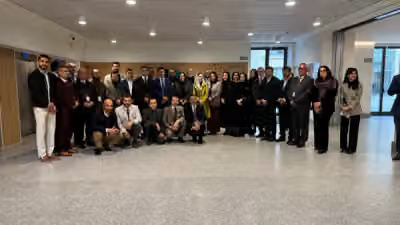
Germany’s Federal Foreign Office has condemned violations of women’s rights in Afghanistan, telling Afghanistan International that systematic violation of rights of Afghan women and girls may constitute gender-based persecution, a crime against humanity under the Rome Statute.

In response to a question from Afghanistan International on Thursday, 26 November, the ministry condemned gender discrimination in Afghanistan, noting that persecution on gender grounds is recognised as a crime against humanity under the Rome Statute of the International Criminal Court (ICC). Afghanistan has been a state party to the statute since May 2003.

The ministry said the systematic and structural violation of the rights of women and girls in Afghanistan could amount to persecution on gender grounds.

Several human rights organisations and women’s rights activists have described the restrictions imposed by the Taliban on women and girls as gender apartheid and have called for its recognition as a distinct crime under international law.

In its response, however, the German Foreign Office did not characterise the Taliban’s policies towards women and girls as gender apartheid.

French Foreign Minister Jean-Noël Barrot described the Taliban’s treatment of women and girls as gender apartheid on Tuesday, calling it the worst form of segregation against women and girls of this century. Spain has also previously described the situation in Afghanistan as gender apartheid and supports its criminalisation under international law.

The German Foreign Office stressed that Berlin does not recognise the Taliban administration as Afghanistan’s legitimate government. It said Germany’s contacts with the Taliban were conducted at a technical level and that Berlin consistently emphasised the need to improve the human rights situation in Afghanistan, particularly the protection of the rights of women and girls.

The ministry said Germany supported international efforts to improve the human rights situation in Afghanistan, including the United Nations-led Doha process.

Berlin also continues its efforts to ensure that Afghanistan fulfils its obligations under the Convention on the Elimination of All Forms of Discrimination against Women (CEDAW).

Germany supported the establishment of an independent investigative mechanism for Afghanistan at the UN Human Rights Council and, according to the ministry, provided financial assistance to facilitate its establishment.

The mechanism is mandated to collect, consolidate, preserve and analyse evidence of international crimes and the most serious violations of international law in Afghanistan.

The German Foreign Office said it continued to support the mandate of Richard Bennett, the UN Special Rapporteur on the situation of human rights in Afghanistan.

It added that Germany would continue providing assistance to the Afghan people in accordance with humanitarian principles, ensuring that aid continues to reach women and children in need.

Taliban Seek Stronger Trade Ties With EU Despite Lack Of Diplomatic Recognition

Nov 26, 2026, 16:40 GMT+0
100%

Nooruddin Azizi, the Taliban’s minister of industry and commerce, met Nicola Bellomo, the European Union’s chargé d’affaires in Afghanistan, to discuss expanding trade relations and economic cooperation.

According to the Taliban, the two sides also stressed the importance of strengthening engagement with the private sector, increasing trade and promoting investment and industrial development.

The Taliban’s Ministry of Industry and Commerce said on Thursday, 26 November, that the discussions also covered support for businesses, the establishment of special export processing zones and the development of industrial parks.

During the meeting, Azizi expressed his ministry’s readiness to broaden economic cooperation with the EU and called for joint projects and programmes to support and develop Afghanistan’s private sector.

The Taliban’s efforts to strengthen economic ties with the EU come despite the bloc’s continued refusal to recognise the Taliban administration.

Thomas Frellesen, the EU’s special envoy for Afghanistan, said in an interview with Radio Azadi published on Wednesday that the bloc was not moving towards normalising relations with or recognising the Taliban. He stressed that technical and operational engagement with the group did not confer legitimacy on its administration.

Afghanistan continues to face significant economic challenges, including limited access to international financial networks, weak investment, poor export performance and inadequate industrial infrastructure.

The World Bank has identified limited access to finance, unreliable electricity and widespread informality as major obstacles to private sector development in Afghanistan. It has also noted that the lack of international recognition of the Taliban administration complicates efforts to mobilise investment on a larger scale.

The Taliban have repeatedly called on regional and international partners to expand economic and trade relations with Afghanistan to attract investment, boost exports and strengthen the country’s private sector.

However, international isolation, targeted sanctions against Taliban individuals and entities, and persistent structural and financial constraints continue to complicate efforts to attract foreign investment.

Russia Praises Taliban’s Role In Maintaining Central Asian Security

Nov 26, 2026, 14:38 GMT+0
100%

Zamir Kabulov, Russia’s special presidential envoy for Afghanistan, has said Moscow continues to cooperate with the Taliban on maintaining security in Central Asia.

He praised the Taliban’s contribution to regional security, saying the group was fulfilling its share of responsibility.

Speaking to Russia’s state news agency TASS on Thursday, 26 November, Kabulov said Russia’s security cooperation with Afghanistan had never ceased.

Asked about cooperation with the Taliban on maintaining security in Central Asia, Kabulov said Moscow had never suspended its efforts in this area and expressed gratitude to the Taliban for fulfilling their responsibilities.

He stressed that the Taliban were suppressing Islamic State (ISIS), which he said could pose a threat to Russia and Central Asian countries. Kabulov added that the Taliban authorities were conducting these operations at their own expense.

His remarks follow Russian Deputy Prime Minister Alexey Overchuk’s visit to Kabul on 12 November.

During the visit, Overchuk held talks with senior Taliban officials. He subsequently said Russian companies had signed a substantial package of contracts to supply grain, flour, medicines and military equipment to Afghanistan.

There has also been speculation about the possible expansion of undisclosed security cooperation between Russia and the Taliban. However, neither side has officially commented on any such expansion.

Kabulov added that Taliban delegations could visit Russia in the near future, saying the recent visit by a high-level Russian delegation to Kabul had generated considerable enthusiasm in Afghanistan.

Asked about the prospect of Taliban delegations travelling to Russia, Kabulov said such visits were entirely possible but would depend on the two sides reaching the necessary agreements.

He explained that the prospective visits would aim to secure specific contracts and agreements across various economic sectors.

The Russian envoy added that the high-level delegation’s visit to Kabul had opened up new opportunities and prospects, generating considerable enthusiasm and optimism in Afghanistan.

During his visit to Kabul, Overchuk held talks with the Taliban’s prime minister, deputy prime minister for economic affairs and foreign minister.