Five Killed As AFF Targets Taliban Outpost in Kabul
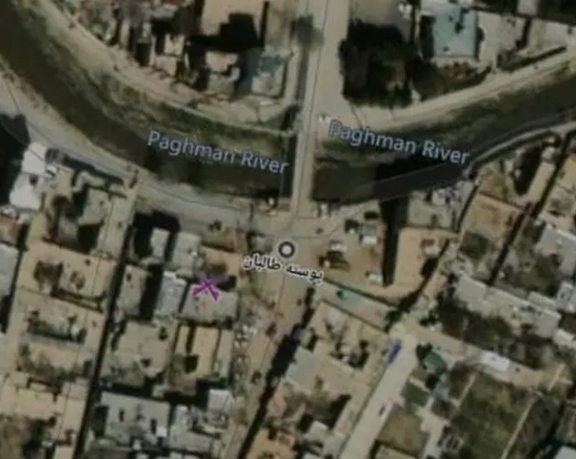
The Afghanistan Freedom Front (AFF) announced that the front’s forces have killed five members of the Taliban and wounded two others in an "operation" in district 3 of Kabul.
The Afghanistan Freedom Front (AFF) announced that the front’s forces have killed five members of the Taliban and wounded two others in an "operation" in district 3 of Kabul.
Local sources too confirmed hearing explosions and shooting in the area on Friday night.
In a statement, AFF added, "This operation, which lasted for 15 minutes, took place at a gathering of Taliban terrorists in district three of Kabul city.”
According to AFF’s statement, no casualties had been inflicted on the front’s fighters and there is a possibility that the casualties of the Taliban will increase.
The Taliban has not yet reacted to the incident.
A reliable source told Afghanistan International that unknown people threw two grenades towards the Taliban outpost and the Taliban fighters opened fire in response.

More than two thirds of the roughly 12,000 journalists in Afghanistan have abandoned their profession ever since the Taliban took over Kabul in August 2021, as per a new report by Reporters Without Borders (RSF).
It also added that over 80% of Afghanistan’s women journalists have had to stop working since August 15, 2021.
RSF stated that the media sector has been decimated in the past two years under the Taliban regime.
It stressed that more than half of the 547 media outlets that were registered in 2021 have since disappeared and of the 150 TV channels, fewer than 70 remain. It said that of the 307 radio stations, only 170 are still broadcasting and the number of news agencies has gone from 31 to 18, according to the Afghan Independent Journalists Association (AIJA).
RSF quoted Zarif Karimi, the director of NAI-Supporting Open Media in Afghanistan as saying that “nationwide the most impacted media outlets are the local ones”.
RSF’s South Asia bureau said, “On their own, these figures showing the extent of the Taliban destruction of the media would sicken anyone but that would be without taking account of the incredible resilience of Afghan journalists who, at home and abroad, battle daily to keep the flame of a free press alive.”
RSF said that the organisation stands at the side of the Afghan journalists and will provide them with emergency assistance and help them build a new free and independent journalism in Afghanistan.
The report also spoke about the challenges while reporting from the ground. It talked about self-censorship, harassment of journalists, arbitrary detentions by the Taliban and also how journalists are forced to comply with the “11 journalism rules” decreed in September 2021 – which, as RSF analysed at the time, opened the way to tyranny and persecution – and with the many other regulations restricting journalistic activity that followed.
The report said that faced by the relentless harassment of media personnel within Afghanistan since the Taliban takeover, many journalists have had to resign themselves to fleeing abroad.
The Assistance Desk at RSF’s international secretariat supported 86 visa applications by Afghan journalists seeking refuge in a third country in 2022. The report stated, “Since January 2023, the organisation has already supported 89 applications of this type. Support for political asylum applications is also continuing, with 36 media professionals assisted in 2022 and 15 since the beginning of 2023.”
Nai, supporting open media in Afghanistan, announced on Friday that the Taliban have detained five journalists in Afghanistan over the past week.
Nai called the Taliban’s detention of journalists "illegal" and urged the group to stop the arbitrary detention of Afghan journalists.
According to Nai’s statement, the Taliban detained Haseeb Hassas, a local reporter of Salam Watandar, in Kunduz province on Thursday.
Afghanistan Journalists Center also announced that the Taliban intelligence had arrested Faqir Mohammad Faqirzai and Jan Agha Saleh, journalists of Killid Radio, in Jalalabad city on Thursday.
It has been said that the Taliban members arrested and imprisoned Seyed Vahdatullah Abdali, a Bakhtar reporter, in Ghazni city on Sunday.
The Taliban have not reacted to the reports of the detention of Afghan journalists.
Nai had previously reported that more than 65 percent of journalists and media workers have lost their jobs in the past two years in Afghanistan.
Iraj Kakavand, the head of the Anti-Narcotics Police of Iran, said that drug production has increased in Afghanistan and that the country has become the main source of methamphetamine production.
Kakavand stressed that the increase in drug production has caused irreparable social damage at the international level.
According to Iranian Student News Agency (ISNA), the senior official of the Islamic Republic, while expressing concerns about the increase in the production of drugs, especially psychotropic drugs in Afghanistan, has emphasised on the need for more serious countering of drug tracking.
Kakavand had previously asked for Russia's support in counter-narcotics efforts in Afghanistan.
ISNA reported on Wednesday that Kakavand had asked Russia to cooperate in the exchange of information to fight drug trafficking from Afghanistan.
Mohsen Rohisefat, a former Iranian diplomat in Afghanistan, said that the dry lands along the course of the Helmand River near the borders of Iran have turned into green fields, and "drugs have even been cultivated in these lands”.
Rohisefat claimed that the Taliban use Iran’s share of water from the Helmand River to irrigate these dry lands.
This former Iranian official said that these farms have been seen through aerial images taken from the area.
According to Rohisefat, "This shows that [the Taliban] use all the water of Helmand River in these fields."
He explained that the Taliban have built a new diversion channel so that no more water will flow to Iran.
On Thursday, the Jomhouri-e-Islami daily quoted this former Iranian diplomat as saying that "begging will not make the Taliban provide water rights” from the Helmand River to Iran.
Earlier, Ali Salajegheh, head of Iran's Environment Organisation, said that the Taliban have released 15 million cubic meters of water instead of 850 million cubic meters of water that the group is obliged to release based on the water treaty between the two countries.
Meanwhile, in response to the question that was it a mistake to accept the Taliban embassy before Iran's water rights from Helmand River were received, Rohisefat claimed that "it was definitely a mistake”.
He said, "The people of Afghanistan are unhappy with the Taliban and do not want the group. Why should we accept the embassy of a minority group in Afghanistan that does not give any rights to its people and considers them as subjects? We should not have accepted the Taliban embassy so easily.”
Bilawal Bhutto Zardari, Pakistan’s foreign minister, announced that after the fall of Kabul to the Taliban, terrorist incidents have increased in Pakistan.
He also stressed that cooperation and engagement between Pakistan and the Taliban is necessary and asked the group to fulfil their commitments.
On Thursday, Pakistani media quoted Pakistan's foreign minister as saying that if the Taliban want diplomatic recognition, they should pay attention to international concerns.
After the Taliban took control of Afghanistan, Tehreek-e-Taliban Pakistan (TTP) increased its attacks in Pakistan.
Pakistan’s army has repeatedly emphasised that TTP has a safe haven in Afghanistan and organises its attacks against the Pakistani government from there.
Afghan and Pakistani Taliban have enjoyed close relations. In the past months, the Afghan Taliban hosted peace talks between the Pakistan army and the TTP. However, these talks have not yielded any results.
However, reliable sources confirmed to Afghanistan International recently that a decree was issued by Mullah Hibatullah Akhundzada, Taliban’s leader, that war in Pakistan is prohibited and "haram".
Mufti Abdul Rauf, a member of the Supreme Court of the Taliban, also announced that "Afghanistan’s people jihad against other countries is absolutely not permissible".