Over 198,612 Sign Petition Calling For An End To Human Rights Violations in Afghanistan
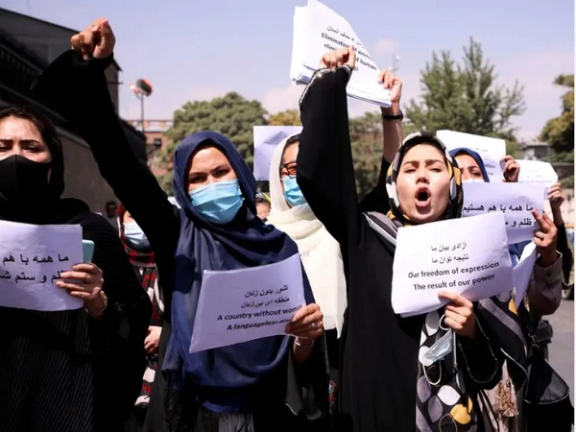
Amnesty has stated that 198, 612 people globally have signed a petition to stand with people in Afghanistan.

Amnesty has stated that 198, 612 people globally have signed a petition to stand with people in Afghanistan.
Referring to their petition which had been launched last year, the global rights body on social media platform X stated that Afghans deserve their right to live in freedom, dignity, and equality.
They also called on the Taliban to end human rights violations.
The petition had stated that the Taliban has started a new era of human rights abuse and violations since taking over on August 15, 2021 in Afghanistan.
Amnesty added that the Taliban had also broken their promise of protecting Afghan people’s rights, especially women’s rights, and they have resumed the cycle of violence and committed a litany of human rights abuses and violations with full impunity.
“Thousands of Afghans have been arbitrarily detained, tortured, disappeared, and even killed. Journalists, activists, human rights defenders, artists, academics, religious and ethnic minorities remain at particular risk,” the petition states.
It called on people to sign the petition as human rights in Afghanistan were under attack on all fronts and that it must be stopped.


Yunus Rashid, the Taliban’s Deputy Minister of Information and Culture, said that the situation for the education of women and girls in Afghanistan is not according to Sharia laws.
Rashid said that the Taliban authorities have reasons for preventing Afghan girls and women from pursuing education, but they do not think it is necessary to convey the reasons to the citizens of Afghanistan and the media.
He said that they can only talk about the reasons for depriving Afghans girls and women from their right to education privately.
After two years of closing schools and universities to girls and women, Rashid claimed that the ban was for a "limited” time.
Afghanistan is the only country in the world where the education of women and girls is prevented.
On Tuesday, Rashid was speaking to the students of Paktia University where he said that students have repeatedly asked him about the closure of schools and universities to women and girls. But he emphasised that the Taliban does not want to talk openly about the reasons for closing schools.
He did not explain why Taliban officials are reluctant to explain their views on women's education. Previously, to justify the ban imposed on Afghan girls and women’s higher education, the Minister of Higher Education of the Taliban, said that the female students did not follow the Taliban's regulations regarding clothing and gender segregation.

The Taliban consulate in Karachi announced the release of 75 Afghan prisoners from the Sindh prison in Pakistan.
Abdul Jabbar Takhari, the Taliban Consul in Karachi, said that these prisoners were freed and transferred to Afghanistan from various prisons in Sindh on Tuesday.
According to Takhari, six children were among the Afghan prisoners.
The Taliban official added that so far 2,516 Afghans have been released from Pakistani prisons and transferred to Afghanistan.
Takhari added that the Afghan consulate in the city of Karachi, which is under the control of the Taliban, is also trying to free 300 more Afghan prisoners.
In the past few months, the Pakistani police have arrested hundreds of Afghans who have travelled to the country due to security threats, health reasons, and migration to third countries.
Pakistani officials have said that these Afghan nationals had been arrested due to a lack of legal document issues.
Previously, human rights organisations and activists have expressed concern about the situation of Afghan immigrants in Pakistan.

Karine Jean-Pierre, the White House spokesperson, has again emphasised on the importance of girls' right to education in Afghanistan.
During a press conference on Monday, Pierre said that the US President has always been very clear about the importance of girls living freely and being able to go to school and seek education.
Pierre added that the US has been very clear in laying out their concerns, such as girls’ education, with the Taliban.
However, Pierre stressed that Washington remains laser-focused on trying to support and assist the Afghan people without bolstering the Taliban.
Referring to the support of US President Joe Biden's administration towards the education of Afghan girls, she said that the US government consistently assesses Washington’s relationship and approach with the Taliban.
For more than 700 days, the Taliban have deprived Afghan girls and women of the right to education in Afghanistan.

Iranian President Ebrahim Raisi said that his government is assessing the report regarding the water level in Helmand submitted by the Iranian delegation which visited Afghanistan.
On Tuesday, during a press conference in Tehran, Raisi once again emphasised on the implementation of the 1973 water treaty between Iran and Afghanistan.
The president of Iran said that the Islamic Republic enjoys a good relationship with its neighbours.
Referring to the challenges of water shortage inside Iran, the president of Iran said that Tehran already has agreements with its neighbours regarding the water issue and that these countries should adhere to them.
Raisi added, "Especially, regarding the water in the areas around Sistan and Baluchistan in Afghanistan, with the discussions and follow-ups that our special representative in Afghanistan, Kazemi Qomi, and his colleagues, these negotiations led to dispatching an expert team to Afghanistan. They (Taliban) also accepted this delegation to assess and see whether the water is sufficient to meet the needs of Sistan and Baluchistan."
The president of Iran said that the report of this delegation is being followed up and assessed.
Earlier in May, Iran's president warned the Taliban to share water from the Helmand River.
Over the years, Iran has accused Afghanistan of restricting the flow of water from the river by building dams over it, a charge that Afghan authorities deny.
Speaking during a visit to the southeastern Sistan and Baluchestan province – a deprived region where the water is desperately needed – President Ebrahim Raisi had warned the Taliban, "Take my words seriously so that you don't complain later."
"Afghanistan's rulers should allow our experts to come and check the truth of the matter. If our experts confirm lack of water there, we have nothing to say, otherwise we will not allow the rights of our people to be violated in any way," he added.

Ahmad Massoud, the leader of the National Resistance Front (NRF), met with Sergei Mironov, the leader of the faction, A Just Russia, in the State Duma of Russia in Moscow.
According to a statement of A Just Russia party, during the meeting, the two sides discussed the political situation in Afghanistan.
Mironov said that Russia respects the sovereignty, independence, and territorial integrity of Afghanistan.
He said, "We stick to this position, and we believe that the people of Afghanistan should determine their own future."
Sergey Mironov added, "We believe that Afghanistan should not become a place for geopolitical ambitions."
The NRF leader also said that during the Taliban rule, the political situation in Afghanistan has worsened. He added that terrorist organisations and drug trafficking have increased in the country and people's rights are being violated.
Massoud emphasised that without an elected government, counternarcotics programmes, and fighting terror groups inside Afghanistan, the country can become a bomb which may explode at any moment.
Meanwhile, Mironov said that in his personal capacity and on behalf of his party, he supports the NRF leader.
Sergey Mironov also announced that they will hold a meeting in the State Duma of Russia about the problems of Afghanistan in the coming months in the presence of Ahmad Massoud.
The National Resistance Front has not yet commented on Ahmad Massoud's visit to Moscow and the details of this trip.