Two Members of Herat Shia Ulema Council Murdered In Herat City
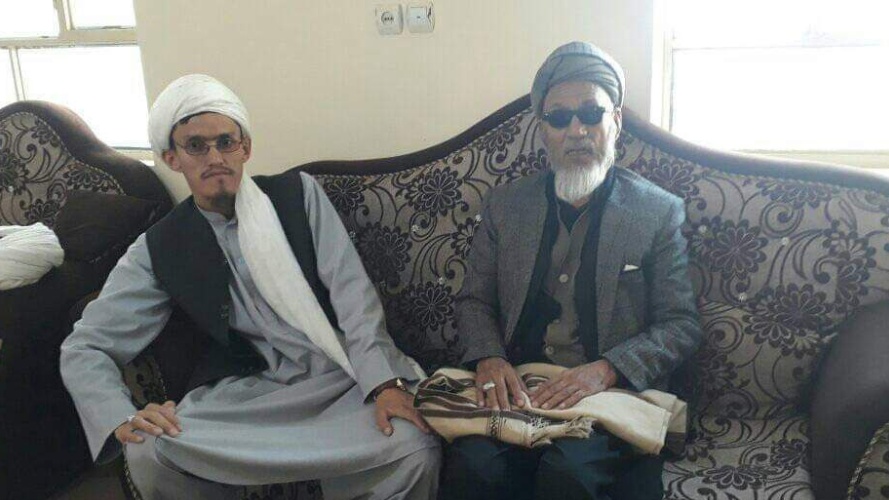
Local reports confirm the killing of two members of the Herat Shia Ulema Council on Thursday.
Local reports confirm the killing of two members of the Herat Shia Ulema Council on Thursday.
Eyewitnesses informed Afghanistan International that on Thursday afternoon in Jibrail town of Herat city, armed individuals on a motorcycle shot at Rajab Akhlaqi and Khadim Hossein Hedayati.
These two members of the Herat Shia Ulema Council hailed from the Lal and Sarjangal districts in Ghor province, as per sources.
Local Taliban authorities are yet to make a statement regarding the attack, but local reports indicate that Taliban forces converged at the crime scene following the murder of the two Shia clerics.
Till date, neither an individual nor a group has accepted responsibility for the assassination of these Herat Shia Ulema Council members.
In a related incident last month, Eid Mohammad Etimadi, another Herat Shia Ulema Council member, was also slain by armed assailants in the Injil district of the same province.
Reports suggest that Etimadi was abducted before being executed by the gunmen.
At the Moscow conference, Ahmad Massoud, leader of the National Resistance Front (NRF), criticised the United Nations' special assessment as "flawed" and "inadequate."
Massoud expressed concerns that the endorsement of the UN Special Coordinator for Afghanistan, Feridun Sinirlioğlu’s proposal, could exacerbate Afghanistan's situation. This plan, presented to the UN Security Council and endorsed by Secretary-General Antonio Guterres, suggests that international compliance and steps towards a comprehensive constitution could normalise relations with the Taliban, including a pathway for their recognition.
However, Massoud, speaking at the "Afghanistan Between Past and Future" conference, remarked that Afghanistan has become a 'Talibanistan'. He emphasised that a government which disrespects its own people is unlikely to uphold international laws or respect other nations. Massoud, a prominent anti-Taliban figure, proposed a referendum in Afghanistan to decide the country's political future, alongside elections to form a people's government, as potential solutions.
He highlighted the Taliban's historical non-compliance with agreements, except for the Doha Agreement, and warned of the perils of international recognition of the Taliban without considering Afghan public opinion, predicting further destabilisation.
Other participants at the Moscow meeting included notable figures like Mohammad Mohaqiq, leader of the Afghanistan People's Unity Party, Mahmoud Saiqal, former Afghan representative to the UN, Fazal Ahmed Manawi, ex-Justice Minister of Afghanistan, Zahir Agbar, Afghanistan's ambassador to Tajikistan, and numerous other distinguished personalities.
The meeting was convened by Sergey Mironov, leader of the Just Russia Party, known for its close association with Russian President Vladimir Putin.
In Moscow, a conference commenced on Thursday, signalling a significant assembly of eminent Taliban opponents and Russian officials.
Amongst the participants was Ahmad Massoud, the leader of the National Resistance Front.
The event also welcomed the involvement of various former Afghan government leaders and prominent Russian political figures.
The conference, entitled "Afghanistan Between Past and Future," is an endeavour of the Russian Justice Party in partnership with the country's Academy of Sciences.
Mullah Hibatullah, the Taliban leader, mentioned in the two-day meeting of the group's cabinet in Kandahar that if the Taliban compel people to adopt “Islam and moral”' by force, the people will resist and go against the group.
According to the Taliban, Hibatullah said that the implementation of Sharia law is the main duty of the officials of the group.
Zabihullah Mujahid, the group’s spokesperson, published a statement on Wednesday stating that a two-day meeting of the Taliban cabinet was held in Kandahar chaired by Mullah Hibatullah. The Taliban spokesperson said that in this meeting, there was a discussion about Mullah Baradar's recent trip to Iran as well as the forced deportation of Afghan immigrants from Pakistan.
Mujahid said that during this two-day meeting, the current political situation, the further development of relations with neighbours and other countries, and the solution of existing problems have been discussed. He added that, during the cabinet meeting focused on implementing constructive policies, the responsibility of preparing strategies for domestic and foreign policies was entrusted to the members of the political commission, led by the Taliban's foreign minister.
The statement added that the leader of the Taliban addressed the group's ministers, emphasising that they are not in charge of a district or province, instead, they are tasked with overseeing all of Afghanistan. The leader urged the group's officials to value the people and avoid being “disloyal” to them.
According to Mujahid, Mullah Hibatullah said that time changes and the Taliban should try to leave "good principles, laws and morals to the next generations".
The Taliban’s spokesperson said that the leader of the group stressed on providing service to the people of Afghanistan.
According to the statement, the leader of the Taliban said, "Try to invite people to Islamic values and morals through encouragement, persuasion, and good manners rather than resorting to force. If compelled, people will resist; however, through positive encouragement, they will respond with friendliness and sincerity."
The leader of the Taliban, who lives in secret and rarely meets senior officials of the group, urged the Taliban officials to learn from the performance of the previous government officials.
Hibatullah said that the officials of the group should be happy about the appointments and not upset about the dismissals.
Mujahid said that in this meeting, Mullah Abdul Ghani Baradar, the economic deputy of the prime minister, and Nooruddin Azizi, the Taliban’s minister of commerce and industry, presented details about their recent trips to Iran and Pakistan.
It has been stated that in this meeting, opinions were discussed and exchanged regarding the selection of different export and import routes of Afghanistan as well as to prepare fuel and food for the upcoming winter.
Mullah Baradar recently went to Iran heading a delegation of the group and spoke with the Iranian officials. The trip took place while the tension between the Taliban and Pakistan was at its peak. Some experts said that with the strained relations between the Taliban and Pakistan, the Taliban is trying to find an alternative way for imports.
Mujahid added that Hidayatullah Badri, the group’s governor of the Central Bank of Afghanistan, has provided information about maintaining the value of the Afghani currency and related issues. The Taliban spokesperson stated that essential decisions have been made to enhance the transparency of all relevant departments as part of the ongoing efforts to strengthen the Taliban's monetary policy. He did not provide more details about these decisions.
Meanwhile, the Taliban’s leader has ordered all the ministers to prioritise the handling of immigrants situation in their agenda.
The spokesperson of the Taliban stated that the provision of services for the education and training of the new generation in religious and contemporary science departments as well as the improvement of the scientific capacity of professors and solving the students and professors’ challenges were also discussed in the meeting. Mujahid stated that essential consultations and decisions have been made in this regard as well.
The Taliban has not released any footage from their cabinet meeting in Kandahar.
Mohammad Yaqub Abdur Rahman, the Taliban’s governor for Sar-e-pol Province, announced a significant increase in oil extraction at the Qashqari oil wells.
The daily output has risen from 650 to 900 tonnes, boosting the field's daily revenue to approximately USD 600,000.
In a recent visit to the Qashqari oilfield, Abdur Rahman revealed these figures. His office in Sar-e-pol confirmed this during his Tuesday visit to the site. He mentioned that a portion of the revenue generated from the Qashqari oilfield would be allocated to local development projects. These include the flattening of roads in the Nariband mountain area and the construction of the Sultan Ibrahim dam.
Furthermore, the Taliban's governor disclosed that the operation of the Qashqari oilfield, along with other oil fields in the Amu Darya basin located in Jawzjan and Faryab, has been entrusted to a Chinese company. In the Sar-e-pol and Faryab provinces, three mines - "Qashqari", "Bazar", and "Zamarudsazi" - have been officially registered.
The Taliban estimates the reserves of the Qashqari oil field to be around 87 million barrels.
On Wednesday, the Taliban convened the first-ever joint meeting amongst its various security departments.
This meeting, hosted by the group’s Ministry of Defence, included representatives from the Ministries of Interior, Defence, and the General Intelligence Directorate (GDI).
Their goal was to devise a comprehensive security strategy for the forthcoming year [hijri]. This event marks the first collaborative effort of the Taliban's security agencies since their ascent to power in August 2021.
The focus of the meeting was on strengthening security measures, upholding national commitments, securing borders, and addressing threats to Islam and their governance system.
Participants discussed and shared opinions, with the aim of setting security priorities for the upcoming year. The Taliban's defence ministry emphasised that the final security programme, shaped by the insights of officials and military experts, will be executed following endorsement from senior leaders.
