Helmand River Water Reaches Afghanistan-Iran Border Point
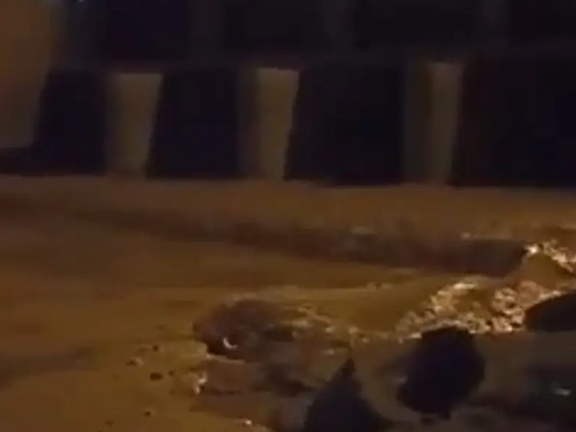
Tasnim news agency has reported that the rise in rainfall within the Helmand River's catchment area, coupled with the filling of the Kamal Khan Dam, has led to the release of water into Iran.
Tasnim news agency has reported that the rise in rainfall within the Helmand River's catchment area, coupled with the filling of the Kamal Khan Dam, has led to the release of water into Iran.
According to the Iranian news agency, the water from the Helmand River has now reached "Jarikeh" dam situated at the Afghanistan-Iran border.
It also noted that the filling of the Kamal Khan Dam resulted in the release of some muddy floods into Iran.
The Taliban has not commented on the matter yet.
An official from Sistan and Baluchistan in Iran has confirmed the release of water towards Iran. The official clarified that it is not in accordance with the water treaty between Iran and Afghanistan. Instead, the agreement solely involves opening the gates of the Kamal Khan Dam, redirecting the flow towards Iran rather than the Godzare desert.
This release began on Wednesday night and is expected to continue in the upcoming days due to increase in rainfall in Afghanistan.
The Taliban has obstructed the Helmand River's passage to Iran by constructing multiple water dams.

Antonio Guterres, the Secretary-General of the United Nations, stated that the Afghanistan Freedom Front (AFF) conducted 24 verified attacks against Taliban forces between November 1, 2023, and January 10, 2024.
However, in his quarterly report, Guterres noted that the Taliban’s armed opposition has not given any territorial challenge to the group.
On Wednesday, March 6, the United Nations Assistance Mission in Afghanistan (UNAMA) released the quarterly report of the UN Secretary-General on the situation in Afghanistan. In this report, Guterres expressed the challenge of assessing the capabilities of the Taliban's armed opposition, citing difficulty in verifying many claims made on social networks regarding their attacks.
However, Guterres has confirmed that AFF has continued to carry out assassinations and "small-scale attacks" against Taliban forces. According to the report, AFF has shifted attacks from rural to urban areas.
The report provided specific instances of AFF activities, including four attacks in Pul-e-Khumri, Baghlan, four attacks in Kabul, one in Kandahar, one in the Aybak city of Samangan, and one in Mazar-e-Sharif.
It added that the National Resistance Front (NRF) has been most active in Parwan and has not carried out any attacks in its traditional stronghold of Panjshir.
Antonio Guterres said that some other armed opposition groups of the Taliban have also announced their existence and claimed to attack the Taliban forces, but none of these reports have been verified.
Request to Stop Corporal Punishment
The Secretary General of the United Nations wrote that the continuation of the introduction and implementation of Taliban policies that violate the rights of men and women in Afghanistan is alarming.
Antonio Guterres called on the Taliban to cease corporal punishment, which is contrary to Afghanistan's obligations under the Convention against Torture.
Taliban recently executed at least three people in Jowzjan and Ghazni provinces. In one of these cases, Afghanistan International sources said that the Taliban shot dead two individuals sentenced to death.
In addition, the Taliban has flogged dozens of people on various charges during their two-and-a-half-year rule.
Another Day of Grief for Afghan Girls
Guterres has once again called the deprivation of Afghan women and girls from education deeply concerning.
“As the ban on secondary schooling for girls remains, the start of the new school year in March will be another day of grief for Afghan girls and for the world,” he said.
Guterres asked the Taliban to immediately reverse the ban on girl’s education.
He stated that there is uncertainty about the Taliban’s ability to create an education system to address the challenges faced by Afghan youths in acquiring essential knowledge and skills.
The United Nations Secretary-General said that although there is little information about Taliban’s religious madrassas, he is concerned that the quality of education in these institutions doesn’t adequately prepare boys and girls for joining an effective workforce in the future.
Increase in Taliban Prisoners
Guterres’ report also states that the number of prisoners in Taliban prisons exceeded 19,000 in January, which has made it difficult for the group to handle and manage prisons.
As per the report, financial restrictions and the cessation of aid to Taliban prisons have failed to meet international standards. This includes inadequate access for prisoners to sufficient food, health services, and essential training.
The United Nations has indicated that discussions are underway among the Taliban leadership, the Supreme Court, and the Ministries of Economy and Justice regarding a plan for alternatives to imprisonment.
Fasihuddin Fitrat, the Taliban’s Chief of Staff, has stated in an interview with TOLOnews TV, that the suicide bombers’ battalions have been dissolved and its forces have been transferred to the special forces command of the Taliban army.
According to him, these battalions were initially trained for the "occupation" period and are now considered unnecessary.
Fitrat clarified that with the withdrawal of international forces and the fall of the previous government, such formations no longer exist within the Taliban's army, stating, "These battalions have been dissolved and practically do not exist."
However, he warned that if Afghanistan faces another aggression and invasion, the entire forces of the group would wage suicide attacks against the invaders.
The Taliban official didn't share details about how many suicide bombers or battalions were dissolved.
When the Taliban took control of Afghanistan in August 2021, they announced a new unit called "Lashkar Mansoori Suicide Bombers Battalions" to protect Afghanistan's borders in the northeastern provinces.
In December 2022, they honoured their suicide attackers by putting up a list of names on the wall of the "Hamza Suicide Bombers Battalion" in Kabul.
A reliable source told Afghanistan International that Mullah Tajmir Jawad, the Deputy Director of Taliban Intelligence, was responsible for establishing the "Hamza Suicide Bombers Battalion”.
During the Taliban's war with the security forces of the previous government and foreign troops, the group carried out extensive suicide attacks on civilian and military targets.
Human rights organisations have reported that suicide attacks were among the deadliest tactics employed during the Afghan war, resulting in the loss of tens of thousands of civilian lives.
In a speech at a gathering in Kandahar in February 2022, Sirajuddin Haqqani, the Taliban's Minister of Interior, announced that 1,050 members from the Haqqani network had committed suicide attacks in the past decade and a half.
Mullah Yaqoob, the Taliban's defence minister, and Fasihuddin Fitrat, the Taliban’s chief of staff of army, met with Khalid bin Mohammad Al Attiyah, Qatar's Minister of State for Defence Affairs.
According to Zabihullah Mujahid, the spokesperson for the Taliban, they discussed bilateral relations and the "expansion of interests" for both nations.
Mujahid wrote on X social media platform that a number of other senior Qatari and Taliban officials were also present in this meeting.
On Sunday, the Taliban's Minister of Defence and the gorup’s Chief of Staff of Army travelled to Qatar.
Earlier, it had been reported that the Taliban officials were going to participate in Qatar’s DIMDEX Defence exhibition as well as meet Qatari officials there.
Qatar does not recognise the Taliban regime. However, it is one of the countries that has diplomatic relations with the group, and the political office of the Taliban has been operating in Doha for many years.
Previously, Mullah Yaqoob had visited Qatar in 2022.
Matthew Miller, US State Department spokesperson, has said that Washington is still the largest provider of humanitarian assistance to Afghanistan since the takeover of power by the Taliban.
Miller added that the US is committed to supporting the people of Afghanistan.
During a press conference, in response to the question of Marzia Hosseini, Afghanistan International’s reporter, he said that one of the ways through which they continue to do so is by addressing macroeconomic issues, which provides stability for the current humanitarian response to become more effective.
He mentioned that the US provided more than USD 2 billion in humanitarian assistance to Afghanistan since August 2021.
In its quarterly report to US Congress, the Special Inspector General for Afghanistan Reconstruction (SIGAR) revealed that the United States has provided assistance to Afghanistan totalling USD 11.21 billion following its withdrawal from the country. According to SIGAR, the US allocated over USD 2.6 billion to Afghanistan between October 2021 and December 2023.
As per the report, the US Department of Defence has spent over USD 5.82 billion in humanitarian, natural disaster, and civil aid sectors up to September 30, 2022.
Within the total aid of $11.21 billion, SIGAR mentioned the transfer of USD 3.5 billion from Afghanistan’s frozen assets of the Central Bank of Afghanistan to the Afghan Trust Fund in Switzerland as part of the US assistance to Afghanistan.
Despite the urgent humanitarian needs of 10.3 million people in Afghanistan, the United Nations had announced last month that its partners have reduced aid.
Sources have reported that the Iranian government has begun the re-registration of former Afghan security forces within its borders.
Two former Afghan soldiers informed Afghanistan International that it has been said that the re-registration is to facilitate the situation of these refugees, though the primary objective of it remains uncertain.
As per reports received by Afghanistan International, the Bureau for Aliens and Foreign Immigrants Affairs in Iran has reached out to several former Afghan security forces seeking their specifications.
A former Afghan army officer told Afghanistan International that an Iranian official from the foreign immigrants’ office contacted him and asked where he had previously served and what was his position.
At the same time, Iran has taken a census of Afghan immigrants and issued residence permits for them.
So far, the Iranian government has not officially commented on the census and the creation of facilities for the former Afghan security forces who took refuge in Iran.
Following the takeover of power by the Taliban in August 2021, hundreds of thousands of Afghans, including the security force members of the previous government, took refuge in other countries, including Iran.
However, Iran has identified hundreds of thousands of Afghans in various provinces and handed them over to the Taliban over the past months.
Like other countries, Iran does not recognise the Taliban, however, it has maintained close diplomatic and economic relations with the group.
About a week ago, the Iranian Ministry of Justice announced that Iran has handed over 1,136 Afghan prisoners to the Taliban in the past year.