Islamabad Accuses Taliban Of Using TTP Against Pakistan
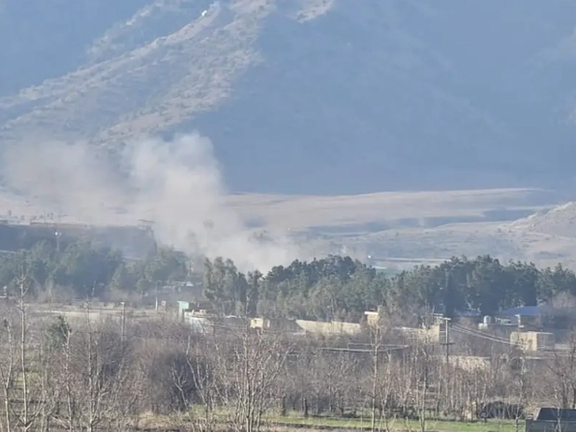
Pakistan’s Ministry of Foreign Affairs released a statement and accused the Taliban of using the Tehreek-e-Taliban Pakistan (TTP) as a proxy against Pakistan.

Pakistan’s Ministry of Foreign Affairs released a statement and accused the Taliban of using the Tehreek-e-Taliban Pakistan (TTP) as a proxy against Pakistan.
The ministry added that TTP consistently used Afghanistan territory for "terrorist" attacks inside Pakistan.
On Monday, Pakistan’s foreign ministry officially confirmed that it has conducted intelligence-based anti-terrorism operations in border regions inside Afghanistan.
In the statement, the ministry stated, "Over the past two years, Pakistan has repeatedly conveyed its serious concerns to the Interim Afghan Government over the presence of terror outfits including TTP inside Afghanistan. These terrorists pose a grave threat to Pakistan’s security and have consistently used Afghan territory to launch terror attacks inside Pakistani territory."
Pakistan said that the target has been "terrorists" affiliated with Hafiz Gul Bahadur Group, responsible for multiple attacks inside Pakistan along with TTP, killing hundreds of civilians and law enforcement officials.
The statement added that certain Taliban elements are “patronising TTP”. The ministry urged Taliban to reconsider their policy of supporting terrorists.
Pakistan emphasised on finding joint solutions in countering terrorism.
Recently, forces affiliated with Hafiz Gul Bahadur, TTP’s commander had claimed responsibility for several suicide attacks in North Waziristan.


Amir Abbas Lotfi, Iran’s Director General of the International Relations Office of the Drug Control Headquarters, stated that transformation of Afghanistan into a major producer of “methamphetamine" must be taken seriously.
Lotfi added that Afghanistan’s recreational drugs harm countries in the region and world.
On Monday, ISNA news agency reported that Lotfi, who is traveling to Austria for the 67th session of the Commission on Narcotic Drugs, has said that Iran is concerned about Afghanistan's status as a major producer of methamphetamine, and the United Nations has also expressed concern about the increase in production, consumption, and trafficking of narcotics in Afghanistan.
According to the report, during a meeting with a Dutch official from the Ministry of Health, Welfare, and Sport, he stated that Iran has achieved the highest international standards in reducing demand for drugs and empowering vulnerable women and girls to combat addiction and substance abuse.
On the sidelines of this meeting, Lotfi met with Norway’s Senior Advisor to the Ministry of Health. He highlighted Iran's geographical proximity to Afghanistan, the world's largest producer of narcotics, and stated, "While we appreciate the reduction of drug cultivation in Afghanistan, the trafficking of narcotics from the region has not seen a significant decrease."
As per the report, the Norwegian official also said that the claim of drug production reaching zero in Afghanistan is unbelievable. He emphasised that even if it were true, given the unstable conditions in Afghanistan, there's no assurance that the decision to resume production wouldn't be made tomorrow, in a few months, or even years down the line, potentially leading the country back into drug production.
He added that Norway, as a European nation, should pursue technical and specialised cooperation with Iran in the realm of combating narcotics and should engage in cooperation with Iran regardless of political considerations.
This statement comes in the wake of Eskandar Momeni, the secretary general of the Iranian anti-narcotics headquarters, recently highlighting the rising production of recreational drugs and methamphetamine in Afghanistan. Momeni characterised Iran as one of the victims of the surge in drug production in Afghanistan.

The Taliban’s Defence Ministry has, for the first time, released a picture of Mullah Yaqoob, the defence minister of the group, wearing the uniform of an army general.
In the picture, Mullah Yaqoob is seen wearing a uniform along with his rank as a general.
The Taliban’s Defence Ministry announced that its border forces have targeted military centres of Pakistan along the Durand line using heavy weapons in response to "Pakistan's aggression”.
The ministry stated that its forces are ready to respond to "any aggressive actions”.
Earlier, residents of Dand Wa Patan district in Paktia province, informed Afghanistan International that armed clashes occurred between Taliban forces and Pakistani border guards along the Durand. Local sources said the clashes began at 7 in the morning on Monday.
Local media also reported that residents of Dand Wa Patan have evacuated their homes following missile strikes by Pakistan.
This armed confrontation ensued subsequent to airstrikes conducted on targets in Khost and Paktika provinces by Pakistani air forces.
Earlier, Zabihullah Mujahid, Taliban’s spokesperson in a statement said that six individuals had been killed in the airstrikes in Khost and Paktika, including three women and three children.
The Taliban warned that the continuation of these attacks would have serious consequences beyond Pakistan's control.
Local sources told Afghanistan International that Pakistani air forces targeted Tehreek-e-Taliban Pakistan (TTP) in Khost and Paktika provinces in the early hours of Monday.
According to the sources, the attacks took place around 3:00 am in the Spera district of Khost province and Barmal district of Paktika province.

The Ministry of Interior in Punjab, Pakistan, has officially announced the initiation of the second phase of deporting Afghan migrants from the region.
Sources referenced by Pakistan's Jang newspaper reveal that the federal government plans to distribute a list of Afghan migrants possessing temporary Afghan Citizen Cards (ACC) to the police for the purpose of deportation.
Initially issued by the Pakistani government in 2017 and 2018, these ACCs were intended as temporary identification for Afghan migrants.
With the expiration of these cards, the validity period has come to an end.
The government of Punjab is urging all ACC holders to voluntarily repatriate to Afghanistan by the deadline of April 15. Those remaining beyond this date will face arrest and forced deportation.
Insights from Pakistani sources suggest that the completion of this phase will pave the way for the subsequent deportation of individuals holding permanent residency cards, marking the third phase of the operation.
The extent of this policy's application, whether confined to Punjab or applicable across Pakistan's other provinces, remains uncertain.
A deportation initiative has been underway since November 2023, with Pakistan's interim government committing to the expulsion of approximately 1.7 million undocumented Afghan migrants.
This move contrasts with previous statements from the Pakistani government, which had assured that holders of both temporary and permanent residence cards would not be subject to deportation.

The Taliban’s Ministry of Defence has reported that their border forces targeted military installations in Pakistan using heavy artillery as a countermeasure to what they described as "Pakistan's aggression”.
The ministry emphasised that its forces are fully prepared to counter any further aggressive acts.
Earlier, residents from the Dand-e-Patan district in Paktia province relayed to Afghanistan International that a violent encounter broke out between Taliban forces and Pakistani border guards along the Durand Line. The confrontation reportedly commenced at 7am on Monday, March 18.
Following a missile attack launched by Pakistan, local media reported that inhabitants of the Dand-e-Patan area were forced to evacuate their homes.
This recent skirmish follows a series of air strikes conducted by the Pakistani Air Force on targets within the Khost and Paktika provinces.
Zabihullah Mujahid, spokesperson for the Taliban, in an earlier statement, disclosed that these air strikes had resulted in the deaths of six individuals, including three women and three children, underscoring the human cost of the conflict.
The Taliban has issued a stern warning about the potential severe repercussions that continued Pakistani military actions could provoke, suggesting consequences that could extend beyond Pakistan's ability to control.
Local sources have shared with Afghanistan International that the early Monday operations by the Pakistani Air Force were aimed at positions associated with the Tehreek-e-Taliban Pakistan within the territories of Khost and Paktika.
These assaults, as detailed by sources, took place around 3am in both the Spera district of Khost and the Barmal district of Paktika, marking a significant escalation in the region's ongoing tensions.

Zabihullah Mujahid, the Taliban spokesperson, revealed that air strikes in Khost and Paktika have led to the loss of six lives, including three women and three children.
The Taliban spokesperson refuted claims of Abdullah Shah Mehsud, a commander of the Pakistani Taliban, being in Afghanistan and warned that continued assaults would have dire consequences outside Pakistan's control.
Contrary to some media reports which allege Abdullah Shah Mehsud's death along with his family in the recent air strikes in Khost and Paktia, the Tehreek-e-Taliban Pakistan released a video denying his presence in Afghanistan.
Zabihullah Mujahid, the spokesperson for the Taliban, disclosed on social media platform X, "Pakistani aircraft targeted civilian homes in Barmal district, Paktika, and Spera district, Khost, around 3am last night. This assault resulted in six casualties, encompassing three women and three children.
Mujahid clarified, "Abdullah Shah Mehsud, the Taliban commander alleged by Pakistan to have been the target of this strike, is located in Pakistan."
The Taliban's statement pointed out that the stricken regions are home to individuals who routinely cross the border for familial visits.
They vehemently denounced Pakistan's actions as an infringement on Afghan territory, asserting their stance against any form of aggression on their land. The statement further highlighted, "The Pakistani populace and its new civilian government must halt certain Pakistani military generals from persisting with policies that have historically harmed the camaraderie between the two neighbouring Muslim nations."
The Taliban urged Pakistan not to attribute its internal shortcomings, lack of governance, and problems to Afghanistan.
In a firm denouncement, the Tehreek-e-Taliban Pakistan labelled the Pakistani air strikes in Afghanistan as "ruthless," highlighting that the attacks targeted Waziristan refugees within Afghan borders.