10,000 Hectares of Agricultural Land Affected By Recent Floods In Afghanistan
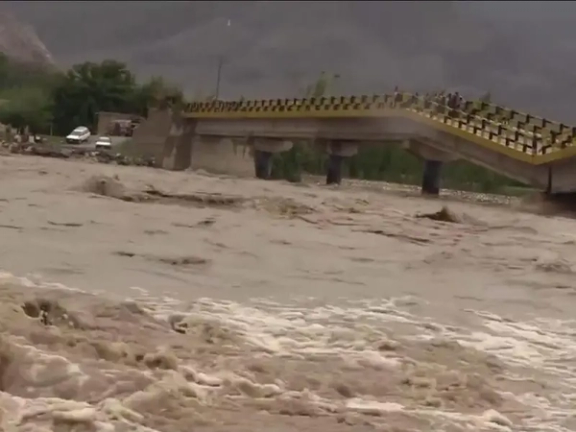
An international network, Famine Early Warning Systems Network (FEWS), reported that the April floods in Afghanistan affected 10,000 hectares of agricultural land.
An international network, Famine Early Warning Systems Network (FEWS), reported that the April floods in Afghanistan affected 10,000 hectares of agricultural land.
The organisation stated that the recent floods in Afghanistan have resulted in the destruction of agricultural crops.
In a report published on Friday, examining the situation in Afghanistan, Yemen, Lebanon, and Gaza, the network mentioned that the effects of multiple shocks are increasing food insecurity across the region.
The report highlighted that following a three-year drought in Afghanistan, the food security crisis persisted in the northern, northeastern, and western parts of the country.
The report also noted that the return of Afghan migrants from Iran and Pakistan is likely to sustain acute food insecurity in the southern and southeastern regions of Afghanistan.
FEWS reported that the World Food Programme distributed humanitarian food aid to about 7.6 million people in Afghanistan in March this year, including 665,000 migrants who returned from Iran and Pakistan.
The report further mentioned that the April floods displaced 6,000 families in eastern and southeastern Afghanistan.
Recently, the United Nations announced that after consecutive years of drought, the people of Afghanistan are vulnerable to natural disasters such as floods.
The World Food Programme stated that more than 80,000 people were affected by the floods in northern Afghanistan, and USD 14 million is needed to address the consequences of the floods.

Based on a letter from the Taliban's General Directorate of Intelligence (GDI), several officials from the Ministries of Interior and Foreign Affairs, including the head of the group's Passport Department, have been arrested on charges of bribery and corruption.
These individuals have been accused of distributing passports to foreign citizens.
The letter, which has been obtained by Afghanistan International, states that official letters from the Taliban's Ministries of Interior and Foreign Affairs were sent to the General Directorate of Passports, requesting cooperation in the issuance of passports for Taliban members.
The first part of the letter mentions that the Taliban's GDI, in coordination with the office of Mullah Hibatullah, the group's leader, arrested these individuals.
The letter does not confirm the identities of any of the individuals, including Abdul Karim Hasib or who have been arrested, nor does it specify their number.
At the end of the letter, it states that the cases of these officials will be sent to the Taliban leader's office in Kandahar for further investigation.
A senior Taliban official told Abdulhaq Omari, a journalist of Afghanistan International, that according to findings from the Taliban's GDI, approximately 10,000 passports were distributed, each sold for 2,000 US dollars.
This Taliban official, who wished to remain anonymous, said that a UN delegation presented evidence to Taliban leaders indicating that these passports were distributed among Al-Qaeda members.
The letter from the Taliban's GDI does not specify to whom the passports were distributed.
Abdul Mateen Qani, a spokesperson for the Taliban's Ministry of Interior, stated in a message released on Monday that Abdul Karim Hasib, the head of the group's Passport Department in Kandahar, had not been arrested.
He said, "Recently, protests regarding land in Barik Ab of Nangarhar province took place, and Hasib as well as some officials from the Ministries of Interior and Defence were summoned to the leadership office to clarify this issue."
Qani added that the work of the Passport Directorate is proceeding normally without any issues.
However, sources told Afghanistan International that the head of the Taliban's Passport Department was arrested and imprisoned on April 22, by order of Hibatullah.
The Afghanistan Freedom Front (AFF) and the National Resistance Front (NRF) have reported two separate attacks against the Taliban in Kabul.
The Afghanistan Freedom Front has claimed responsibility for an explosion in the Khair Khana area of Kabul, stating that the attack resulted in the deaths of two Taliban members and injuries to three others.
Simultaneously, the National Resistance Front reported the killing of two Taliban members in Kabul's police district 5.
Local sources had earlier informed Afghanistan International about a significant explosion in Khair Khana, Kabul. The Afghanistan Freedom Front announced that on Friday evening they attacked a vehicle belonging to the Taliban's Ministry of Interior at the Panjsad Family Hill in Khair Khana, within Kabul's police district 15. AFF has released a video of this attack, showing the explosion.
Meanwhile, the National Resistance Front announced that it had killed two Taliban members and wounded another one in an attack. The Resistance Front emphasised that their attack caused no injuries to their forces or to civilians. In a statement released on Friday, the National Resistance Front reported that the attack took place at 8:25pm. They said that their forces targeted a Taliban vehicle in the Fazelbeg area.
Taliban officials have not yet commented on the attacks by the AFF and NRF. The National Resistance Front has declared that it will continue its "targeted" operations against the Taliban in various parts of the country.
The Afghan consulate in Mashhad is experiencing turmoil due to conflicts among the Taliban, diplomats of the former government, and the Islamic Republic of Iran.
Sources in Mashhad report that the Taliban attempted to send a new consul-general to the city without notifying the Iranian Ministry of Foreign Affairs.
According to documents obtained by Afghanistan International, on Tuesday, the Taliban’s Ministry of Foreign Affairs sent an official letter summoning Abdul Jaber Ansar, the Afghan Consul-General in Mashhad, to Kabul.
Abdul Jaber Ansar was appointed as the Afghan Consul General in Mashhad in 2019 by the Ministry of Foreign Affairs of the Islamic Republic of Afghanistan.
The official letter from the Taliban’s Ministry of Foreign Affairs stated that since Sunday, May 26, Ansar has been assigned as the Deputy Director of Treaty Affairs for Asia and Africa in the Directorate of Legal and Treaty Affairs within the Taliban’s Ministry of Foreign Affairs.
Sources from the Afghan consulate in Mashhad informed Afghanistan International that on Monday, May 27, Nasir Ahmad Haqqani, a Taliban member, arrived in Mashhad from Tehran and introduced himself as the new Consul General of Afghanistan in the city.
Haqqani also works as the First Secretary to the Taliban’s ambassador in Tehran.
According to sources, Haqqani intended to take over the responsibilities of the Afghan consulate without the knowledge of the Iranian Ministry of Foreign Affairs.
Consequently, Ansar refused to hand over the consulate responsibilities to him and informed Haqqani that any changes at the consulate must be conducted through official channels in accordance with international conventions.
Sources from the Afghan consulate in Mashhad indicated that Ansar's stance was that "anyone replacing the Afghan Consul General must go through diplomatic procedures, with the Taliban first submitting their request to the Ministry of Foreign Affairs of the host country, the Islamic Republic of Iran."
Sources stated that Ansar told the Taliban representatives that any further decisions regarding the new consul general would only be made after the approval of the Iranian Ministry of Foreign Affairs.
What is the Taliban's Stance?
Zakir Jalali, an official from the Taliban’s Ministry of Foreign Affairs, referred to Ansar as the "former Consul General of Afghanistan in Mashhad" on his social media page on Friday, stating that his duties ended "by the order of the Prime Minister”.
Jalali mentioned that a new diplomat would be sent to Mashhad to replace the diplomat from the previous Afghan government. "Until the new diplomat arrives, a diplomat from the Afghan Embassy in Tehran will oversee consulate affairs, and the First Secretary of the consulate will continue providing consular services as an interim measure."
Financial corruption accusations at the Afghan Consulate in Mashhad
In his statement, the Taliban official mentioned that Afghan immigrants in Mashhad "require transparent and standard consular services" and that one of the priorities of the Taliban’s Ministry of Foreign Affairs is to “combat administrative corruption”.
Jalali claimed that "during the previous regime, a vast network of administrative corruption was spread from the consular department to overseas missions. After eradicating corruption at the centre, the second phase of eliminating corruption in overseas consular departments is underway."
He directly accused Ansar of being significantly involved in administrative corruption.
"Financial matters of Mashhad consulate under control of the Taliban"
While the Taliban’s Ministry of Foreign Affairs accused the Afghan Consul General in Mashhad of corruption, sources from this consulate told Afghanistan International that all consular affairs and "income sources of the Mashhad consulate" are currently under the control of the Taliban's appointees.
Sources explained that all revenue sources of the Afghan consulate in Mashhad, including visa issuance, certification, identity verification, passport issuance, and renewal, are managed by four diplomats sent by the Taliban from Kabul to Mashhad.
According to our sources, Maulawi Abdul Sami Samim, Anwar Nabil, and Fazl Rahman Ataee work as secretaries at the consulate, all introduced by the Taliban, and control all financial matters.
In addition to these three, the Taliban have also sent another temporary diplomat named Ashraf Yad to Mashhad. Sources mentioned that the refugee attaché and two cultural affairs staff at the Afghan consulate in Mashhad are also individuals hired and sent by the Taliban from Kabul.
The Afghan consulate in Mashhad has a total of 64 local employees. In this diplomatic office, besides the seven Taliban envoys, two diplomats from the previous Afghan government are still working.
A source from the Afghan consulate in Mashhad told Afghanistan International that the Taliban use accusations of administrative corruption as a tool to remove professional and experienced consulate staff and replace them with their own appointees.
According to consulate sources, the Afghan consulate in Mashhad is the only diplomatic representation of Afghanistan in Iran where all financial matters are conducted through the ATM banking system instead of money exchanges.
Meanwhile, sources sent official documents to Afghanistan International indicating that Mohammad Musa Amiri, the head of financial and administrative affairs at the Taliban’s Ministry of Foreign Affairs, "commended Ansar's responsibility" in his official letters.
Sources questioned Jalali's allegations, stating, "If the Taliban's intention behind the consulate changes was to fight corruption and Ansar was involved in corruption, then why did the Taliban’s Ministry of Foreign Affairs appoint him as the “Deputy Director of Treaty Affairs for Asia and Africa in the Directorate of Legal and Treaty Affairs within the ministry?"
What is the position of the Iranian Ministry of Foreign Affairs?
Statements from the spokesperson of the Iranian Ministry of Foreign Affairs indicate that Iran has not yet approved the change of the Afghan Consul General in Mashhad.
Nasser Kanaani, the spokesperson for the Iranian Ministry of Foreign Affairs, announced in a press conference in Tehran on Thursday, that on the May 18, during a meeting between the Taliban's chargé d'affaires in Tehran and the Director-General of South Asia Affaires at the Iranian Ministry of Foreign Affairs, necessary explanations were provided for the appointment of the new Afghan Consul General in Mashhad.
The spokesperson of the Iranian Ministry of Foreign Affairs stated that any changes to the Afghan consulate staff in Mashhad must comply with the 1963 Vienna Convention.
Kanaani explained that new individuals "must be introduced to the host government through defined channels and, after obtaining the host government's agreement and receiving visas, enter the host country for the designated mission and commence their specified duties”.
The spokesperson for Iran's Ministry of Foreign Affairs announced that the necessary explanations have also been communicated to the Taliban’s Ministry of Foreign Affairs officials through various channels.
Andrei Belousov, recently appointed by Vladimir Putin as Russia's Defence Minister, has called for increased security measures along the Tajikistan-Afghanistan border.
He described Afghanistan as the principal source of instability in Central Asia, stating, "We are on the frontline."
Belousov spoke at the 83rd meeting of the Collective Security Treaty Organisation's (CSTO) Defence Council in Almaty on Friday.
According to a statement from the Russian Ministry of Defence, he highlighted the continuous threat posed by numerous radical groups within Afghanistan which are intensifying their efforts to propagate their ideologies in neighbouring republics.
The Defence Minister warned of the threat of terrorist groups expanding beyond Afghan borders and emphasised on the necessity of constant vigilance and timely actions to stabilise the region, particularly along the Tajik-Afghan border.
Belousov also stressed on the importance of enhancing military coherence and combat readiness of Russian and Tajik forces stationed in the area. He referred to Russia's Base 201 in Tajikistan, which has conducted several military exercises in recent years along the Afghan border with Tajikistan and other countries.
"The key issue is that we are now on the frontline. The situation on the southern borders of CSTO member states is extremely challenging," Belousov noted.
"Additionally, the conditions and trends in Afghanistan are deteriorating; we are monitoring them, understanding how to manage them, but all this necessitates our heightened attention and increased readiness," he added.
Following the Taliban's rise to power in Afghanistan, Tajik officials have repeatedly advocated in regional meetings for the creation of a "security belt" around Afghanistan. Security concerns in Russia and other CSTO member states have significantly heightened following the March 22 attack near Moscow.
The Qatar Ministry of Foreign Affairs announced that Faisal bin Abdullah Al-Hanzab, Qatar's foreign minister’s special representative, met Thomas Niklasson, the European Union's Special Representative for Afghanistan.
The meeting, held in Doha on Wednesday, focused on the upcoming third Doha meeting regarding Afghanistan.
According to the Qatar Foreign Ministry, the session addressed the situation in Afghanistan and the joint international efforts to achieve peace and stability in the country.
Simultaneously, Rina Amiri, the US Special Envoy for Afghan Women, met with the United Arab Emirates' representative to the United Nations on Wednesday to discuss the forthcoming Doha meeting.
The third Doha Meeting, which will include special representatives for Afghanistan from various countries, is scheduled for June 30 and July 1.
Stéphane Dujarric, the spokesperson for the UN Secretary-General, mentioned that representatives from different countries will convene in Doha to enhance clarity and coordination on the global community’s approach to Afghanistan.
Dujarric emphasised that human rights and the rights of Afghan women will be a priority at the third Doha meeting.