Unknown Individuals Attack Afghan Migrants In Iran

Some Afghan migrants in Iran reported that a group of unknown individuals attacked their workplace in the village of Dorudzan, Marvdasht County, Fars Province, at night with "sticks and knives”.

Some Afghan migrants in Iran reported that a group of unknown individuals attacked their workplace in the village of Dorudzan, Marvdasht County, Fars Province, at night with "sticks and knives”.
They told Afghanistan International that at least six Afghan workers were injured in the attack. According to these migrants, the assailants also took their cash and phones.
Images and videos provided to Afghanistan International show several injured people lying on the ground in a field, their bodies bloody and wounded. Ambulances arrived at the scene to transport the injured.
The migrants said that "thugs" attacked them at their workplace on July 11 at night, using weapons, sticks, and knives. They called on the authorities of the Islamic Republic of Iran to arrest and interrogate the perpetrators of this incident.
The injured migrants are currently hospitalised at the Marvdasht Shiraz hospital. So far, the Iranian authorities have not commented on the incident.
This is not the first time Afghan migrants in Iran have been attacked. According to reports, Afghan migrants have been mistreated and beaten in various parts of Iran for years, with the perpetrators often not being held accountable.
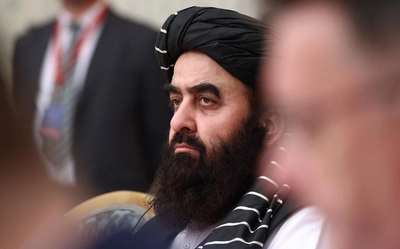

Asif Durrani, the special representative of Pakistan for Afghanistan, announced that he had discussed "the international community's engagement with Afghanistan" with a German parliamentary delegation.
Durrani said that in this meeting, terrorism, as well as the economic and social situation of Afghanistan, were also discussed.
On Friday, Durrani reported on his meeting with the German parliamentary delegation in a post on the X social media platform, calling it "useful”.
Despite having historically close relations with the Taliban, Pakistan's relations with the group have become strained since the Taliban came to power.
Islamabad accuses the Taliban of sheltering the Pakistani Taliban on Afghan soil. Previously, the UN Security Council sanctions monitoring team also described Tehreek-e-Taliban Pakistan as "the largest terrorist group in Afghanistan" in a report.

Turkiye has detained five military commanders affiliated with Abdul Rashid Dostum, the leader of Junbish-i-Milli Islami Afghanistan party and transferred them to a migrant deportation centre in Istanbul.
The Afghan embassy in Ankara told Afghanistan International that it is ready to assist to free them.
An informed source in Turkiye told Afghanistan International that Turkish police coerced the signatures of these four military commanders on their deportation papers.
Meanwhile, some sources in Turkiye said that the legal residency period of many officials and military personnel of the previous Afghan government have expired, and they are at risk of deportation. These sources added that the Turkish government has not extended the residence permits of these Afghan officials, and they are afraid to leave their homes due to the fear of arrest by the police.
A source close to the Junbish-i-Milli Islami Afghanistan said that the residency of about two hundred families of party members affiliated with Marshal Dostum has expired, and all of them are at risk of deportation.
Some individuals at risk of deportation say that if the military personnel affiliated with this party, who have a long history of fighting against the Taliban, are deported, they might be killed by the Taliban.
Junbish-i-Milli Islami Afghanistan is a prominent political party in Afghanistan, established in 1992 under the leadership of Abdul Rashid Dostum. This political-military organisation has extensive influence in the northern provinces of Afghanistan, particularly among the Turkic ethnic groups in these provinces.
The party has fought against the Taliban in several historical periods.
Many leaders of the party, including Abdul Rashid Dostum and his family members, went to Turkiye after the fall of the Islamic Republic of Afghanistan in August 2021 and have been living in the country since then.
Some members of the party told Afghanistan International that contrary to the Turkish government's promise not to deport former government officials and military personnel, it is now unconditionally seeking to deport Afghans who have fled to Turkey fearing Taliban retaliation.
Among these Afghan refugees are those who have entered Turkey with or without visas through unofficial routes.

Mohammad Reza Naseri, the representative of Iran’s leader, Ali Khamenei, in Yazd province of Iran has called for the organisation of Afghans in Iran.
Naseri stated: "On one hand, Iran's population and birth rate has decreased, while on the other hand, we are witnessing an uncontrolled influx of foreign nationals in this area."
According to Iranian media, he told the officials of the Islamic Republic of Iran that the presence of Afghans in Iran needs to be organised and managed.
Criticising the increasing presence of Afghans in Iran, he said that there should be more sensitivity on this issue.
Justifying his remarks, he claimed that "the uncontrolled presence of foreign nationals creates social problems and damages that must be taken seriously”.
Iranian officials have not released official statistics on the number of Afghans in the country, but some estimates suggest their population is between five and six million.
Khamenei's representative in Yazd, during a meeting with several Iranian military officials, said that the presence of Afghans needs to be organised.
Every week, Iran arrests thousands of Afghan migrants from various parts of the country and deports them to Afghanistan.
Earlier, the Director General of Citizenship and Foreign Nationals Affairs of Kermanshah province announced prohibition of Afghan migrants’ settlement, and employment in 16 provinces.
East Azerbaijan, West Azerbaijan, Ardabil, Zanjan, Kurdistan, Kermanshah, Ilam, Lorestan, Chaharmahal and Bakhtiari, Kohgiluyeh and Boyer-Ahmad, Gilan, Mazandaran, Sistan and Baluchestan, Hormozgan, and Hamedan are provinces where the settlement and employment of Afghans are prohibited.
In October 2023, more than 540 Iranian artists, lawyers, doctors, journalists, and civil and social activists called for an end to the harassment of Afghan migrants in Iran.

Shiite protest caravans in Herat carried Ashura flags and chanted "Labbayk Ya Hussain" as they patrolled the 12th, 9th, and 13th districts of the city.
The protests were a response to statements made by Ahmadullah Muttaqi, the Taliban's Director of Information and Culture, who had called Ashura a "heresy”.
Local residents told Afghanistan International that the protesters expressed their "disgust" with the Taliban official's remarks during their late-night demonstration on Thursday.
Previously, Ahmadullah Muttaqi had referred to Ashura as a "heresy" during a meeting with local officials and Shiite representatives on Wednesday, insisting that "political and foreign heresies" must be stopped.
With the arrival of the month of Muharram and the days of Ashura, the Taliban have launched extensive campaigns to remove Shiite religious symbols, such as mourning flags, in various cities, including Kabul and Herat. In recent days, the Taliban have taken down Ashura flags in the Jebrael township and other Shiite-populated areas of Herat.
On Wednesday, the Taliban's intelligence agency arrested seven protestors who were demonstrating against the Taliban's prevention of Ashura ceremonies.
Some Herat residents reported that the city has taken on a military atmosphere amid tensions between Ashura mourners and local Taliban officials. These residents warn that the continuous Taliban restrictions on mourning ceremonies could lead to clashes between the people and the Taliban in the city.

US President Joe Biden, in his latest speech, stated that he was completely opposed to the US "occupation" of Afghanistan.
Biden emphasised that when the US killed Osama bin Laden, they should have left Afghanistan because no one can unite the country.
The US President added that he has travelled across Afghanistan, including areas with poppy fields and the northern regions.
Biden warned that Israel should not make the "mistake" that the US made in Afghanistan in Gaza. He added that after the Hamas attack on Israel, he visited the country and conveyed to Israeli officials, including Benjamin Netanyahu and his war cabinet, that they should not repeat the US’ mistake in Afghanistan. He added that his message was not to occupy any areas but that the Israelis should go after those who carried out the attack, “even though you may be criticised for it”.