Taliban Not Our Partners In Fight Against ISIS, Says US Department of Defence
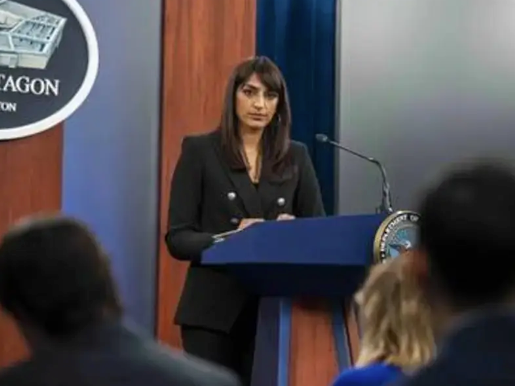
Sabrina Singh, a spokesperson for Pentagon told Afghanistan International on Thursday, that the US has international partners in its efforts to defeat ISIS.

Sabrina Singh, a spokesperson for Pentagon told Afghanistan International on Thursday, that the US has international partners in its efforts to defeat ISIS.
However, Sabrina Singh emphasised that the US does not consider the Taliban as a cooperative force in the fight against ISIS.
This statement comes after NBC News, citing its sources, reported that in light of the growing global threat from ISIS, Biden administration officials are considering expanding cooperation with the Taliban regime to help track down ISIS-Khorasan.
NBC based this information on details provided by two informed sources and a former US official.
The US and other Western governments are striving to counter the increasing danger posed by ISIS-Khorasan. Until earlier this year, American and other Western officials believed that ISIS-Khorasan had the intent to carry out attacks outside of Afghanistan but lacked the capability to do so.
However, this perspective changed after ISIS' attack on the Crocus City Hall concert venue in Moscow on March 22, which resulted in the deaths of 130 people.
The Taliban have been engaged in a bloody conflict with ISIS over the past few years and claim that ISIS has been suppressed and no longer poses a threat to the group or other countries.


Waheeda Amiri, a women's rights activist, has stated that even if Taliban members had raped her in prison, it would not have impacted her fight for freedom.
In an interview with Afghanistan International, Amiri said that the Taliban view women who fight against them as sexual slaves.
She shared that while she feared being raped in Taliban custody, it made no difference to her as she stood in defense of the women and people of Afghanistan, regardless of the consequences.
Amiri emphasised that a person only enters the struggle if they have experienced pain. She described her pain as being deprived of education during the Taliban's first regime in the 1990s. At that time, she was in the first grade and, due to being denied education, she remained illiterate until the age of 20.
The women's rights activist added that the Taliban forces repeatedly fired at their protests and used tear gas, but she was not afraid of the Taliban's violence. She continued her fight for the women of Afghanistan, especially in protest against the closure of girls' schools.
Amiri also noted that the Taliban's oppressive actions against activists and women's rights movements have caused women's protests to diminish on the streets of Afghanistan.
However, she stressed that the Taliban's violence against women has turned them into a serious movement, with their voices being heard more than ever worldwide.
Previously, the US State Department's annual report on human rights mentioned that 16 out of 90 women imprisoned in Jawzjan, Faryab, and Samangan had become pregnant after being raped by Taliban members.
The report also noted that the Taliban had executed at least four women in Samangan after they were repeatedly raped by its members.
In a joint report published in July by The Guardian and Rukhshana Media, it was revealed that Taliban members had gang-raped a female human rights activist in prison. The activist stated that the Taliban threatened to release a video of the sexual assault if she continued her protests against the group.

The United Nations Population Fund (UNFPA) announced that Afghanistan is in urgent need of 18,000 skilled midwives. UNFPA warned that if this need is not met, many women's lives will be at risk.
Afghanistan has one of the highest maternal mortality rates in the world and UNFPA says that midwives can fulfil about 90 percent of the immediate reproductive health needs of mothers, babies and adolescent girls.
According to the statement, there is a need for about 900,000 more trained midwives globally.
The United Nations Population Fund (UNFPA) said that in 2021, it supported more than 70 family clinics in Afghanistan, but that number has now increased more than six-fold to 477 clinics, despite the very challenging operating environment.
Since 2021, these clinics have helped more than five million Afghans access vital health services, especially in remote and hard-to-reach areas, according to the report.
High maternal mortality rate
The report of the United Nations Population Fund states that Afghanistan has long had one of the highest maternal mortality rates in the world, so much so that every hour, a woman dies due to complications of pregnancy and childbirth.
These deaths are largely preventable with the care of skilled midwives, according to the statement.
For every 100,000 births, 638 mothers die in childbirth, due to poverty, limited access to health services and gender inequality, as per a report.
Referring to the restrictions imposed by the Taliban on women's education, work, and travel, the UNFPA said that the prospects for this situation appear more dangerous for women, girls, and future generations in Afghanistan.

On Thursday, August 23, the Taliban's Supreme Court announced that an individual had been publicly flogged 39 times in Khost province after being convicted of blasphemy.
The court's statement detailed that the individual had been found guilty of insulting Islamic sanctities.
The sentencing was handed down by the Public Security Court of the Khost Primary Court, and the punishment was carried out in the presence of Aminullah Munib, the director of the Khost Court of Appeals, along with military and civilian government officials.
The Taliban did not disclose the identity of the individual in question.
This incident follows a similar case from the previous day, where the Taliban's Supreme Court revealed that a woman in Kabul had been flogged 35 times on charges of maintaining an extramarital affairs. The court added that she had been sentenced to two years in prison but did not provide further details about her identity or the manner in which the punishment was executed.

Kazakhstan's Ministry of Foreign Affairs announced on Wednesday, August 21, that it has officially recognised a Taliban diplomat as the Chargé d'Affaires of the Afghan Embassy in the country.
The ministry stated that the appointment of Mohammad Rahman Rahmani is significant for the development of relations between the two nations.
In a statement, the ministry mentioned that Alibek Bakayev, Kazakhstan's Deputy Foreign Minister, met the "head of the Afghan Embassy" in the city of Astana on Wednesday.
The statement did not refer to the "Islamic Emirate," the title the Taliban use for their regime.
Bakayev said, "Afghanistan's active presence among regional countries will lead to the revival of its economy and stability. This will improve the situation of the Afghan people and contribute to peace and security in the region."
The Deputy Foreign Minister emphasised that the official recognition of the Taliban representative as Chargé d'Affaires is aimed at "enhancing trade, economic, and humanitarian cooperation between Afghanistan and Kazakhstan”.
Last month, Turkmenistan, another key Central Asian country, also accepted a Taliban diplomat as the Chargé d'Affaires of the Afghan Embassy in Ashgabat.
Russia and Central Asian countries have been at the forefront of expanding relations with the Taliban regime in the region.
In June, Kazakhstan's President announced that the country had removed the Taliban from its list of terrorist groups to facilitate economic relations with Afghanistan under Taliban rule.

Sources in Nangarhar have informed Afghanistan International that at least 231 former members of the Afghan National Army, Police, and National Directorate of Security (NDS) are being held in a Taliban prison.
According to these sources, the Taliban detained these individuals without any specific charges.
Some of the imprisoned individuals, who wished to remain anonymous, told Afghanistan International's Pashto service that none of them know the reason for their detention, and the Taliban have provided no explanation to them.
Many of these prisoners have been in custody for nearly two and a half years, yet their fate remains uncertain.
Most of the detainees were arrested by the Taliban's Intelligence Directorate, Police Command, and the Ministry for the Propagation of Virtue and Prevention of Vice in Nangarhar.
One prisoner stated, "If Mullah Hibatullah's amnesty applies to everyone, then why are we still in prison? Yes, we served in the national army, some were in the police, and some in the NDS; but after the regime change, we left our duties, and I even started a shop in my village."
Another detainee, who identified himself as Rahmanullah, mentioned that his family struggles to visit him in prison. Rahmanullah also revealed that the former soldiers in Jalalabad prison had written to the Taliban governor in Nangarhar, requesting a decision on their fate, but they have yet to receive a response.
He added, "What kind of amnesty is this? Either kill us all or take us to court so we can understand what our charges are." He also mentioned that the staff of the Taliban's Ministry for the Propagation of Virtue and Prevention of Vice refer to them as "slaves of infidels" and subject them to psychological and emotional torture.
Meanwhile, a source in Nangarhar province told Afghanistan International that a meeting was held earlier last month to discuss the fate of these prisoners.
According to this source, during the administrative meeting, representatives from the province, intelligence, and police command were assigned the task of reviewing the cases of the 231 former security personnel and then presenting them to the court.
The source further stated that the Taliban's Intelligence Directorate and Police Command would investigate the records of former army soldiers and NDS members to determine how many battles they had participated in and whether they had killed anyone during the conflict.
Nangarhar province had the highest number of soldiers serving in the ranks of the former security forces.
The United Nations Assistance Mission in Afghanistan (UNAMA) has reported on several occasions that the Taliban has imprisoned, tortured, and even executed former soldiers and government employees; however, the group has repeatedly denied these allegations.