Taliban Arrest Dozens of Money Exchangers in Herat Amid Crackdown on Unlicensed Operators
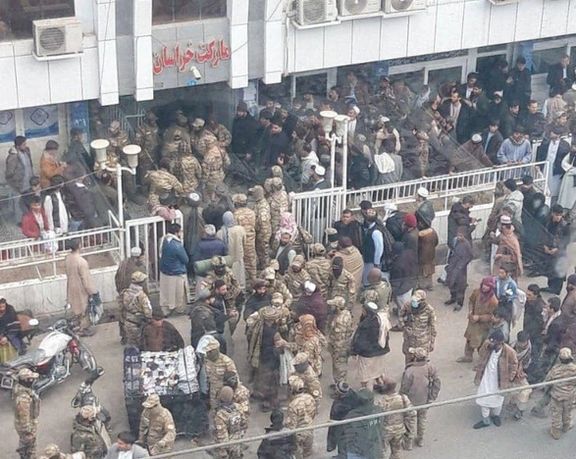
Sources in Herat report that the Taliban have arrested more than 60 money exchangers over the past week for operating without licences.
Sources in Herat report that the Taliban have arrested more than 60 money exchangers over the past week for operating without licences.
The arrests come in the wake of new regulations introduced by the Taliban-controlled Central Bank of Afghanistan, requiring money exchangers to provide a guarantee of six million Afghanis to obtain a licence.
The Currency Exchange and Monetary Services law, implemented in 2024, prohibits anyone from providing monetary services without a valid licence. Sources indicate that the Taliban has intensified its enforcement efforts, particularly between Thursday of last week and Wednesday, 1 January.
Taliban military units reportedly blocked access to Behdad and Khurasan markets in Herat, detaining money exchangers, shopkeepers, and even ordinary citizens collecting funds. These arrests follow months of increased pressure on the money exchange community in Herat.
In late July 2024, the Taliban had already shut down the Khurasan Market, Herat’s main hub for currency exchange. This closure prompted dozens of money exchangers to stage a protest outside the Taliban governor’s office in Herat, demanding the market’s reopening and the removal of restrictive conditions on their operations.
In addition to protests, the Afghan Money Exchangers Union had gone on strike in recent months to oppose the Taliban’s stringent requirements. A money exchanger in Herat told Afghanistan International that many exchangers cannot afford the six million Afghani guarantee, while others who can are reluctant to comply due to a lack of trust in the Taliban.

The National Resistance Council for the Salvation of Afghanistan has condemned the Taliban’s increasing restrictions throughout 2024, describing this period as the “darkest and bleakest” in the nation’s history.
In its New Year’s message, the council accused the Taliban of imposing policies that have “paralysed” the lives of the Afghan people.
In a statement released on Wednesday, the council reflected on 2024 as a year marked by significant global events and profound political, economic, and social crises in Afghanistan. The council criticised the Taliban’s escalating restrictions across security, economic, social, and legal spheres, which have further destabilised the country and disrupted the daily lives of its citizens.
The statement highlighted the plight of women and girls, stating that 2024 has been “particularly difficult and filled with restrictions” for them. The council condemned the Taliban’s policies, which have systematically eroded the rights and freedoms of Afghan women and girls, further deepening their marginalisation.
Looking ahead, the council expressed hope that 2025 would bring about collective efforts and international cooperation to address Afghanistan’s ongoing crises. The council called on global actors to work towards resolving the country’s political, economic, and social challenges and to take concrete steps to end the injustices faced by its people.
As Afghanistan enters the new year, the council urged the international community to prioritise the rights and welfare of the Afghan population and to support initiatives aimed at restoring stability and justice in the region.
The Taliban’s Office of the Deputy Prime Minister for Economic Affairs has attributed severe water shortages and a lack of resources in rural areas as the primary drivers behind migration from villages to cities.
The office has reported that half of Afghanistan’s arable land remains unused due to insufficient water supplies.
On Wednesday, the office published a report titled “The Shah wa Arus Dam: A Significant Step in Agricultural Development,” which highlights the detrimental impact of climate change on water availability and agricultural land. The report underscores the critical need for constructing dams and implementing effective water management systems to address these challenges.
The Taliban emphasised that building dams would not only enhance agricultural productivity but also serve as a significant step towards generating electricity. Afghanistan currently produces only 20% of its electricity needs domestically, relying heavily on imports from neighbouring countries. The report stressed the urgent necessity of increasing domestic power generation capacity through dam construction.
In addition to addressing water scarcity, the Taliban highlighted the role of dams in mitigating natural disasters. Afghanistan, one of the countries most vulnerable to the effects of climate change, has experienced a series of severe droughts, floods, and the destruction of homes and farmland in recent years.
The report also raised concerns about the future of wheat cultivation in Afghanistan, predicting below-average yields due to adverse weather conditions. Above-average temperatures are expected to disrupt groundwater supplies needed for spring planting, while colder-than-anticipated weather could further hinder crop growth.
The Taliban’s Office of the Deputy Prime Minister for Economic Affairs argued that investment in dams and water management systems could help alleviate these challenges. It stated that such initiatives would improve agricultural production, create employment opportunities in rural communities, and reduce migration from villages to urban centres.
Statistics from the Taliban’s Supreme Court and statements from officials across Afghanistan indicate that the group publicly flogged 583 people and executed six individuals during 2024.
The Taliban have repurposed Afghanistan’s sports stadiums—once venues for cricket, football, and cultural events—into spaces for public punishments. Nearly every day, men and women accused of various crimes face public floggings or beatings before onlookers in different provinces. Many of these punishments are carried out collectively.
One victim, Zarghona Zendagi, a resident of Behsud District in Nangarhar, shared her harrowing experience of being publicly flogged about 18 months ago for an alleged “illicit relationship,” an accusation she vehemently denies. The emotional scars of the event continue to affect her profoundly.
Zarghona stated: “What hurts the most is being arrested, flogged, and humiliated in front of my family and community without any crime or wrongdoing.”
She described how her ordeal began: “My mother was seriously ill and hospitalised. With no male family member to help, I had to manage everything myself. A hospital staff member assisted me in caring for her, and that’s how we became acquainted.”
She recounted being arrested by the Taliban after running into the same hospital staff member in the city, where he inquired about her mother’s health. Accused of an “illicit relationship,” she faced a swift trial, resulting in public flogging and a forced marriage to the man with whom she had only exchanged greetings. Zarghona revealed that this forced marriage brought no solace; instead, she continues to endure disdain and humiliation from her husband’s family and her community.
Zarghona is among many Afghans who have faced such punishments, which are widely condemned as torture under international conventions. Over three years into the Taliban’s rule, public floggings and executions remain a near-daily occurrence across Afghanistan.
A Year of Brutal Punishments
According to data from the Taliban’s Supreme Court and media reports, 583 individuals were publicly flogged and six were executed in 2024 alone. A voice recording attributed to Taliban leader Hibatullah Akhundzada, released on 24 March 2024, ordered the enforcement of public punishments to uphold Sharia law.
In the first half of 2024, the Taliban publicly flogged approximately 250 individuals. The first recorded punishment occurred on 22 December 2022 at the central football stadium in Tirin Kot, Uruzgan, where 22 people, including two women, were whipped for various alleged crimes.
Reports from the United Nations and the Taliban governor’s media office in Sar-e-Pul show that 39 individuals were flogged in January and February 2024. A further 210 were flogged between March and June. The remaining 334 floggings took place in the latter half of the year.
Taliban court documents reveal that in July 2024, 44 people were publicly flogged. Between August and October, 161 individuals faced similar punishments, followed by 81 in November and 46 in December. The charges ranged from extramarital relationships, theft, and fraud to “immorality” and running away from home.
Floggings occurred across multiple provinces:
January and February 2024: One person in Paktika, four in Helmand, 11 in Maidan Wardak, eight in Herat, four in Laghman, two in Sar-e-Pul, and 13 in Bamiyan.
June 2024: A total of 147 individuals were flogged, including 63 (14 women) in Sar-e-Pul’s central stadium for charges of immorality, theft, and illicit relationships.
July 2024: Floggings continued in provinces such as Ghazni, Bamiyan, Kandahar, Paktika, Uruzgan, Badghis, Panjshir, Parwan, and Kunar.
August–October 2024: 161 individuals were publicly punished in various regions, including 42 in Khost, 19 in Kabul, and others in Faryab, Takhar, and Herat.
November–December 2024: Public floggings continued in provinces like Paktia, Khost, Balkh, Samangan, and Kabul.
Taliban Justifications and Global Condemnation
The Taliban assert that public punishments are mandated by Sharia law and serve as a deterrent to prevent crime. Taliban leader Hibatullah Akhundzada has ordered their implementation as part of the group’s governance strategy.
However, human rights organisations and the international community widely condemn these actions as gross violations of human rights. The United Nations, Amnesty International, and other groups have repeatedly called on the Taliban to cease public punishments and respect human rights principles.
On 21 May 2024, Richard Bennett, the UN Special Rapporteur for Afghanistan, condemned the Taliban’s use of corporal punishment, urging its immediate cessation.
Nazifa Jalali, a member of the Committee for Documenting Human Rights Violations, criticised the silence of international organisations and Islamic countries over the Taliban’s abuses. She accused these nations of prioritising their political and economic interests, citing China’s silence as an example of trade-driven indifference.
Anwar Zeb Khan, a representative of Bajaur in the Khyber Pakhtunkhwa Provincial Assembly of Pakistan, has revealed that hundreds of insurgents from Afghanistan have entered the Bajaur region and seized control of five checkpoints.
According to Khan, the insurgents have raised the flag of the Afghan Taliban in the area.
The Pakistani newspaper Dawn reported on Wednesday, 1 January, that Khan made these remarks during a session in which the provincial assembly summoned the Khyber Pakhtunkhwa police commander.
Khan, a member of the Pakistan Tehreek-e-Insaf (PTI) party, stated: “The terrorists entered the [Bajaur] region in broad daylight last Sunday, seized the checkpoints, and raised the Islamic Emirate of Afghanistan flags while chanting slogans in its favour.”
He further noted that approximately 400 insurgents captured checkpoints located in the “Mulla Saeed Banda” area, which lies far from the Afghan border.
Criticising the effectiveness of the fenced border between Pakistan and Afghanistan, Khan remarked: “I am simply astonished at how such a large number of terrorists managed to cross the fenced border.”
The Pakistani politician disclosed that the insurgents have fortified their positions by digging new trenches and building strongholds in the region. He added that the Pakistan Army has asked residents of the Mulla Saeed Banda area to evacuate, allowing for a clearance operation to be conducted.
In recent weeks, insurgent attacks have escalated in various parts of Khyber Pakhtunkhwa province. The Pakistani military has consistently alleged that insurgents carry out these attacks from Afghan territory. However, the Taliban have rejected these accusations, asserting that Pakistan is shifting the blame for its security failures onto others.
The International Committee of the Red Cross (ICRC) has revealed that 455 civilians were killed or injured in 234 explosion-related incidents across Afghanistan in 2024.
Alarmingly, 359 of the victims were children, according to the organisation.
In a statement released on Tuesday, the ICRC highlighted its collaboration with the Afghan Red Crescent Society in delivering awareness programmes to over 240,000 individuals this year, more than half of whom were children.
The organisation underscored the dire humanitarian situation in Afghanistan, describing 2024 as a year fraught with significant crises. It cited economic hardships, natural disasters, and the lingering impacts of armed conflict as the primary challenges facing the nation.
The ICRC voiced particular concern for vulnerable groups, including women, children, and individuals with disabilities, emphasising the urgent need for sustained international attention and long-term support to address these issues.
Access to clean drinking water was also identified as a critical challenge. The ICRC reported that it had rehabilitated 1,247 water pumps in nine provinces throughout 2024, aiming to improve access to this essential resource.
The report further revealed that floods impacted more than 119 people across 32 provinces, resulting in the destruction of 6,800 homes.
The ICRC called for continued efforts to deliver vital assistance to those most in need, urging the international community to remain focused on Afghanistan’s humanitarian plight.