Islamic Republic of Iran Executes Three Afghan Prisoners In Bandar Abbas
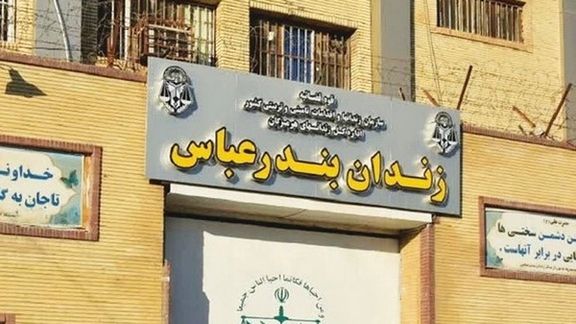
The Iranian Human Rights Organisation reported that the Islamic Republic executed five prisoners, including three Afghans, in the central prison of Bandar Abbas.

The Iranian Human Rights Organisation reported that the Islamic Republic executed five prisoners, including three Afghans, in the central prison of Bandar Abbas.
The organisation said that the Islamic Republic's judiciary had previously sentenced the prisoners to death on drug-related charges.
The Iranian Human Rights Organisation wrote in a statement that authorities at Bandar Abbas Central Prison carried out the death sentences of these prisoners on Wednesday morning, January 1. The organisation identified one of the executed prisoners as Ramzi Yigsavar, 25, from the Baburiyan tribe of Afghanistan.
The Iranian Human Rights Organisation has identified the two executed Iranian prisoners as Hedayat Ghasemi and Shahrokh Sabahpour. The organisation said that the identities of the other two Afghan prisoners who were executed are still unknown.
Earlier, the Iranian Human Rights Organisation announced on Monday, the execution of an Afghan prisoner named Jalal Stanikzai in Aligudarz prison in Lorestan. The organisation wrote that Jalal Stanikzai had been arrested four years ago on charges of premeditated murder and sentenced to death.
The Islamic Republic has continued to carry out this sentence, despite opposition from international organisations to the execution of the defendants.
According to the Human Rights Organisation Hengaw, the Islamic Republic of Iran executed at least 74 Afghan prisoners in 2024.


Fazl Ahmad Manawi, a former justice minister and a member of the National Resistance Front (NRF), said that Khalil Haqqani, the former Taliban refugee minister, had indirect and continuous contacts with the NRF.
He added that these contacts continued since the war in Panjshir until the suicide attack on Haqqani's life.
However, he emphasised that Ahmad Massoud, the leader of the National Resistance Front, had no direct contact with Khalil Haqqani.
Manawi said in an interview with Afghanistan International on Wednesday that Khalil Haqqani was not a supporter of war and that they received repeated calls from him when the war was underway in Panjshir.
He clarified that Haqqani's efforts to prevent war and stand his ground continued until the last moment.
Earlier, Michael Semple, former deputy EU envoy for Afghanistan, had said in an interview with Afghanistan International that Haqqani was assassinated because of covert internal and external connections. He said that the Taliban leader was suspicious of Haqqani's contacts. Semple had described Haqqani's assassination as a result of internal Taliban conflicts.
Fazl Ahmadi Manawi, a senior member of the National Resistance Front, also attributes the assassination of Khalil Haqqani to internal Taliban disputes.
Khalil Haqqani was killed last month in a suicide attack at the headquarters of the Taliban’s Ministry of Refugees in Kabul.
Manawi mentioned the increasing dissatisfaction within the Taliban ranks, saying that the Kandahar group had monopolised power, and this had caused dissatisfaction among other factions within the group.
Manawi predicted that with the coming to power of the new US government, aid to the Taliban will be cut off and they will not be able to finance the huge expenses of their jihadi schools and security institutions through taxes and underground resources.
Manawi stated that the coming year will not be a good year for the Taliban, predicting that signs of the Taliban's collapse will become more visible in 2025. This member of the National Resistance Front stated that in a meeting with representatives of regional countries, they realised that these countries were also disappointed with the Taliban.

An assistant professor at Allameh Tabataba’i University said at a conference in Tehran on Wednesday that many elites from Afghanistan migrated to Iran after the Taliban came to power.
Mandana Tishehyar called them human capital and considered their migration to Western countries to be detrimental for Iran.
In the talk "Immigration of Scientific Elites in Iran Today, Challenges and Solutions," this university professor said that Afghan immigration to Iran began in the 1970s and now their second and third generations are present in Iran, those who, according to Tishehyar, were educated and raised in Iran.
According to IRNA, Tishehyar said that after the Taliban came to power in Afghanistan, a wave of people left the country, "including educated people such as university professors, students, doctors, engineers, lawyers, economists, sociologists, journalists, writers, and athletes who brought financial capital to Iran in addition to human capital”.
Tishehyar, pointing out that these people leave Iran for Western countries, America, and Australia after a while for various reasons, said, "No effort was made to ensure their continued existence. The migration of this group of Afghans from Iran is not in the country's interest and will end up being detrimental to Iran in the long run."
The university professor went on to say that as Afghan immigrants leave Iran, “their next generation will become alienated from the Persian language”. She said, “Elite Afghan immigrants could have helped Iran solve some issues such as smuggling, security, counter-terrorism, the environment, climate change, and the water issue.”
The assistant professor at Allameh Tabataba‘i University also pointed out the issue of preventing women and girls from getting an education in Afghanistan, saying that preventing women from getting an education by the Taliban "will result in their children not being educated properly in the future, which will have consequences for Iran as well”.
This university professor in Tehran criticises the lack of efforts to retain elite Afghan immigrants, even though in recent months the Islamic Republic has launched a massive campaign to collect and deport Afghan immigrants from their country.
In addition, restrictions on the education of children of immigrant families have increased, and employment and even settlement of Afghans have been banned in many Iranian cities.
The harsh treatment and inappropriate treatment of Afghan immigrants by law enforcement officials and, in some cases, by Iranian citizens has made it difficult for families to consider staying in Iran. In recent years, many Afghans have tried to move to European countries, the United States, and Australia.

Pakistan's Defence Minister Khawaja Asif has claimed that the Taliban had demanded 10 billion rupees to remove the Tehreek-e-Taliban Pakistan (TTP) from the border areas.
He asked Taliban officials to guarantee that the militants would not return to Pakistan, but they did not respond positively.
Hamid Mir, a well-known Geo News TV host, on Wednesday released a part of his interview with Asif, who has always made harsh and critical statements against the Taliban.
The Pakistani defence minister said, "After the Taliban returned to power, I went to Afghanistan and met with the Taliban’s defence minister and other leaders. I told them that if the terrorists did not stop, we would be forced to take action and they should not complain later."
Pakistan has bombed Afghan border areas at least twice in the past three years, saying that the attacks target members of the Tehreek-e-Taliban Pakistan (TTP) who have safe havens in the areas.
In the latest incident, the Pakistani army attacked the Barmal district of Paktia province, killing at least 48 people. The Taliban claimed that civilians, including children and women, were killed in the attack. However, Pakistani officials claim that they had targeted leaders of the Tehreek-e-Taliban Pakistan (TTP).
Pakistan has asked the Taliban not to allow Pakistani militants to operate in border areas and attack Pakistani security forces. Khawaja Asif claimed in the interview that the Taliban “demanded 10 billion rupees to transfer members of the Tehreek-e-Taliban Pakistan (TTP) to another location”.
Earlier, there were reports that the Taliban planned to move TTP members to northern Afghanistan, but the group has not shown any interest in being present in the north.
The senior Pakistani official said that internal threats pose a greater threat to Pakistan's security than external threats. He accused former Prime Minister Imran Khan of settling more than 40,000 Tehreek-e-Taliban Pakistan (TTP) members in Khyber Pakhtunkhwa.
He addressed the recent US sanctions against his country's missile programme and said that those responsible for the genocide in Gaza have no right to protest against Pakistan.
The United States has sanctioned several Pakistani companies and entities for their involvement in Pakistan's ballistic missile development programme. The country said that Islamabad has no justification for building these missiles, which could also endanger US security.

Sources in Herat report that the Taliban have arrested more than 60 money exchangers over the past week for operating without licences.
The arrests come in the wake of new regulations introduced by the Taliban-controlled Central Bank of Afghanistan, requiring money exchangers to provide a guarantee of six million Afghanis to obtain a licence.
The Currency Exchange and Monetary Services law, implemented in 2024, prohibits anyone from providing monetary services without a valid licence. Sources indicate that the Taliban has intensified its enforcement efforts, particularly between Thursday of last week and Wednesday, 1 January.
Taliban military units reportedly blocked access to Behdad and Khurasan markets in Herat, detaining money exchangers, shopkeepers, and even ordinary citizens collecting funds. These arrests follow months of increased pressure on the money exchange community in Herat.
In late July 2024, the Taliban had already shut down the Khurasan Market, Herat’s main hub for currency exchange. This closure prompted dozens of money exchangers to stage a protest outside the Taliban governor’s office in Herat, demanding the market’s reopening and the removal of restrictive conditions on their operations.
In addition to protests, the Afghan Money Exchangers Union had gone on strike in recent months to oppose the Taliban’s stringent requirements. A money exchanger in Herat told Afghanistan International that many exchangers cannot afford the six million Afghani guarantee, while others who can are reluctant to comply due to a lack of trust in the Taliban.

The National Resistance Council for the Salvation of Afghanistan has condemned the Taliban’s increasing restrictions throughout 2024, describing this period as the “darkest and bleakest” in the nation’s history.
In its New Year’s message, the council accused the Taliban of imposing policies that have “paralysed” the lives of the Afghan people.
In a statement released on Wednesday, the council reflected on 2024 as a year marked by significant global events and profound political, economic, and social crises in Afghanistan. The council criticised the Taliban’s escalating restrictions across security, economic, social, and legal spheres, which have further destabilised the country and disrupted the daily lives of its citizens.
The statement highlighted the plight of women and girls, stating that 2024 has been “particularly difficult and filled with restrictions” for them. The council condemned the Taliban’s policies, which have systematically eroded the rights and freedoms of Afghan women and girls, further deepening their marginalisation.
Looking ahead, the council expressed hope that 2025 would bring about collective efforts and international cooperation to address Afghanistan’s ongoing crises. The council called on global actors to work towards resolving the country’s political, economic, and social challenges and to take concrete steps to end the injustices faced by its people.
As Afghanistan enters the new year, the council urged the international community to prioritise the rights and welfare of the Afghan population and to support initiatives aimed at restoring stability and justice in the region.