• العربية
  • پښتو
  • فارسی
Brand
  • Afghanistan
  • Sport
  • Markets
  • Afghanistan
  • Sport
  • Markets
  • Theme
  • Language
    • العربية
    • پښتو
    • فارسی
  • Afghanistan
  • Sport
  • Markets
All rights reserved for Volant Media UK Limited
volant media logo

Pakistan’s UN Envoy Reaffirms Support For UNAMA Mission In Afghanistan

Mar 6, 2025, 14:30 GMT+0

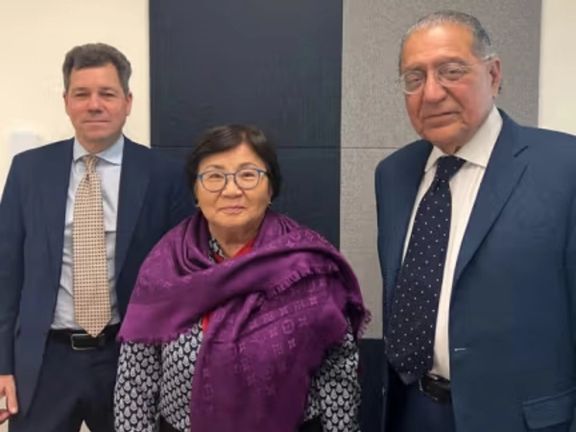
Pakistan’s Permanent Representative to the United Nations, Munir Akram, met with Roza Otunbayeva, the UN Secretary-General’s Special Representative for Afghanistan, on Thursday, expressing Pakistan’s full support for the UN Assistance Mission in Afghanistan (UNAMA).

During their meeting, Akram and Otunbayeva also discussed ongoing humanitarian aid efforts in Afghanistan, according to a statement issued by Pakistan’s UN mission.

The meeting comes amid criticism from the Taliban, who recently labelled UNAMA’s mission in Afghanistan a “failure.” Taliban spokesperson Zabihullah Mujahid accused the UN mission of publishing “negative and inaccurate” reports about Afghanistan, arguing that such reports contribute to a “negative perception” of the country within the United Nations.

The United Nations has announced that Otunbayeva will brief the UN Security Council on the situation in Afghanistan on 10 March.

On 15 March last year, the UN Security Council unanimously adopted a resolution extending UNAMA’s mandate for another year. A decision on whether to extend the mission further is expected soon.

Pakistan’s UN mission emphasised that Ambassador Akram reaffirmed Pakistan’s commitment to supporting UNAMA’s mandate and its role in Afghanistan.

In June 2024, Pakistan was elected as a non-permanent member of the UN Security Council. Alongside Denmark, Greece, Panama, and Somalia, Pakistan secured a two-year term with overwhelming support from the UN General Assembly. These five countries will serve on the Security Council from 1 January 2025 to 31 December 2026.

Most Viewed

Taliban Order Cut To Residential Fibre-Optic Internet In Kabul, Say Sources
1

Taliban Order Cut To Residential Fibre-Optic Internet In Kabul, Say Sources

2

Taliban Besieged TOLOnews Offices After Journalist Detentions, Say Sources

3

Taliban Leader Adviser Arrested In Kandahar Over Alleged Bribery

4

Pakistani Envoy Urges Taliban to Take Practical Action Against Militants

5

Exiled Media Watchdog Urges UN, EU To Seek Release Of Journalists Held By Taliban

•
•
•

More Stories

Anti-Taliban Forces Carried Out 91 Attacks In Three Months, Reports UN

Mar 6, 2025, 13:06 GMT+0

UN Secretary-General António Guterres has confirmed in his latest report that anti-Taliban armed groups conducted 91 attacks against the Taliban over the past three months.

According to the report, the National Resistance Front of Afghanistan (NRF) was responsible for 53 of these attacks, while the Afghanistan Freedom Front (AFF) carried out 21. The People's Sovereignty Front of Afghanistan, a group reportedly led by former parliament members and politicians, claimed responsibility for one attack.

The perpetrators of 16 additional attacks remain unidentified.

The UN confirmed that anti-Taliban groups have targeted key locations, including the Ministry of Interior in Kabul and the Bagram military base in Parwan province. The NRF claimed responsibility for an attack on 28 December targeting the Taliban’s Ministry of Interior in Kabul. Meanwhile, the AFF claimed responsibility for two separate attacks on Bagram base and district on 19 December and 31 December.

The United Nations has warned of a severe funding shortfall for humanitarian aid in Afghanistan, revealing that as of January 2025, only 3.5 percent of the requested aid has been secured.

This funding is part of the 2025 Humanitarian Needs and Response Plan, which aims to assist 16.8 million people. The UN has identified 22.9 million Afghans in need of urgent aid.

Reports indicate that out of the $2.42 billion required for the response plan, only 3.5 percent has been funded. Similarly, the UN’s Strategic Framework for Afghanistan (2023–2025) has received less than 11 percent of the $2.53 billion needed for 2025.

The ongoing humanitarian crisis in Afghanistan has been exacerbated by dwindling financial resources and restricted access to affected regions. Aid agencies have warned that without sufficient funding, the UN’s ability to provide critical assistance could be severely impacted, endangering millions of lives.

The UN Assistance Mission in Afghanistan (UNAMA) has reported that Taliban leader Hibatullah Akhundzada is tightening his grip on power.

According to the UN report, Akhundzada has recently convened high-level meetings in Kandahar, reinforcing his direct control over the Taliban administration. He has also appointed loyalists to key positions, further solidifying his influence within the regime.

Taliban Agree To Talks, But Federal Govt Refuses To Cooperate, Says KP Chief Minister

Mar 6, 2025, 11:55 GMT+0

Khyber Pakhtunkhwa Chief Minister Ali Amin Gandapur announced on Wednesday that the Afghan Taliban have agreed to engage in negotiations on security issues, with a committee established to facilitate the process.

However, he accused Pakistan’s federal government of failing to cooperate with the provincial administration on the matter.

Speaking at a press conference at the Peshawar High Court, the senior Khyber Pakhtunkhwa government official revealed that the provincial administration had submitted Terms of Reference (TORs) for talks with Afghanistan to the federal government but had received no response despite multiple reminders.

“We have sent the TORs for talks with Afghanistan to the federal government, but despite repeated reminders, no response has been received. Terrorism is not just an issue for our province but for the entire country,” the official stated, as quoted by The News International.

Call for Dialogue Amid Rising Terrorism

Gandapur stressed that dialogue with the Afghan Taliban is the only viable solution to counter terrorism in Pakistan. He urged the federal government to take the security crisis seriously and respond to the proposals submitted by the Khyber Pakhtunkhwa government. He warned that if terrorism in the province is not effectively addressed, it could soon spread across the country.

Over the past year, both Khyber Pakhtunkhwa and Balochistan have witnessed a surge in terrorist attacks. In response, the Khyber Pakhtunkhwa administration has repeatedly called for negotiations with the Afghan Taliban.

Political Divide Over Engagement with the Taliban

Currently, Khyber Pakhtunkhwa is governed by the Pakistan Tehreek-e-Insaf (PTI), led by former Prime Minister Imran Khan, while the federal government is controlled by opposition parties. The PTI-led provincial government has historically favoured engagement with both the Afghan Taliban and the Tehreek-e-Taliban Pakistan (TTP). However, Pakistan’s federal government and military firmly oppose granting any concessions to the Taliban, particularly the TTP.

The primary obstacle in past negotiations between the Pakistani government and the TTP has been the militants’ demands. While the government insists on the surrender of the TTP, the group demands control over parts of the tribal areas and the implementation of Sharia law. Previous negotiations, facilitated by the Afghan Taliban, were held in Kabul in 2022 but ultimately failed due to these irreconcilable differences.

Trump’s New U.S. Travel Ban May Include Citizens Of Afghanistan & Pakistan

Mar 6, 2025, 10:30 GMT+0

A new executive order on travel restrictions, expected to be signed next week by U.S. President Donald Trump, may include citizens of Afghanistan and Pakistan, potentially barring their entry into the United States, Reuters reported, citing three informed sources.

According to the report, released early Thursday, tens of thousands of Afghan citizens could be affected by the proposed ban. The sources, who requested anonymity, said the decision stems from government assessments of security risks and deficiencies in the screening processes for travellers from these countries.

The sources indicated that Afghanistan is expected to be placed on the list of countries facing a full travel ban, while Pakistan is also under consideration. Other countries may also be included, though details remain unclear.

If implemented, the order would resemble Trump’s first-term travel ban, which targeted several Muslim-majority nations. That policy, initially introduced in 2017, was revised multiple times before being upheld by the U.S. Supreme Court in 2018. Trump’s successor, Joe Biden, reversed the ban in 2021.

Impact on Afghan SIV Holders and Refugees

The new restrictions could significantly impact Afghan citizens who had been approved for resettlement in the U.S. under refugee and Special Immigrant Visa (SIV) programmes but have not yet entered the country. Many of these individuals remain at risk of Taliban retaliation due to their cooperation with the U.S. during its 20-year military presence in Afghanistan.

One Reuters source said that these individuals are undergoing extensive security screening to ensure they are fully vetted. The U.S. State Department office responsible for overseeing Afghan resettlements is reportedly working to exempt SIV holders from the ban, though a source cautioned that such an exemption is “unlikely to be granted.”

Trump’s Executive Order and Its Broader Implications

Trump issued an executive order on 20 January calling for heightened security vetting for all foreign nationals seeking to enter the U.S. The order mandates that several government agencies— including the State Department, the Department of Justice, the Department of Homeland Security, and the Office of the Director of National Intelligence— submit a list of countries facing potential travel restrictions by 12 March.

The departments involved have not yet responded to requests for comment.

The travel ban is part of a broader immigration strategy that Trump has pursued since returning to office. In an October 2023 speech, he pledged to restrict entry from Gaza, Libya, Somalia, Syria, Yemen, and “anywhere else that threatens our security.”

Concerns Over Afghan Evacuations

Shawn VanDiver, president of a coalition involved in Afghan evacuations and resettlements in coordination with the U.S. government, has urged visa holders to travel to the U.S. as soon as possible.

AfghanEvac, an organisation advocating for Afghan refugees and military partners of the U.S., warned that the Trump administration is likely to reinstate a travel ban affecting Afghan nationals. On Wednesday, the organisation posted on X:

“If you have a valid U.S. visa in your passport/travel document, travel as soon as possible. We are hearing from within State that a travel ban is likely coming in the next week for Afghan nationals (and others).”

AfghanEvac stated that while details on the potential travel ban remain uncertain, the organisation will oppose any such directive if confirmed.

During his first term, Trump’s travel ban did not initially include Afghanistan, but in 2017, The New York Times reported that the U.S. Embassy in Kabul had refused to issue visas to Afghans who had worked with the U.S. government, instructing them to withdraw their applications.

AfghanEvac, founded in August 2021 during the U.S. military’s withdrawal from Afghanistan, works to resettle at-risk Afghans, particularly former U.S. military partners. The organisation, comprising a coalition of 250 groups, has helped relocate over 195,000 eligible Afghans to the U.S. since 2021.

If enacted, the proposed travel ban would represent a significant setback for Afghan evacuees still awaiting resettlement, further complicating efforts to protect those who assisted U.S. forces during the war in Afghanistan.
Afghan Nationals Involved In Deadly TTP Attack On Bannu Military Base

Mar 6, 2025, 09:50 GMT+0

The Pakistani military has talked of Afghan nationals involvement in a deadly attack on a military cantonment in Bannu, Khyber Pakhtunkhwa, claiming the assault was orchestrated by the Tehreek-e-Taliban Pakistan (TTP) from Afghan soil.

In a statement released on Wednesday, the Inter-Services Public Relations (ISPR) confirmed that the TTP militants launched the attack on Tuesday using two explosive-laden vehicles. The assault resulted in 34 fatalities, including five Pakistani soldiers, 13 civilians, and 16 TTP militants, four of whom were suicide bombers. At least 32 others sustained injuries.

The powerful explosions partially destroyed the cantonment’s perimeter wall and several nearby houses. Videos circulating on social media captured the moment of the blasts, showing thick plumes of smoke rising into the sky amid sustained gunfire.

The Pakistani military has called on the Taliban government to prevent its territory from being used for terrorist activities against Pakistan. It warned that Islamabad reserves the right to take necessary measures in response to cross-border threats.

This incident marks the latest in a series of attacks where Pakistan has accused Afghan nationals of involvement in the ongoing conflict between the Pakistani military and the TTP. Islamabad has repeatedly claimed that the Taliban government provides sanctuary to TTP militants, an allegation Kabul denies, asserting that Pakistan’s security challenges are rooted within its own borders.

The Bannu attack comes amid ongoing clashes between Pakistani border forces and the Taliban at the Torkham border, which have been escalating over the past several days.

Kabul Airport Attack Mastermind, An Afghan National, Arrested At Border, Says Pakistan PM

Mar 5, 2025, 16:23 GMT+0

Pakistani Prime Minister Shehbaz Sharif has confirmed that the mastermind behind the attack on Kabul Airport is an Afghan national who was apprehended during an operation at the Afghanistan-Pakistan border.

Expressing gratitude to Donald Trump, Sharif emphasised Islamabad’s continued cooperation with Washington in combating terrorism and maintaining regional security.

On Wednesday, 5 March, in his first address at a joint session of the U.S. Congress, former President Donald Trump announced that, in collaboration with Pakistan, the mastermind of the deadly Kabul Airport attack had been captured. The incident, which claimed the lives of 13 American soldiers and over 170 Afghan citizens, has now led to the suspect’s extradition to the United States for trial.

In a note posted on X, Sharif stated: “We thank US President Donald Trump for acknowledging and appreciating Pakistan’s role and support in counter-terrorism efforts across the region, in the context of Pakistan Security Forces’ recent apprehension of ISKP’s top-tier operational commander Shareefullah, an Afghan national.”

Sharif also reaffirmed Pakistan’s unwavering commitment to eradicating the threat of terrorism, adding, “We will continue to partner closely with the United States in securing regional peace and stability.”

The Associated Press, citing the White House, has identified the senior ISIS-K member as Mohammad Sharifullah. Similarly, Axios, quoting U.S. sources, reported that the individual, also known as “Jafar”, was responsible for planning and coordinating the attack at Abbey Gate – the entrance to Kabul Airport. Axios further noted that Sharifullah is expected to arrive in the United States on Wednesday, where his court hearing will be held publicly.