• العربية
  • پښتو
  • فارسی
Brand
  • Afghanistan
  • Sport
  • Markets
  • Afghanistan
  • Sport
  • Markets
  • Theme
  • Language
    • العربية
    • پښتو
    • فارسی
  • Afghanistan
  • Sport
  • Markets
All rights reserved for Volant Media UK Limited
volant media logo

Pakistan, Taliban Resume Talks On Reopening Torkham Border After Weeks Of Closure

Mar 17, 2025, 10:48 GMT+0

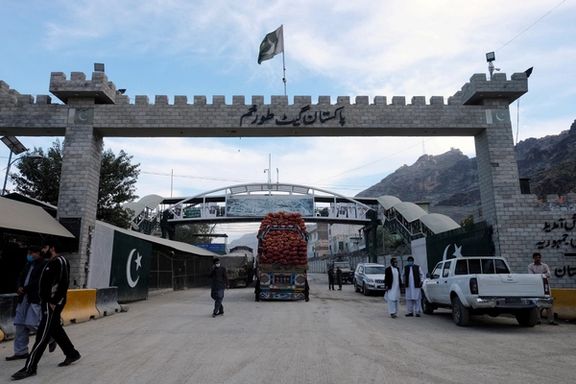
Pakistan and the Taliban are set to resume negotiations on Monday to reopen the Torkham border, which has been closed for the past 25 days. Sources told Afghanistan International that delegations from both sides have traveled to Torkham for talks scheduled at noon.

A Pakistani delegation, led by Syed Jawad Hussain Kazmi, head of the Khyber Pakhtunkhwa Chamber of Industry and Commerce, left Jamrud for the border. Meanwhile, a 25-member Afghan delegation from Jalalabad, Nangarhar province, is also heading to Torkham.

This is the second Pakistani delegation to engage in talks after last week’s negotiations ended without progress. A 57-member Pakistani delegation had previously met with Taliban representatives, calling for an immediate ceasefire and the reopening of the border. However, the talks collapsed after the Taliban continued building a border post, which Pakistan strongly opposed.

The Torkham border, a crucial crossing between Afghanistan and Pakistan, has remained shut since clashes erupted on 21 February. The dispute began when the Taliban attempted to construct a border post, while Pakistan installed a signboard at the zero point. The confrontation led to the complete closure of the crossing for both passengers and trade.

The prolonged shutdown has left thousands stranded on both sides and caused heavy financial losses. Kazmi stated that the closure is costing Pakistan around three million dollars per day.

Most Viewed

Pakistan Hosts Regional Meet On Afghanistan Without Taliban
1

Pakistan Hosts Regional Meet On Afghanistan Without Taliban

2

Taliban Delegation Travels To Russia To Facilitate Medicine Imports

3

Taliban Ignore Afghanistan’s Interests By Backing Militants, Says Pakistan Army Chief

4

Germany’s Interior Minister Defends Deportations To Afghanistan

5

United Nations Delivers Education Kits To Four Million Afghan Children

•
•
•

More Stories

Pakistan Rejects Taliban’s Request To Extend Afghan Refugees’ Stay

Mar 17, 2025, 09:50 GMT+0

The Express Tribune reported on Monday that Pakistan has rejected a formal request from the Taliban to extend the stay of Afghan refugees.

Pakistani authorities have reaffirmed their decision to deport undocumented Afghan migrants and holders of Afghan Citizen Cards (ACC) after March 31.

According to the Express Tribune, citing sources within the Pakistani government, the Taliban had requested an extension through diplomatic channels following Islamabad’s announcement on March 7. However, a senior Pakistani official told the newspaper that the request had been denied. The government maintains that the expulsion of undocumented Afghan migrants and ACC holders will proceed as planned from April 1.

The official stated that Pakistan’s federal government has instructed provincial authorities to make the necessary arrangements for the deportation process. On March 7, the Pakistani government announced that Afghan migrants without residence permits, as well as those holding ACC cards, must leave by March 31. Authorities warned that deportation measures would be enforced against those who remain after the deadline.

While the exact number of undocumented Afghan refugees in Pakistan remains unclear, estimates suggest around 800,000 Afghans currently hold ACC cards. Pakistan has issued these cards for years to identify Afghan refugees, but they are distinct from Proof of Registration (PoR) cards, which are granted only to Afghan refugees recognised by the United Nations.

Former Taliban Detainee Alleges Forced Stripping, Abuse & Photography In Prison

Mar 17, 2025, 08:47 GMT+0

Former Taliban detainee Nadia Sadat told Afghanistan International that she was stripped naked and subjected to abuse in prison. She claimed that Taliban officials took photos and videos of her during interrogations.

Sadat was detained for protesting in Mazar-i-Sharif and for speaking to the media about the closure of schools and universities for women and girls. She said that during her detention, Taliban officers sexually abused her and touched parts of her body without consent.

Sadat criticised the conditions in Taliban prisons, saying, “The Taliban are devoid of humanity.” She added that detainees are tortured, and female prisoners are particularly vulnerable. After two weeks in detention, she was released on bail after a large sum was paid. However, her health has since deteriorated and she struggles to sleep. Sadat also disclosed that a senior Taliban official in Balkh had proposed to her.

At least ten women confirmed to Afghanistan International that they were sexually assaulted during their detention. Eight women reported being raped, while two said that Taliban officials filmed and photographed their naked bodies during interrogations. Some witnesses claimed that the Taliban used mobile phones or installed cameras in women’s cells to record the abuse.

Richard Bent, the UN Special Rapporteur on Human Rights in Afghanistan, confirmed that he is aware of these allegations and that investigations are ongoing.

Karzai Urges Taliban To Lift Ban On Girls’ Education, Calls It Barrier To Progress

Mar 16, 2025, 16:19 GMT+0

Former Afghan President Hamid Karzai has urged the Taliban to reopen schools and universities for girls as the new academic year approaches.

He warned that the ongoing ban on girls’ education is a major barrier to Afghanistan’s development and will push the country further into decline.

The Taliban has not yet announced a specific date for the start of the new school year. However, last year, they opened schools on March 20 after canceling Nowruz celebrations. As the new academic year begins, the ban on girls’ education is entering its fourth year.

On Sunday, Karzai wrote on X that Afghan girls have been waiting for years to hear the school bell but remain deprived of this right. He stressed that education is not only a fundamental right but also essential for the country’s survival and prosperity. He warned that continued restrictions are forcing young people and families to leave Afghanistan.

Once again, he called on the Taliban to lift the ban and allow girls to continue their studies.

Despite repeated international calls, the Taliban insists that education policies are an internal matter. Over the past three years, the ban on girls’ education beyond sixth grade has left 1.4 million female students without access to schooling.

Taliban Closes 22 Media Outlets, Detains 50 Journalists In One Year

Mar 16, 2025, 15:05 GMT+0

The Afghanistan Journalists Center (AFJC) has reported a 24 percent rise in violations against journalists and media outlets in the past year. The report, covering March 2024 to March 2025, documented 172 cases of media suppression by the Taliban.

According to the AFJC’s annual report released on Sunday, the Taliban shut down 22 media outlets and detained 50 journalists over the past year. The report described an intensified crackdown on press freedom, with increasing restrictions on media organisations and reporters.

The AFJC recorded 122 cases of threats, 22 media closures, and the detention of 50 journalists. It stated that 15 of the closed media outlets remain shut, while 10 of the detained journalists are still in custody.

Marking National Journalists’ Day, the report highlighted divisions within the Taliban regarding media policies. Some officials in the Ministry of Information and Culture follow media laws from the previous government, while conservative figures push for stricter control over the press.

The AFJC also pointed to the enforcement of the Taliban’s Promotion of Virtue law, which grants broad authority to morality enforcers overseeing media operations. These enforcers, sometimes working with Taliban intelligence, have taken direct action against journalists and media outlets.

The report criticised the sidelining of the Media Complaints and Rights Violations Commission. It also noted five new restrictions on media, including bans on airing live political programs, critical content, and broadcasting images of living animals. Journalists must now get Taliban approval for guests and use the terms “martyr” and “martyrdom” in reports.

Journalists who fail to comply face threats, imprisonment, or the closure of their media organisations. Despite these restrictions, the AFJC noted that no targeted attacks on media workers were recorded in the past year.
Pakistan Must Engage Taliban To Tackle Terrorism, Says KP Adviser

Mar 16, 2025, 13:02 GMT+0

A senior adviser to Pakistan’s Khyber Pakhtunkhwa (KP) government has stated that while Islamabad blames Taliban for terrorism, it refuses to engage in diplomatic talks with the group.

Muhammad Ali Saif, an adviser to the KP chief minister, stressed that dialogue with the Taliban is necessary to curb terrorism. He warned that Pakistan is struggling with rising militant attacks, yet the federal government remains inactive. He accused the country’s prime minister of being a “passive spectator.”

Saif criticised Pakistan’s leadership for lacking a clear counterterrorism strategy and failing to initiate diplomatic talks with Afghanistan. He added that the government does not allow Khyber Pakhtunkhwa to engage with the Taliban either. He warned that if urgent action is not taken, terrorism could spread to Punjab and Sindh.

Earlier, KP Chief Minister Ali Amin Gandapur linked the province’s insecurity to the situation in Afghanistan. He proposed forming a jirga [tribal council] to negotiate with the Afghan Taliban. He also expressed willingness to send a delegation to Afghanistan, pending federal government approval.

Violence has escalated in Khyber Pakhtunkhwa and Balochistan in recent months. The Tehreek-e-Taliban Pakistan (TTP), a major militant group opposing the Pakistani government, has a strong presence in KP.

Pakistani authorities claim the Afghan Taliban supports the TTP, allowing it to launch attacks from Afghan territory. The Taliban denies these allegations, but international reports have corroborated Pakistan’s concerns.