Hosseini Urges Global Action To Reopen Afghan Girls’ Schools & Universities
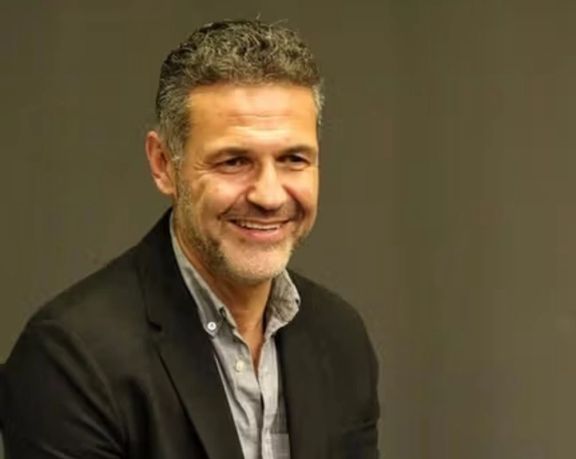
Afghan-American author Khaled Hosseini has urged the global community to support Afghan girls and demand the reopening of schools and universities.

Afghan-American author Khaled Hosseini has urged the global community to support Afghan girls and demand the reopening of schools and universities.
In a message to Afghanistan International, he said Afghan women are strong and courageous. He praised them for standing up for their rights despite threats of arrest or violence.
Hosseini described them as resilient and determined, refusing to remain silent under Taliban rule.
He called on the world not to forget Afghan girls. He said education is key not just for their future, but for rebuilding Afghanistan.
The academic year in Afghanistan began on 20 March. Girls’ schools remain closed for the fourth year in a row.
The Taliban continue to block girls and women from attending universities. This includes medical education.
Afghanistan faces a severe shortage of female health workers.
UNICEF has warned that the education ban could lead to over 5,000 deaths this year. These include 1,600 mothers and 3,500 newborns.
The agency said the lack of trained female doctors and nurses is a major threat to women’s and children’s health.
Hosseini urged the Taliban to reopen schools and let girls return to class. He said the world must act now.


The International Committee of the Red Cross (ICRC) has announced that around 33 million people in Afghanistan are facing acute water shortages. The organisation stressed that access to clean drinking water is essential for life, health, and stability.
In a statement marking World Water Day on 22 March, the ICRC noted that the Afghan population continues to suffer the compounded effects of over four decades of armed conflict and accelerating climate change.
Martin De Boer, head of programmes for the ICRC in Afghanistan, said that for millions already enduring hardship and a deepening humanitarian crisis, access to water for drinking, cooking, and irrigation remains out of reach. He attributed the worsening situation to a lack of basic infrastructure such as functioning water supply systems, dams, and irrigation networks.
The ICRC voiced concern over the growing water crisis and reiterated its commitment to supporting Afghan communities and authorities in improving water management. The organisation highlighted that much of Afghanistan’s freshwater depends on snow and glacial melt, but rising temperatures are threatening these critical sources.
The UN’s Food and Agriculture Organization (FAO) also warned of the need to protect Afghanistan’s glaciers, describing them as vital to the region’s water supply. The FAO underlined that safeguarding these resources is essential in tackling both climate change and the global water crisis.
In December 2024, the Taliban’s environmental protection agency reported that 181 square kilometres of glaciers in Afghanistan had melted due to climate change, adding further urgency to the crisis.

Rasoul Mousavi, former Director General for South Asia at Iran’s Ministry of Foreign Affairs, has called the recent visit of a US delegation to Afghanistan a turning point in the Taliban’s foreign relations.
Writing on X, Mousavi revealed that, according to available information, the US delegation first travelled to Kandahar before continuing on to Kabul for further meetings. He warned that regional intelligence and political institutions appeared to be in a state of “strategic negligence,” similar to their inaction during the collapse of the Afghan republic in 2021.
The delegation included Zalmay Khalilzad, former US Special Representative for Afghanistan, and Adam Boehler, Donald Trump’s Special Envoy for Hostage Affairs. During their visit, they met with the Taliban’s acting Foreign Minister, Amir Khan Muttaqi.
This marked the first official US visit to Taliban-controlled Afghanistan since American forces withdrew from the country in August 2021.
Following the high-level meetings, the Taliban released George Glezmann, a US citizen who had been detained for two years. Khalilzad later stated that Glezmann’s release was offered by the Taliban as a “gesture of goodwill” toward former US President Donald Trump and the American people.

The US State Department has removed Sirajuddin Haqqani, the Taliban’s Interior Minister, and two other senior Haqqani Network leaders from its Rewards for Justice programme, sources close to Haqqani told Afghanistan International.
Previously, the State Department had offered between $5 million and $10 million for information leading to the capture of Sirajuddin Haqqani, Yahya Haqqani, and Aziz Haqqani. These names have now reportedly been removed from the rewards list.
Despite this, Sirajuddin Haqqani still appears on the FBI’s website and former State Department listings as a “Global Terrorist.” Khalil-ur-Rahman Haqqani, his uncle and former Taliban minister for refugees who was killed in a recent ISIS attack in Kabul, remains on the list with a $5 million reward.
The State Department had earlier described Yahya Haqqani as a key link between the Haqqani Network and al-Qaeda. It also said Yahya had acted in place of Sirajuddin Haqqani and Khalil Haqqani when they were unavailable.
The US Department of Justice has not commented on the removal of the Haqqani leaders. Taliban officials have also not responded. US authorities have yet to answer questions from Afghanistan International about the changes.
Sirajuddin Haqqani, as leader of the Haqqani Network, is blamed for deadly attacks in major cities and large-scale civilian casualties. The network was designated a foreign terrorist organisation by the US in 2012. All assets tied to it remain frozen, and US citizens are prohibited from engaging in any transactions with it.
Despite the reported removal of some individuals from the reward list, both the FBI and the State Department have reiterated that the $10 million reward for information leading to Sirajuddin Haqqani’s capture is still active.
The Haqqani Network remains officially listed as a terrorist organisation by the US Department of Justice. Public support or financial collaboration with the group remains a criminal offence under US law.
US Delegation Visits Kabul
The removal of the names from the US reward list comes shortly after a US delegation visited Kabul. The delegation included Adam Boehler, the US Special Presidential Envoy for Hostage Affairs, and Zalmay Khalilzad, former US envoy for Afghan peace talks.
This marked the first visit by American officials to Kabul since the Taliban regained power in 2021. The US delegation met with Taliban Foreign Minister Amir Khan Muttaqi. It is unclear whether they met with other Taliban officials.
Before the visit, the Taliban removed anti-American slogans from the walls of the US Embassy in Kabul.
US State Department spokesperson Tammy Bruce told Afghanistan International that the primary goal of the trip was to secure the return of American hostages. She also noted that broader, long-term issues were discussed during the meetings.

Pakistan’s Counter-Terrorism Department (CTD) has arrested Shamsullah, a suicide bomber trained in Afghanistan, in Lahore’s Burki area.
Initial investigations reveal he was trained under the supervision of Jamaat-ul-Ahrar commanders and entered Pakistan via a border crossing near Chaman.
The CTD also reported apprehending 11 suspected terrorists across 166 intelligence-based operations in cities including Sargodha, Rawalpindi, Pakpattan, Gujrat, Chakwal, Bahawalpur, Bahawalnagar, and Faisalabad.
Authorities seized significant quantities of explosives, detonators, and cash from the suspects.
According to Geo News, Shamsullah confessed to being trained in Afghanistan by Jamaat-ul-Ahrar commanders Suleman and Qasim Khorasani, who tasked him with carrying out suicide attacks in Pakistan.
Qasim Khorasani, a senior figure in the group, is accused of orchestrating targeted killings of police officers in Lahore and Peshawar. Pakistani officials claim that Shamsullah and other recruits were forcibly administered drugs during training to enhance their compliance.
Lahore Police hailed the arrests as a crucial step in thwarting major security threats. The CTD vowed to continue operations relentlessly to identify and dismantle terrorist networks across the region.

Sources at Torkham confirmed to the Pashto section of Afghanistan International that the Torkham border crossing reopened for passenger movement on Saturday morning. The border had partially reopened on Wednesday, 19 March, permitting only patients and freight vehicles to pass.
According to sources, full access for all travellers resumed at 8:00 AM local time on Saturday. Only those with valid visas may cross, based on available information.
Sayed Tayeb Hamad, spokesperson for the Taliban’s Nangarhar police command, confirmed the reopening for passengers. In a video message, he advised travellers to avoid the route for the next two days. He specified that only patients would be allowed to cross on Saturday and Sunday.
The border had been closed since 21 February due to clashes between Pakistani and Taliban border forces. The conflict arose over the Taliban’s construction of a checkpoint and Pakistan’s installation of a signboard. To enable the reopening, two separate jirgas—tribal councils—with representatives from both Pakistan and the Taliban convened at the border.