• العربية
  • پښتو
  • فارسی
Brand
  • Afghanistan
  • Sport
  • Markets
  • Afghanistan
  • Sport
  • Markets
  • Theme
  • Language
    • العربية
    • پښتو
    • فارسی
  • Afghanistan
  • Sport
  • Markets
All rights reserved for Volant Media UK Limited
volant media logo

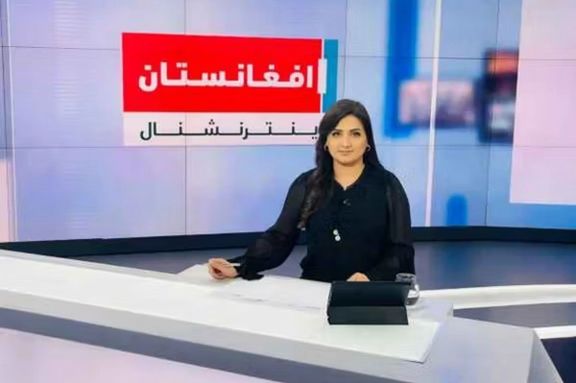
Afghanistan International TV Nominated For 2025 Press Freedom Award

Apr 3, 2025, 12:28 GMT+1

Afghanistan International TV has been longlisted for the 2025 Press Freedom Award by One World Media, a London-based non-profit organisation dedicated to supporting independent journalism and media that promotes justice and empowers citizens.

In an official statement, One World Media congratulated Afghanistan International TV on its nomination and confirmed that the network will advance to the final judging stage of the competition.

The organisation revealed that it received 559 entries this year across 13 categories from more than 100 countries. The Press Freedom Award recognises exceptional journalism that makes a significant impact, particularly in challenging environments. Winners will be announced in June 2025.

On its website, One World Media praised the diversity and depth of the entries: “Our judges have spent countless hours reviewing powerful and thought-provoking stories — ones that challenge stereotypes, reshape narratives, and build connections across borders. From Afghanistan and Argentina to China, Fiji, India, Gaza, Myanmar, Nigeria, Sweden, Yemen — and so many more — the stories of people across the globe are represented in our longlist.”

Afghanistan International TV has gained recognition for its fearless reporting on human rights, press freedom, and political developments within and beyond Afghanistan, often in the face of severe restrictions and threats to journalists.

Most Viewed

Arrests & Killings Of Former Afghan Forces Continue, Says UN
1

Arrests & Killings Of Former Afghan Forces Continue, Says UN

2

Taliban To Put TOLOnews Journalists On Trial

3

Taliban Beat Shia Cleric In Kabul After Marriage Dispute, Say Sources

4

Attack On Pakistani Police Centre Was Not Planned In Afghanistan, Says Taliban

5

Taliban & Pakistan Prepared To Work Together For Peace & Security, Says China

•
•
•

More Stories

US President Trump Imposes 10 Percent Tariff On Afghan Imports

Apr 3, 2025, 11:09 GMT+1

On Wednesday, US President Donald Trump announced a 10 percent base tariff on all goods imported into the United States, including those from Afghanistan, alongside additional tariffs on major trading partners.

A White House official confirmed the 10 percent tariff would take effect from early morning.

According to the US government’s tariff schedule, American exports to Afghanistan face a 49 precent customs duty. Trade data shows the 2024 US-Afghanistan trade volume reached approximately $34.0 million. US exports to Afghanistan dropped to $11.4 million, a 76.9 precent decline ($38.2 million) from 2023, while imports from Afghanistan rose to $22.6 million, up 13.2 percent ($2.6 million). This shifted the US trade balance with Afghanistan from a $29.7 million surplus in 2023 to an $11.1 million deficit in 2024.

On 2 April, Trump signed an executive order enacting the tariffs, dubbing it “American Economic Independence Day.” He claimed the move would boost domestic production, promising “stronger competition and lower consumer prices.” “Jobs and factories will come roaring back—you’re already seeing it. We’ll supercharge our industrial base, open foreign markets, and dismantle trade barriers,” he stated.

On 13 February 2025, Trump had ordered his economic team to develop a reciprocal tariff plan targeting countries imposing duties on US imports, laying the groundwork for this policy.

Pakistani General Exposes Haqqani-Kandahar Taliban Divide

Apr 3, 2025, 10:09 GMT+1

A retired Pakistani army general, Inam-ul-Haq, has revealed deepening tensions within the Taliban, spotlighting a rift between the Haqqani Network and the Kandahar faction, in an Express Tribune article.

He outlined how disputes over the Tehreek-e-Taliban Pakistan (TTP), girls’ education bans, Pakistan relations, and governance are driving the divide.

Haqqani Network and TTP Ties

Haq highlighted the Haqqani Network’s historical links to North Waziristan and Pakistan’s tribal areas, noting their role in hosting TTP during the Taliban’s fight against foreign and Afghan forces, with backing from Pakistan and the ISI. However, he argued the Haqqanis remain distinct within the Taliban: “Loya Paktia under Haqqani control was never forcibly integrated into the Kandahar-dominated Islamic Emirate of Afghanistan (IEA). Instead, they partnered with the IEA, retaining autonomy.”

He contrasted the Haqqanis’ pragmatic outlook—forged since the Soviet war and open to engagement with Pakistan, the ISI, and the US—with Kandahar’s more rigid stance.

TTP Dispute

The general explained that Kandahar views TTP as a destabilising force threatening Kabul-Pakistan ties, yet lacks the will or ability to curb it due to Haqqani influence. Conversely, the Haqqanis see TTP as a “reserve force” for potential internal conflicts. Haq linked Sirajuddin Haqqani’s recent absence and foreign trips to his frustration with Kandahar, writing: “While keen to address TTP issues with Pakistan, the Haqqanis are unwilling to relinquish TTP’s military potential.”

Taliban Unity at Risk

The Express Tribune, seen as aligned with Pakistan’s military, noted that maintaining Taliban cohesion is increasingly difficult. During Sirajuddin Haqqani’s absence, Kandahar deployed forces to Haqqani-controlled border regions, asserting dominance. Meanwhile, the Haqqanis pursue independent ties with regional and Western nations, risking further estrangement from Kandahar.

Pakistan’s Strategy

Haq recommended a multi-pronged approach for Pakistan: sustained religious diplomacy with Kandahar, international efforts under the Doha Agreement, discreet military action on both sides of the border, a firm domestic anti-terrorism stance, and an exit route for the Haqqanis from their predicament.

Future Warning

He cautioned that unresolved TTP tensions could exhaust Pakistan’s patience, destabilising the region. Haq hinted at a potential anti-Taliban coalition of ex-mujahideen, disaffected Taliban members, and remnants of the prior Afghan government, warning: “Kabul may witness another power shift.”
Pakistan’s Khyber Pakhtunkhwa Begins Deporting Undocumented Afghans

Apr 3, 2025, 09:06 GMT+1

The Pakistani newspaper Dawn reported that Khyber Pakhtunkhwa province will begin deporting undocumented Afghan migrants today, Thursday, 3 April, according to a provincial official.

The forced deportation deadline, originally set for March 31, was extended by two days due to Eid al-Fitr.

An official from the Afghan Commissionerate in Peshawar city told Dawn on Thursday: “Phase 2 will commence from [Thursday], and we have set up camps, one each at Landi Kotal and Nasir Bagh Road.” The Afghan Commissionerate, a Pakistani government body tasked with managing Afghan refugees, confirmed the launch of this phase amid conflicting reports about whether deportations would proceed or if the deadline had been further delayed.

Pakistan previously mandated that undocumented Afghan migrants and Afghan Citizen Card (ACC) holders voluntarily return to Afghanistan by 1 April. That deadline lapsed three days ago. While the Associated Press reported a 10-day extension due to Eid al-Fitr, Pakistani media over the past two days have indicated deportations are underway. Since September 2023, Pakistan has expelled nearly one million Afghan migrants.

UNHCR statistics show 1.52 million registered Afghan refugees and migrants remain in Pakistan, including roughly 800,000 ACC holders, alongside thousands of undocumented Afghans. The government plans to deport both groups in this phase, a move that has drawn sharp criticism from the Taliban, the United Nations, human rights organisations, and refugee advocates. Uncertainty persists over whether Pakistan will fully implement or delay this policy.

Additionally, the government has announced that Afghan migrants with UN-issued Proof of Registration (PoR) cards will face deportation after 30 June this year.

Pakistan’s Interior Minister Briefs PM On Afghan Deportation Plan

Apr 2, 2025, 15:18 GMT+1

On Wednesday, Pakistan’s Interior Minister Mohsin Naqvi briefed Prime Minister Shehbaz Sharif on national security measures for Eid and the ongoing repatriation of Afghan refugees.

The discussion focused on enforcing measures following the deadline for Afghan refugees to depart Pakistan.

According to the Express Tribune, officials reiterated that legal action would target those staying in violation of government policies. Senior Pakistani leaders have consistently underscored their resolve to deport Afghan refugees, a topic revisited during Wednesday’s meeting between Sharif and Naqvi.

The Express Tribune reported that Sharif praised security agencies for upholding law and order, though his position on deporting Afghan Citizen Card (ACC) holders remained unspecified. The original 31 March deadline for Afghan refugee deportations was postponed due to Eid al-Fitr.

A Pakistani official confirmed the deadline has now been extended to early next week, after which the deportation of approximately 800,000 ACC holders, as estimated by the UN, will commence.

Purple Saturdays Urges Global Support For Afghan Women’s Rights

Apr 2, 2025, 14:35 GMT+1

The Purple Saturdays Movement has sounded the alarm over the worsening plight of Afghan women and girls, decrying the Taliban’s ongoing violations of their rights and freedoms.

In a statement issued on Wednesday, 2 April, the Afghan women-led protest group called for global solidarity to support those affected.

“Millions of girls are denied education, barred from schools and universities, while countless women are stripped of their right to work and live freely,” the statement declared. “Afghan women are confined to their homes, trapped in fear, oppression, and despair.”

The movement also drew attention to the wider impact of these restrictions, noting a surge in mental health struggles, depression, and hopelessness among Afghan women and girls due to the persistent denial of basic rights. “With global solidarity and a united voice of protest, we can stand with Afghan women,” it urged. “This is not merely a moral obligation but a shared responsibility for us all.”

Despite sustained efforts by the Purple Saturdays Movement and international criticism, the Taliban has shown no sign of relaxing its policies nearly four years after seizing power. Afghan women and girls remain excluded from education beyond the sixth grade and prohibited from attending universities, with no policy shift in sight.