India Tracks Sikh Persecution In Afghanistan, Pakistan
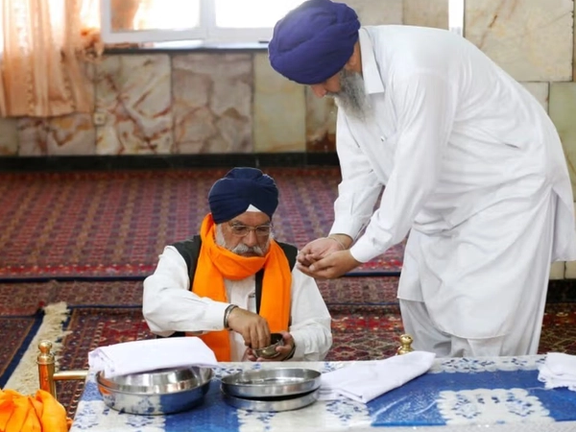
On Thursday, Kirti Vardhan Singh, India’s Minister of State for External Affairs, told Parliament that the government closely monitors reports of Sikh persecution in Afghanistan and Pakistan.

On Thursday, Kirti Vardhan Singh, India’s Minister of State for External Affairs, told Parliament that the government closely monitors reports of Sikh persecution in Afghanistan and Pakistan.
His critique focused predominantly on Pakistan rather than the Taliban, with whom New Delhi has recently fostered improved political relations.
In a written parliamentary response, Singh stated: “Atrocities against minority communities in Pakistan, including Sikhs, involve persecution, intimidation, forced marriages, forced conversions, and vandalism of their places of worship.” However, he did not elaborate on the specifics of Sikh persecution in Taliban-controlled Afghanistan, despite detailed accounts from human rights organisations and the US State Department’s annual reports.
After the Taliban seized Kabul, India evacuated 74 Afghan Sikhs via military and Air India flights, citing fears of persecution. The US State Department’s report last year underscored the dwindling Sikh and Hindu populations in Afghanistan, noting their safety concerns under Taliban rule and reluctance to pursue legal action due to risks of torture. It reported that over 900 Sikh and Hindu citizens fled Afghanistan post-takeover, leaving just six individuals to protect their religious sites and sacred texts.


Hafiz Zia Ahmad, a spokesperson for the Taliban’s Foreign Ministry, announced on Thursday that Mohammad Reza Bahrami, Iran’s Director General for South Asia, met Taliban Foreign Minister Amir Khan Muttaqi in Kabul.
The talks covered “recent developments, water issues, and the situation of Afghan migrants” in Iran, according to Zia Ahmad, who described Bahrami as an advisor to Iran’s Foreign Minister. Iran’s IRNA news agency reported in February that Abbas Araghchi had appointed Bahrami, a former two-term ambassador to Afghanistan, to this role.
Zia Ahmad noted on X that Alireza Bikdeli, Iran’s acting ambassador in Kabul, attended the meeting. He hailed the discussions as a fresh chapter in Iran-Taliban relations, quoting Muttaqi as saying ties are progressing positively and urging both sides to seize available opportunities.
Bahrami reportedly cited Abbas Araghchi’s recent Kabul visit as Foreign Minister, calling it a “new phase” in bilateral ties and affirming the nations’ ability to manage shared affairs effectively.
The Iranian Embassy in Kabul has yet to comment on Bahrami’s visit.

Nader YarAhmadi, an adviser to Iran’s Minister of Interior, has announced that nearly 2,000 Afghan doctors are currently working in Iran, including around 700 specialists and subspecialists.
In an interview published on Thursday by Iranian news outlet Khabar Online, YarAhmadi stated that some of these doctors also serve as university professors, employed under contracts with various Iranian universities.
While acknowledging the positive contributions of qualified Afghan professionals, he also raised concerns over the presence of undocumented Afghan nationals in the country. “The illegal presence of Afghan citizens in our country has created an atmosphere where, at times, when we want to utilise legally residing individuals, the conditions are not ideal,” he remarked.
Following the Taliban’s return to power in August 2021, Afghanistan has witnessed a significant exodus of medical professionals. The combination of severe restrictions on women, drastic cuts in healthcare funding, and escalating poverty has pushed the country’s healthcare system to the brink of collapse.
The Taliban’s ban on women’s education—particularly in medical and scientific fields—and ongoing limitations on female employment have further exacerbated the crisis, leaving many hospitals and clinics understaffed and under-resourced.
As a result, many Afghan doctors have sought opportunities abroad, including in neighbouring Iran, where their skills are in demand despite the broader challenges surrounding refugee and migrant integration.

US President Donald Trump has announced a 10 percent base tariff on all goods imported into the United States, a sweeping move that also includes products from Afghanistan.
The measure, part of a broader revision of US trade policy, imposes additional tariffs on several major trade partners and is expected to impact Afghanistan’s export economy.
According to the Taliban-controlled National Statistics and Information Authority, Afghanistan exported $5.7 million worth of goods to the United States between March 2023 and March 2024. These exports included traditional Afghan products such as handwoven carpets, saffron, dried figs, snuff, brooms, kites, and other cultural and agricultural goods.
The annual report detailed the scale and value of these exports. Afghanistan exported approximately 13,000 square metres of carpets, worth $1 million. It also exported 500 kilograms of saffron valued at $530,000, 108,000 kilograms of dried figs worth $280,000, and 16,000 kilograms of betel leaves with a value of $130,000. A smaller quantity of dried garlic, 19 kilograms in total, was valued at just $41. Additional exports included 5,000 kilograms of construction materials worth $20,000 and kites valued at $100.
In addition to these, Afghanistan’s exports to the United States encompassed a wide range of goods such as quroot (dried cheese), honey, rosewater, tobacco, minerals, mint, felt, plastic bags, clay utensils, medicinal herbs, confectionery, laundry soap, henna, asafoetida, almonds, almond kernels, prunes, mulberries, apricots, and apples.
During the same period, the United States exported $23.4 million worth of goods to Afghanistan, resulting in a trade deficit of $17.7 million for Afghanistan.
Data from the Office of the U.S. Trade Representative indicates that US exports to Afghanistan in 2024 dropped significantly to $11.4 million, marking a 76.9 percent decrease (equivalent to $38.2 million) from 2023. Meanwhile, U.S. imports from Afghanistan rose to $22.6 million, reflecting a 13.2 percent increase (or $2.6 million) from the previous year.
This shift in trade flow has led to a reversal in the U.S. trade balance with Afghanistan. In 2023, the United States held a trade surplus of $29.7 million with Afghanistan, but in 2024 that turned into a deficit of $11.1 million.
In 2022, Afghanistan’s exports to the United States were valued at $5.3 million, while U.S. exports to Afghanistan reached $34.7 million, creating a trade deficit of $29.4 million for Afghanistan.
According to the current US tariff schedule, Afghan goods exported to the United States are now subject to a 49 percent customs duty. The total trade volume between the two countries in 2024 is estimated at $34 million.

The US Department of the Treasury has imposed sanctions on several entities and individuals in Russia, including Afghan businessmen Hushang Ghairat and his brother Sohrab Ghairat, for aiding Yemen’s Houthi rebels.
On Wednesday, the Treasury revealed that the brothers supported Sa’id al-Jamal, a senior Houthi financial figure, in securing millions of dollars’ worth of weapons, sensitive goods, and “stolen Ukrainian grain” from Russia. No additional details on the brothers’ activities were disclosed.
Al-Jamal, a Yemeni businessman based in Iran, is under US sanctions for allegedly providing financial and logistical backing to the Houthis, whom the US labels a “global terrorist” group.
US Treasury official Scott Bessent stated: “The Houthis depend on Sa’id al-Jamal and his network to obtain critical supplies for their terrorist war machine. Today’s action reaffirms our resolve to curb the Houthis’ destabilising regional threats.”
In recent weeks, the US has ramped up efforts against the Houthis, with the military conducting multiple airstrikes on Houthi targets in Yemen.

Afghanistan International TV has been longlisted for the 2025 Press Freedom Award by One World Media, a London-based non-profit organisation dedicated to supporting independent journalism and media that promotes justice and empowers citizens.
In an official statement, One World Media congratulated Afghanistan International TV on its nomination and confirmed that the network will advance to the final judging stage of the competition.
The organisation revealed that it received 559 entries this year across 13 categories from more than 100 countries. The Press Freedom Award recognises exceptional journalism that makes a significant impact, particularly in challenging environments. Winners will be announced in June 2025.
On its website, One World Media praised the diversity and depth of the entries: “Our judges have spent countless hours reviewing powerful and thought-provoking stories — ones that challenge stereotypes, reshape narratives, and build connections across borders. From Afghanistan and Argentina to China, Fiji, India, Gaza, Myanmar, Nigeria, Sweden, Yemen — and so many more — the stories of people across the globe are represented in our longlist.”
Afghanistan International TV has gained recognition for its fearless reporting on human rights, press freedom, and political developments within and beyond Afghanistan, often in the face of severe restrictions and threats to journalists.