Iran, Pakistan Deport More Than 4,000 Afghan Migrants In One Day
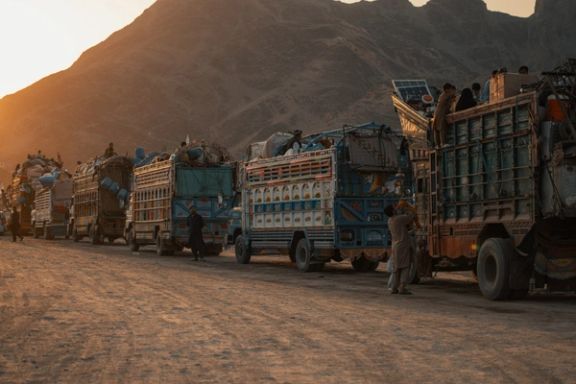
Iran and Pakistan deported a combined total of 4047 Afghan migrants on Thursday, 22 May, according to the Taliban’s High Commission for Addressing Migrants’ Issues.
Iran and Pakistan deported a combined total of 4047 Afghan migrants on Thursday, 22 May, according to the Taliban’s High Commission for Addressing Migrants’ Issues.
The commission stated that 2736 Afghans were deported from Iran, while 1311 were returned from Pakistan. The deportees reportedly reentered Afghanistan through various border crossings, including Torkham, Spin Boldak, Bahramcha, Angoor Ada, Pul-e-Abrisham, and Islam Qala.
Despite ongoing talks between Taliban officials and authorities in both Iran and Pakistan regarding the treatment and status of Afghan migrants, mass deportations continue unabated.
The Taliban have not provided further details about the condition of the returnees or the circumstances under which they were expelled. Human rights groups have previously raised concerns about the treatment of Afghan migrants in both neighbouring countries, particularly in light of Afghanistan’s ongoing humanitarian crisis.

Taliban forces have detained the 12-year-old son of prominent cleric and vocal Taliban critic Mawlawi Abdul Qadir Qanit during a raid on the family’s home in Kabul, sources close to the family told Afghanistan International.
Qanit himself was arrested two days earlier from the same residence.
According to the sources, the Taliban stormed the home on Thursday morning. The cleric’s eldest son reportedly fled to avoid arrest, prompting Taliban fighters to detain the younger child instead. During the raid, family members were allegedly insulted and humiliated as Taliban forces conducted a search of the house.
Afghanistan International obtained video footage of Qanit’s arrest earlier in the week, showing plainclothes Taliban intelligence agents arriving in a civilian vehicle, entering the alley outside his home, and forcibly taking him away in front of neighbours.
The reason for the child’s detention remains unknown.
Mawlawi Qanit is one of the few religious scholars who have consistently and publicly criticised the Taliban’s rule, frequently speaking out against the group’s policies and consolidation of power. He was previously detained by Taliban intelligence for his outspoken remarks.
The arrest of Qanit’s son marks a growing trend of Taliban pressure on critics and their families, further raising alarm among human rights observers.
Pakistan’s Foreign Minister and Deputy Prime Minister, Ishaq Dar, has proposed the formation of a regional bloc comprising Pakistan, Afghanistan, China, and Bangladesh.
Speaking on Thursday, Dar did not clarify whether the envisioned alliance would be political, economic, or military in nature.
Addressing recent tensions with the Taliban, Dar acknowledged that relations between Pakistan and the group had remained strained for several years. However, he recently visited Kabul, where he held meetings with the Taliban’s top leadership. He also met Taliban representatives during a subsequent visit to China.
Dar’s remarks, reported by Samaa News, included comments on the recent aerial skirmish between India and Pakistan. He described the encounter as “the largest of its kind,” lasting over an hour, compared to a previous record of thirty minutes. He suggested that this conflict had shifted perceptions in the international community, asserting that Pakistan was now gaining recognition as a formidable nation.
The proposal for a regional alliance comes at a time when Islamabad has expressed frustration with the Taliban’s neutral stance during the recent India-Pakistan tensions. Defence Minister Khawaja Asif noted that only two parties Israel and the Taliban appeared to support India’s position. Asif criticised the Taliban’s approach, recalling Pakistan’s longstanding support for the group despite global pressure and scrutiny.
Despite these criticisms, signs of rapprochement are emerging. Chinese Foreign Minister Wang Yi stated that relations between the Taliban and Pakistan are improving, with both sides agreeing to appoint ambassadors to one another’s capitals in the near future.
Currently, diplomatic engagement remains at the level of chargé d’affaires. Ubaid Ur Rehman Nizamani serves as Pakistan’s envoy in Kabul, while Sardar Ahmad Shakeeb represents the Taliban in Islamabad.
On 21 May, China’s Foreign Ministry confirmed that both the Taliban and Pakistan had expressed a mutual willingness to elevate their diplomatic ties, signalling a possible thaw in relations amid broader regional shifts.
Taliban-affiliated individuals have reportedly threatened female employees of United Nations agencies in Kabul with death, marking a serious escalation in the group’s campaign of intimidation against women working with international organisations.
According to multiple sources within the UN offices in Kabul who spoke to Afghanistan International, armed men have followed and harassed a number of Afghan female UN staff over the past two days.
These individuals have also visited the homes of staff members, threatening their male relatives, fathers, husbands, or brothers, to prevent the women from returning to work, warning that failure to comply would result in the women being killed.
In at least some cases, armed Taliban affiliates reportedly forced male relatives to pledge, at gunpoint, to stop their daughters, wives or sisters from working. The threats were reportedly accompanied by insults, video recordings, and humiliation of the families.
Sources indicate that the female staff targeted are primarily employed by UNICEF, UNDP, UNAMA, UNFPA, and the World Health Organization. The harassment reportedly began near the UN’s central office in Pul-e-Charkhi and extended to various neighbourhoods across Kabul, including Macroryan, Karte Char, Darulaman, Khair Khana, Karte Naw, Arzan Qemat, and Kote Sangi.
In response, UN agencies have advised their local female staff to work from home until further notice. However, two days on, staff say they have yet to receive formal assurances or explanations from UN leadership regarding their safety.
This is the first known instance where Taliban threats against female UN employees have escalated from general restrictions to direct death threats. The Taliban had previously issued a decree in December 2022, signed by their leader Hibatullah Akhundzada, banning women from working in non-governmental organisations. Though temporarily enforced, women were later allowed to resume work, particularly in Kabul, where such bans had not been widely implemented until now.
Female staff are now calling on the international community and human rights organisations to intervene urgently to protect their safety, dignity, and right to work.
The Taliban has publicly flogged a woman and two men in Yangi Qala district of Takhar province after convicting them of theft and engaging in sexual relations outside of marriage.
The Taliban’s Supreme Court announced on Thursday that each of the three individuals received 39 lashes in a public setting.
According to the court’s statement, issued on 21 May, the woman and one of the men were also sentenced to two years of imprisonment.
This incident is part of a broader pattern in recent days. Over the past week, the Taliban has flogged at least 36 individuals, including eight women, in various provinces across Afghanistan, in connection with a range of alleged offences.
The Taliban describes such corporal punishment as the implementation of “Islamic Sharia law.” Since reclaiming control of Afghanistan nearly four years ago, the group has consistently dismissed international calls to halt corporal punishment and torture. Despite widespread condemnation from human rights organisations, the Taliban continues to carry out public floggings and executions.
China has announced that Pakistan and the Taliban have agreed to elevate their diplomatic relations to the level of ambassadors.
Chinese Foreign Minister Wang Yi welcomed the development, stating that Beijing supports the strengthening of ties between Afghanistan and Pakistan.
In a statement issued on Wednesday, 21 May, the Chinese Ministry of Foreign Affairs confirmed that both Pakistan and the Taliban expressed their willingness to enhance their diplomatic engagement. Currently, the relationship is maintained at the chargé d'affaires level, with Ubaid-ur-Rehman Nizamani serving as Pakistan’s envoy in Kabul and Sardar Ahmad Shakib representing the Taliban in Islamabad.
The Chinese ministry stated that Foreign Minister Wang Yi held discussions with his counterparts from the Taliban and Pakistan regarding the diplomatic interaction, bolstering communication, and taking concrete steps to foster economic development, infrastructure projects, and regional cooperation.
During the meeting, Wang Yi emphasised several key priorities: building mutual political trust, fostering good neighbourly relations, expanding diplomatic exchanges, deepening practical cooperation, rejecting all forms of terrorism, and maintaining regional peace and stability.
The Pakistani Ministry of Foreign Affairs also issued a statement, welcoming what it called “positive momentum” in bilateral relations with the Taliban. The ministry highlighted progress in diplomatic engagement, trade, and the facilitation of commercial ties.
Although neither Pakistan nor China has formally recognised the Taliban government, both countries have maintained close working relations with the group.
The announcement followed an informal trilateral meeting held in Beijing on Tuesday, hosted by Wang Yi and attended by the foreign ministers of China, Pakistan, and the Taliban.