No Direct Talks Planned Between Putin & Taliban Leaders, Says Russia
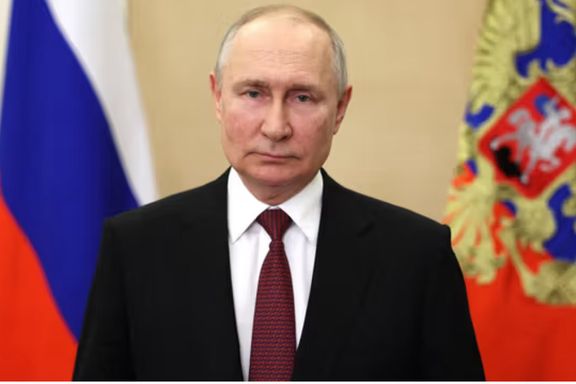
Russian President Vladimir Putin currently has no plans to initiate direct contact with Taliban leaders, the Kremlin said on Friday.
Russian President Vladimir Putin currently has no plans to initiate direct contact with Taliban leaders, the Kremlin said on Friday.
Kremlin spokesperson Dmitry Peskov made the remarks in response to a question about whether Putin was preparing for talks with the Taliban leadership.
At present, there are no such plans, Peskov said adding that, however, within the framework of bilateral relations, contacts at various levels will continue.
While Moscow has increased its engagement with the Taliban in recent months, including accepting a Taliban-appointed ambassador, Peskov’s comments indicate that top-level communication remains off the table for now.

The Taliban have arrested several of their own local officials in Badakhshan’s Khash district, following recent protests and violent clashes sparked by the group’s efforts to destroy poppy fields in the area.
Informed sources told Afghanistan International on Friday that the detainees include Gul Ahmad Shahin, the Taliban-appointed police chief of Khash; Qari Nawid, head of criminal investigations; and Qari Wajid, another local commander. The three men were reportedly arrested for refusing to suppress protesters and allegedly siding with local residents.
The Taliban have also launched search operations in the district, leading many civilians to flee to the surrounding mountains, according to local sources.
In addition to detaining their own officials, Taliban forces have arrested several residents and community elders, including Mawlawi Roh-ul-Bayan, an influential local cleric. They are accused of organising and encouraging the anti-Taliban demonstrations.
All detainees have reportedly been transferred to Fayzabad, the capital of Badakhshan province. The Taliban’s local administration has not issued any official comment regarding the arrests.
The unrest began earlier this week when Taliban forces attempted to eradicate poppy crops in Khash. The operation triggered a wave of public anger and led to clashes in which at least eight people were killed and dozens wounded, according to eyewitnesses and hospital sources.
On Thursday, the Taliban reportedly arrested at least 37 individuals in connection with the protests. Local sources say the main market in Khash remains closed and that Taliban fighters are mistreating civilians. Residents are reportedly staying indoors for fear of arrest, while Taliban units continue to monitor and patrol the area intensively.
The incident underscores growing tensions between Taliban forces and communities in northern Afghanistan, where local resistance to the group’s policies particularly regarding poppy eradication has been mounting.
Ata Mohammad Noor, former governor of Balkh province has warned that Russia’s recognition of the Taliban could trigger new regional and international tensions.
In a statement issued following reports of the Kremlin’s deepening ties with the Taliban, Noor said such recognition would have consequences beyond bilateral relations, potentially turning Afghanistan into a battleground for renewed proxy conflicts.
He stressed that the legitimacy of any political system must be grounded in the will and consent of the people, not merely through endorsement by foreign governments.
Noor criticised the Taliban for ruling by force, dismantling representative institutions, and violating basic human rights and freedoms. He argued that the group has failed to earn any form of domestic legitimacy.
Drawing parallels with previous Afghan regimes, Noor stated: “Historical experiences, such as the governments of Taraki, Karmal, and Najib (the communist regime leaders) have shown that no level of external support can sustain a regime that lacks national backing.”
He urged regional and global powers to support the Afghan people rather than lending legitimacy to what he described as an imposed and repressive regime.
The Taliban announced Thursday that Abdul Ghani Baradar, its deputy prime minister for economic affairs, held talks with Uzbek President Shavkat Mirziyoyev on expanding political and economic cooperation between the two sides.
The meeting took place on 3 July in Khankendi, Azerbaijan, on the sidelines of the 17th meeting of foreign ministers of the Economic Cooperation Organization (ECO), according to a statement from the Taliban’s presidential office.
During the talks, President Mirziyoyev reportedly expressed Uzbekistan’s willingness to invest in key sectors of Afghanistan’s economy, including railway infrastructure, textiles, cement, mining, and electricity.
Both parties agreed to establish a joint working group, led by Baradar and Uzbekistan’s prime minister, to monitor the implementation of future agreements. The working group will meet every three months to assess progress.
According to the Taliban’s statement, Uzbekistan committed to supporting major infrastructure projects in Afghanistan, including the Mazar-e-Sharif–Herat–Kandahar railway line, the construction of textile factories, cement plants, oil refineries, and salt mining operations. Tashkent also pledged to help expand electricity imports to Afghanistan via a 500-kilovolt transmission line extension.
Baradar urged continued engagement between Uzbekistan and the Taliban-led government, emphasising the importance of bilateral trade and transit links.
The Taliban further stated that Uzbekistan had agreed to facilitate the export of Afghan agricultural goods to Central Asia and Russia through Uzbek territory, assist with banking transactions, simplify visa issuance for Afghan nationals, and advance the development of the Termez International Trade Centre.
Afghanistan Freedom Front (AFF) has sharply criticised Russia’s decision to recognise Taliban regime, warning that such moves legitimise extremist organisations and undermine constitutional order across Central Asia.
In a statement issued Friday, the anti-Taliban resistance group said Moscow’s engagement with the Taliban amounts to “formalising the status of terrorist groups” and risks emboldening regional militants including Tehreek-e-Taliban Pakistan, Ansarullah Tajikistan, the Islamic Movement of Uzbekistan, Islamic State-Khorasan, al-Qaida and Hizb ut-Tahrir.
The threat of terrorism and religious extremism at the gates of Central Asia is real and immediate, the AFF said. The group added that recognising the Taliban is a green light for like-minded factions now preparing to establish similar regimes in the region.
The front argued that the Taliban’s seizure of power in 2021 directly fuelled the resurgence of armed extremist networks across neighbouring states. Given the group’s ideological alignment with those organisations, the statement added, it is impossible to distinguish the Taliban from their twin, allied and co-operative terrorist groups.
AFF leaders warned that diplomatic acceptance of the Taliban by “a major, civilised country such as Russia” will further motivate militants to pursue cross-border ambitions and destabilise Central Asia.
Russia has not formally recognised the Taliban government but last month agreed to accept a Taliban-nominated ambassador in Moscow after removing the movement from its list of proscribed organisations, a step that has drawn criticism from Western governments and Afghan opposition factions alike.
Iranian media have voiced concern over strengthening ties between the Taliban and Azerbaijan, warning of potential security and geopolitical consequences for Tehran.
Iranian media have voiced concern over strengthening ties between the Taliban and Azerbaijan, warning of potential security and geopolitical consequences for Tehran.
In an article published Thursday, 4 July, the Iranian news agency IRAF criticised the Taliban’s recent diplomatic outreach to Baku, following a visit by Abdul Ghani Baradar, the group’s deputy prime minister for economic affairs, to attend the Economic Cooperation Organisation (ECO) summit in Azerbaijan.
According to IRAF, Baradar's visit and his formal request for Azerbaijan to accept a Taliban-appointed ambassador in Baku signals a move by both sides to deepen political and diplomatic relations under the guise of economic cooperation.
The article argued that the Taliban's closer engagement with Azerbaijan coincides with escalating tensions between Iran and Israel, and could carry serious intelligence and security implications for Tehran. It suggested that Baku’s growing alignment with the Taliban reflects a broader vision for future economic ties, positioning Afghanistan as a key resource hub for Azerbaijan.
“Afghanistan is seen by Baku as a land of untapped resources that could support Azerbaijan’s economic ambitions,” the article said.
Baradar also extended an invitation to Azerbaijani officials to invest in Afghanistan’s oil and gas sector, railways, and renewable energy. During high-level meetings, he emphasised the importance of the Lapis Lazuli corridor and announced the Taliban’s plan to export coal to Türkiye via Azerbaijan.
Azerbaijani officials reportedly welcomed the proposals and expressed readiness for joint investment and cooperation in key sectors, including mining and clean energy.
IRAF warned that the Taliban’s warming relationship with Azerbaijan, a country with known military ties to Israel, could have far-reaching political, economic, and security repercussions for Iran, particularly as Tehran faces the risk of renewed conflict in the region.
The article further suggested that the Taliban's growing economic diplomacy with Baku may signal a distancing from previous tacit alignment with the Islamic Republic of Iran.