Taliban Poetry Law Tightens Grip On Dissent, Says Iranian Writers’ Association
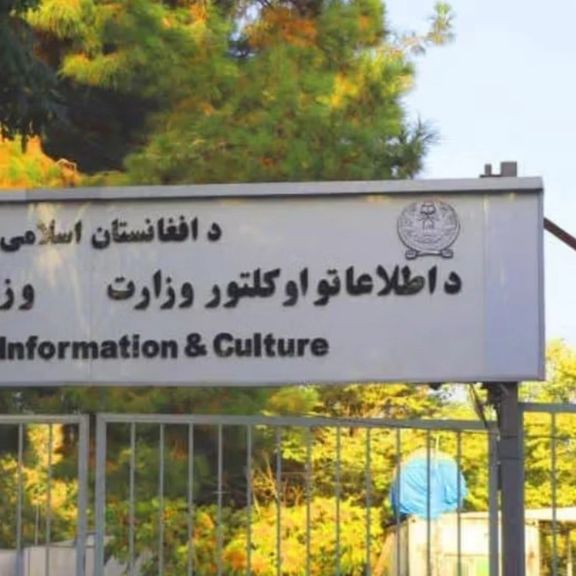
The Iranian Writers’ Association has condemned a new Taliban law restricting poetry, warning it will further stifle freedom of thought and expression in Afghanistan.

The Iranian Writers’ Association has condemned a new Taliban law restricting poetry, warning it will further stifle freedom of thought and expression in Afghanistan.
In a statement issued Sunday, the association said the “Law on Regulating Poetry Recitals,” recently signed by Taliban leader Hibatullah Akhundzada, marks a systematic expansion of repression. The group said the measure would “undoubtedly tighten the space for dissenters even further.”
The law bans the writing of romantic poetry and criminalises criticism of Akhundzada’s decrees. Members of Afghanistan’s cultural community have widely denounced the decision, with some responding by posting videos of romantic and protest poems on social media.
Founded in 1968, the Iranian Writers’ Association is an independent professional and cultural body that has long campaigned for freedom of expression. Renowned Persian literary figures including Ahmad Shamlou, Houshang Golshiri and Bahram Beyzai were among its members.


Around 400 Afghan women and girls are living in limbo in Britain after their asylum applications were rejected, according to a report by The Observer. The paper said they cannot return to Afghanistan yet are not permitted to remain in the UK.
Figures from the Home Office showed that by the end of June 2025, more than 6,000 Afghan asylum claims had been refused, including 367 from women and girls, despite widespread reports of human rights abuses in Afghanistan.
The Observer reported on Sunday that thousands of Afghan asylum seekers, among them hundreds of women and girls, were stranded in temporary accommodation such as hotels with no source of income and no clear future.
An Oxford University study found that acceptance rates for Afghan asylum applications had more than halved in the past year. While nearly 99 percent of applications were approved at the end of 2023, the figure fell to just 37 percent in the first half of 2025.
By June this year, more than 6,700 Afghan asylum seekers were still awaiting an initial decision. If rejections continue at the current rate, the total number of Afghans refused asylum could surpass 10,000.
The Home Office has argued that the rejections are based on its assessment of “security in Afghanistan,” claiming there is only limited evidence that all groups in the country face persecution. Officials maintained that vague or general fears of the Taliban were insufficient grounds for asylum.
At the same time, the department has admitted that rejected applicants cannot be returned to Afghanistan, as the UK does not recognise the Taliban as a legitimate government. The Taliban, for their part, have refused to accept passports or documents issued by the former Afghan embassy in London. Since 2021, at least nine Afghans are believed to have returned voluntarily.
A Home Office spokesperson told the newspaper that the previous government had left behind a chaotic asylum system, leaving thousands of people in uncertainty. The official said the current government was working to reform the system by removing those with no right to remain, while allowing others to rebuild their lives. The spokesperson acknowledged that women could face Taliban persecution and said most Afghan women seeking asylum were accepted.
According to official data, more than 8,000 Afghans arrived in the UK by small boats in the first half of this year.

An Iranian provincial governor said South Khorasan exported more than $1.75 billion worth of goods to Afghanistan in the second half of last year, accounting for about 40 percent of Iran’s total exports to its eastern neighbour.
Mohammad Reza Hashemi, governor of South Khorasan, told state media the province is seeking to expand cross-border trade, noting that a second border market is expected to open following a recent visit by an Iranian economic delegation to Afghanistan.
“Having a shared border with Afghanistan is a valuable opportunity for developing trade exchanges,” Hashemi said, adding that authorities aim to strengthen the frontier as both an economic and security asset.
The Tehran Times reported in July that trade between Iran and Afghanistan increased nearly 84 percent in 2024 compared with the previous year, reaching $3.19 billion.
Customs data also showed that the value of goods transited from the Dogharoon border crossing into Afghanistan reached more than $1.6 billion between January and July this year.
Iran remains one of Afghanistan’s largest trading partners, exporting fuel, construction materials, foodstuffs and consumer goods, while importing agricultural products and some raw materials in return.

The Shanghai Cooperation Organisation (SCO) will hold a consultative meeting on Afghanistan on 11–12 September in Dushanbe, the group’s secretary-general said.
Nurlan Yermekbayev told Russia’s state news agency RIA Novosti that the talks would include a broad exchange of views on Afghanistan’s current situation and its impact on the region. Security engagement between SCO members and the Taliban authorities will also be on the agenda, he said.
Yermekbayev added that Afghanistan continues to face social and humanitarian challenges, including women’s rights and terrorism, though its economy has shown some signs of improvement. He said SCO members share a consensus on the nature of Afghanistan’s problems and the organisation is closely monitoring developments.
His remarks followed warnings from Sergei Shoigu, secretary of Russia’s Security Council, who said more than 23,000 foreign militants are active in Afghanistan and pose a significant threat to regional security.
Yermekbayev noted that despite these challenges, all SCO member states continue to maintain bilateral engagement with the Taliban. He recalled that in the SCO leaders’ declaration of 4 July 2024, members stressed that forming an inclusive government representing all ethnic and political groups in Afghanistan was the only path to lasting peace and stability.
The SCO, founded in 2001, includes Russia, China, India, Kazakhstan, Kyrgyzstan, Tajikistan, Pakistan, Iran, Uzbekistan and Belarus as full members. Afghanistan and Mongolia hold observer status, while dialogue partners include Azerbaijan, Armenia, Bahrain, Egypt, Cambodia, Qatar, Kuwait, the Maldives, Myanmar, Nepal, the United Arab Emirates, Saudi Arabia, Turkiye and Sri Lanka.
Yermekbayev’s comments come ahead of the SCO leaders’ summit scheduled for 31 August to 1 September in the northern Chinese city of Tianjin. The Taliban are not among the invitees.

China has agreed in principle to extend the China–Pakistan Economic Corridor (CPEC) into Afghanistan, Pakistan’s deputy prime minister and foreign minister said Friday.
Ishaq Dar told reporters in Islamabad that the understanding was reached during recent trilateral talks with Kabul and Beijing and that details of the plan are now being finalised.
Under the proposal, Afghanistan would be linked to regional transit networks, including the planned Pakistan–Afghanistan–Uzbekistan railway. Dar said the project could expand trade, improve Afghanistan’s infrastructure and enhance border and security cooperation.
He added that discussions also focused on the return of Afghan refugees and management of cross-border movement. Islamabad, he said, hopes that with China’s support, trade and transit between the two countries will become smoother.
CPEC, launched in 2015, is a flagship project of China’s Belt and Road Initiative and has so far concentrated on infrastructure projects in Pakistan. If implemented, the extension would connect Afghanistan to one of Beijing’s largest regional connectivity schemes.

Pakistan’s foreign minister has declined to comment on reported airstrikes in Afghanistan’s Nangarhar and Khost provinces, which the Taliban have blamed on Islamabad.
Ishaq Dar, speaking at a press conference in Islamabad on Friday, said his country’s ambassador in Kabul had been summoned and was reviewing details of the matter. He did not directly address whether Pakistan had carried out the strikes.
Dar downplayed the development, saying the summoning of ambassadors and the lodging of protests was a routine diplomatic practice and “nothing to worry about.”
He said that during a recent visit to Kabul alongside his Chinese counterpart, he urged Taliban officials to act against Tehreek-e-Taliban Pakistan (TTP) and the East Turkestan Islamic Movement (ETIM). According to Dar, the two ministers pressed the Taliban to keep these groups away from border areas, prevent them from using Afghan soil for terrorism and hand them over to Pakistan and China.
Pakistani and Chinese foreign ministers were in Kabul this week for a trilateral meeting with the Taliban.
Sources told Afghanistan International that late Wednesday airstrikes targeted TTP and Hafiz Gul Bahadur group fighters in Khost and Nangarhar.
On Thursday, the Taliban’s foreign ministry accused Pakistan of carrying out the attacks and confirmed it had summoned Islamabad’s envoy.
Taliban officials said at least three civilians were killed and seven others wounded in the strikes.