WHO Seeks $4 Million To Aid Afghanistan Earthquake Survivors
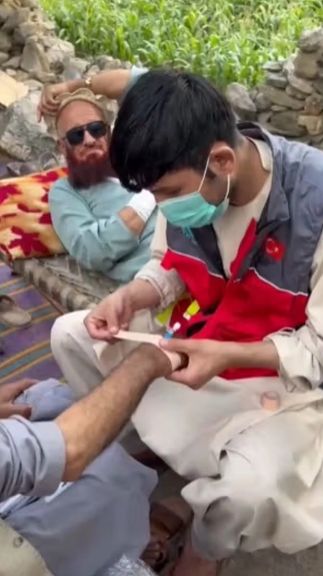
The World Health Organization said Thursday it needs $4 million in urgent funding to provide life-saving assistance to survivors of the deadly earthquake in eastern Afghanistan.
The World Health Organization said Thursday it needs $4 million in urgent funding to provide life-saving assistance to survivors of the deadly earthquake in eastern Afghanistan.
The agency warned that without immediate financial support, its ability to deliver critical health services and emergency aid will be severely limited.
The WHO said the requested funds would be used to provide essential medical care, expand mobile health teams and support water, sanitation and hygiene services in quake-hit areas.
The Taliban said the death toll from the earthquake has risen to 2,205.

The Taliban said Thursday the death toll from the powerful earthquake in Kunar province has climbed to 2,205, with 3,640 others injured.
Deputy Taliban spokesperson Hamdullah Fitrat said rescue teams have recovered hundreds of bodies from the rubble in the districts of Chawkay, Dewagal Dara, Chapa Dara and Manogai. Search and rescue efforts remain under way, he said, adding that tents have been set up for survivors and the delivery of emergency aid is continuing “in an organised manner.”
On Wednesday, Taliban spokesman Zabihullah Mujahid said the death toll had reached 1,457, with 3,394 injured, three days after the quake struck. He also said 6,782 homes were destroyed.
Mujahid said rescue operations were ongoing in Kunar to recover victims’ bodies and that the wounded were being airlifted to hospitals by helicopter.
The governments of Germany and the Netherlands are under growing pressure from courts and human rights groups to process the asylum cases of Afghans deemed at risk, particularly those stranded in Pakistan.
Courts in both countries have ruled that authorities must act on the cases. In Germany, legal challenges and public criticism led to approval for 47 Afghans, including activists, artists and former judges, to enter the country.
The decision followed reports that more than 210 Afghans holding German admission papers were recently detained by Pakistani police and deported to Afghanistan. Many of the families had been waiting in Islamabad for months or even years for relocation.
A German Foreign Ministry spokesman said Berlin is pressing for their return to Pakistan and is holding talks with Islamabad to ease the process.
Chancellor Friedrich Merz said his government would uphold the commitments made by its predecessor but stressed that all Afghan refugees must undergo security checks before entry. Human rights groups have accused the government of “deliberate neglect” and have filed complaints against some ministers.
In the Netherlands, a court in The Hague ordered the government to accept 42 former guards of its embassy in Kabul and their families. The court said Dutch authorities had failed in their duty to these individuals and violated the law.
Thousands of Afghans who fled the Taliban to Pakistan are still waiting to be relocated to safe countries. Reports estimate more than 2,000 Afghans, including former employees of German institutions and others at risk, remain in Pakistan awaiting transfer to Germany.
A magnitude 4.7 earthquake struck eastern Afghanistan on Thursday morning, the US Geological Survey said.
The quake hit at about 9:40 a.m. local time, with its epicentre recorded east of Jalalabad at a depth of 13 kilometres, according to USGS data.
There were no immediate reports of damage or casualties. Local sources in Kunar also confirmed the tremor.
The quake follows a magnitude 6 earthquake that struck the region five days earlier, which has since been followed by several aftershocks.
A prominent Taliban-linked social media user close to the Haqqani network has praised the work of female doctors in responding to the earthquake in Kunar province.
Mohammad Jalal shared photos of female doctors treating patients in Kunar and wrote on X that Afghan female doctors are helping tirelessly, and their dedication in these difficult days is remarkable and clear.
The presence of female doctors has again raised the issue of women’s access to education. The former US ambassador to Afghanistan welcomed the deployment of a team of female doctors from Kabul, noting on X that without them, female patients would have had no one to treat them.
Local sources in Kunar, however, told Afghanistan International on Tuesday that six pregnant women have died in provincial hospitals since the earthquake because of a shortage of female staff and medical facilities.
Similar concerns emerged after last year’s deadly earthquake in Herat, where reports said dozens of women died. The United Nations said more than 90 percent of victims were women and children. Sky News reported that some women delayed fleeing their homes during the quake out of fear of being without a hijab or male guardian.
Despite the urgent need for female doctors during crises, the Taliban have not eased restrictions on girls’ education. In December, the Ministry of Public Health banned women from studying in medical institutes. The move barred around 35,000 female students from continuing studies in medicine and nursing across 10 state institutes and 150 private centres.
The UN Population Fund has said Taliban restrictions have cut women’s access to health care by around 50 percent closing facilities and reducing the number of female medical workers. UNICEF warned in April that if the ban on medical education for women continues, more than 5,000 mothers and children could die this year. The agency estimated at least 1,600 mothers and 3,500 newborns were at risk.
The UN Population Fund has also stressed that Afghanistan urgently needs 18,000 skilled midwives and warned that failure to meet this need could put many women’s lives in danger.
Analysts say the education ban stems from Taliban leader Hibatullah Akhundzada and his circle of clerics in Kandahar. Reports suggest divisions within the movement, with Interior Minister Sirajuddin Haqqani reportedly opposing the policy, which has deepened the Taliban’s isolation and cut international funding, and indirectly criticising the ban.
The UN Refugee Agency on Wednesday appealed for urgent assistance for survivors of the earthquake in eastern Afghanistan.
The agency warned that many areas have been completely destroyed and survivors are in desperate need of shelter, medical care and emergency supplies.
The agency said its response is hampered by a severe shortage of funding.
A UNHCR staff member who visited the quake-hit areas said in a video message that they are witnessing widespread needs, whether medical aid, emergency supplies or shelter, as many villages have been completely destroyed by this earthquake.
The United Nations noted that the arrival of more than 2 million migrants from neighbouring countries has further compounded Afghanistan’s crises.
UNHCR added that this humanitarian response is facing a severe shortage of funding, and needs support to meet the most urgent needs of the affected people in Afghanistan.