Taliban Cuts Wi-Fi Access In Five Afghan Provinces

The Taliban has cut off wireless internet access in five provinces, reliable sources told Afghanistan International on Tuesday.

The Taliban has cut off wireless internet access in five provinces, reliable sources told Afghanistan International on Tuesday.
Residents in Kandahar, Uruzgan, Helmand, Nimroz and Balkh provinces have lost access to Wi-Fi services, which are typically provided through home routers and other wireless devices.
The move came a day after the Taliban blocked fibre optic internet in Mazar-i-Sharif city, the capital of Balkh province. Sources within the group said the shutdown was ordered directly by Taliban leader Mullah Hibatullah Akhundzada.
According to the sources, the measure is part of a broader Taliban plan to gradually restrict both fibre optic and Wi-Fi services across the country. Independent observers confirmed that over the past three weeks, fibre optic companies’ services have either been completely suspended or severely disrupted nationwide.
Experts warn the restrictions may provide the Taliban with short-term control over the flow of information, but in the long run will cause serious harm to Afghanistan’s economy, education and technological development.
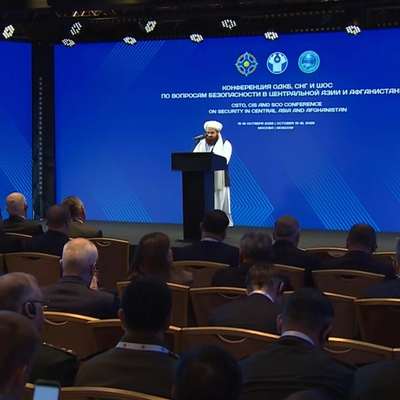
Mullah Yaqoob Mujahid, the Taliban’s defence minister, travelled to Doha to convey condolences to the Qatari government, replacing Foreign Minister Amir Khan Muttaqi, who remains under a UN travel ban.
The Taliban’s defence ministry said Yaqoob met with Mohammed bin Abdulaziz Al-Khulaifi, Qatar’s minister of state for foreign affairs. Enayatullah Khwarizmi, a ministry spokesman, said the meeting focused on bilateral ties and reaffirmed the Taliban’s support for Qatar. Qatar’s foreign ministry has not commented.
Muttaqi, listed under UN sanctions, requires approval from the Security Council’s sanctions committee for foreign travel. He recently failed to secure authorisation to visit India and Pakistan.
The visit coincided with a summit of Arab and Islamic leaders in Doha to discuss Israel’s recent strike on Qatar and other “hostile actions” by Tel Aviv. The Taliban were not invited.
In a phone call with Al-Khulaifi last week, Muttaqi condemned Israel’s attack, calling it “an aggression beyond all limits” and a “clear violation of international laws, norms and values.” He urged Islamic nations to adopt a united stance against Israel.
Qatar has played a central role in facilitating Taliban diplomacy, hosting the group’s political office in Doha and mediating talks with the United States that led to the 2020 agreement enabling the Taliban’s return to power.
Despite these ties, Doha has not formally recognised the Taliban government. At Monday’s summit, Qatar used Afghanistan’s tricolour flag rather than the Taliban banner and, in official statements, continues to refer to Afghanistan by its republican title instead of the “Islamic Emirate.”

Hundreds of residents of Mazar-i-Sharif city staged protests on Tuesday against the Taliban’s plan to demolish long-standing shops in the city’s auction market.
Demonstrators chanted “Death to traitors” and accused the group of threatening their livelihoods.
A local resident told Afghanistan International that Taliban authorities moved to tear down several shops early Tuesday. Traders who arrived at work found demolition under way. He said the Taliban had collected taxes from the same businesses for the past four years but were now preparing to destroy them without prior warning.
Shopkeepers argued their businesses, some of which have been operating for four decades, were their only source of income. They demanded that the Taliban provide alternative premises before carrying out demolitions.
Taliban spokesman in Balkh, Haji Zaid, confirmed the shops would be cleared under a contract authorised by Taliban officials in Kabul to build a new commercial market. He said local authorities had spoken with protesters in an attempt to ease tensions.
Nasim Amiri, a former member of the Balkh Chamber of Commerce, told Afghanistan International the shops were owned by the Ministry of Hajj and Religious Affairs and recently leased to a private company under the Taliban’s economic office for redevelopment.
Protesters warned that the demolitions would leave hundreds of families without income. Similar demonstrations over Taliban property seizures and demolitions have taken place in Bamiyan and other provinces.

Mohammad Naseem Haqqani, head of the Taliban-appointed Sheikh Zayed University in Khost, has declared that waging jihad against Pakistan is an individual obligation.
The cleric labelled the Pakistani government as “puppets” and its laws as influenced by “Jews and Christians.”
In a video circulated on social media, Haqqani criticised Pakistani clerics, including Mufti Taqi Usmani, for refusing to issue similar calls. He claimed they remained silent out of fear of Pakistan’s Inter-Services Intelligence agency and argued that imprisonment or death would be preferable to what he described as the moral decline of Muslim scholars. Haqqani went as far as to pray for a “heavenly thunderbolt” to strike Pakistan.
Taliban government statements frequently refer to Haqqani with titles such as “Sheikh al-Hadith” and “Mawlana,” underscoring his religious authority within the group. He previously served as a spokesperson for the ministry overseeing emergency response and currently leads Sheikh Zayed University in Khost.
Escalating War of Words
Haqqani’s comments follow sharp criticism from Hafiz Muhammad Tahir Mahmood Ashrafi, head of Pakistan’s Ulema Council and the prime minister’s special representative for interfaith affairs. Ashrafi urged the Taliban to refrain from interfering in Pakistan’s internal matters, telling them, “We are not your students; you are our students.”
Ashrafi described Pakistan as an Islamic nation that had made decades of sacrifices for Afghanistan. He said thousands of Pakistanis had lost their lives supporting Afghans, but recent attacks launched from Afghan territory had caused Pakistani civilian casualties.
“Wars you claim to have won were because of our sacrifices,” Ashrafi said. “If you do not know this, ask. Is it possible that we could fight your battles but be unable to defend our own homeland?”
The Taliban have not yet officially responded to Haqqani’s remarks.

The Taliban has banned fibre-optic internet in Balkh province on orders from its supreme leader, Hibatullah Akhundzada, a spokesman confirmed Tuesday.
Haji Zaid, spokesman for the Taliban governor in Balkh province, said the decision was made “to prevent immoral activities” and that authorities were now seeking alternatives.
At least three sources told Afghanistan International that fibre-optic services have been shut down across Afghanistan for the past three weeks.
Residents in Mazar-i-Sharif city reported Monday that Wi-Fi services in the city had been cut. Telecommunications companies confirmed the shutdown, saying it was carried out under Taliban orders. According to locals, Afghan Telecom and all other cable internet providers have been suspended, leaving only low-speed mobile internet in operation.
Impact Of Fibre-Optic Shutdown
The loss of fibre-optic connections has severely restricted access to high-speed internet in Afghanistan. Government offices, private businesses and households can no longer use reliable fast internet, relying instead on slower mobile networks.
The shutdown has disrupted online government services, banking, and remote education, while businesses struggle to operate. Analysts warn the move could further deter foreign investment, restrict Afghanistan’s access to global markets, and deprive students of educational opportunities.
Fibre-optic internet transmits data using light signals through glass cables, offering far greater speed and stability than mobile networks. Afghanistan is connected to international broadband through fibre-optic links with five neighbouring countries.
Figures from the former Ministry of Communications show the previous government invested heavily in fibre-optic projects, including a $150 million initiative funded by $60 million from Afghanistan’s state budget and the remainder by the US Agency for International Development.

The Taliban has cut Wi-Fi services in Mazar-i-Sharif and suspended fibre-optic connections nationwide, in what sources say may be part of a broader effort to restrict high-speed internet access across Afghanistan.
Residents of Mazar-i-Sharif city said the shutdown began on Monday when Taliban authorities ordered service providers to cut Wi-Fi in the city. Local telecommunications companies confirmed the decision, saying it had been issued by Taliban officials.
Afghan Telecom and several other providers suspended cable-based internet services, though mobile networks remain operational.
A Kabul-based internet service provider told Afghanistan International that the Taliban halted fibre-optic services nationwide about 20 days ago. The company official, who requested anonymity due to security concerns, said providers contacted the Ministry of Communications for clarification but were told the directive had come directly from Kandahar.
According to the source, a Taliban cabinet delegation is expected to travel to Kandahar to brief the group’s supreme leader on the importance of fibre-optic services for major development projects, including the TAPI and TAP regional pipeline initiatives.
Direct Order from Akhundzada
A telecom official in Mazar-i-Sharif city also confirmed the shutdown, saying the decision was announced during an emergency meeting between Balkh governor Mohammad Yusuf Wafa and internet providers. He said Wafa told participants that the order had come directly from Taliban leader Hibatullah Akhundzada.
Companies said Taliban leaders have justified the restrictions as a way to curb “immorality.” In previous directives, service providers were instructed to block access to apps such as TikTok and PUBG, as well as pornography websites. Providers said the cost of such filtering was prohibitively high, between $50,000 and $100,000 a month. They managed to block some adult websites but failed to restrict the apps, a shortfall that repeatedly drew Taliban criticism.
Sources said Akhundzada has now opted to suspend high-speed internet altogether in order to control public opinion. The new policy may be implemented gradually, province by province.
Before the fibre-optic shutdown, average internet speeds in Afghanistan reached about 40 megabits per second. Since the suspension, speeds on wireless networks have fallen to between 4 and 6 Mbps.
Part of Global Trend
The Taliban’s move in Mazar-i-Sharif is the latest example of internet restrictions being used as a political tool. According to the global watchdog NetBlocks, there were 296 shutdowns recorded in 54 countries in 2024 alone.
Iran almost entirely cut internet access during protests over rising fuel prices in November 2019 and has since imposed widespread filtering and limits on high-speed services. Russia, since 2021, has throttled internet connections and blocked access to several social media platforms.
In May 2022, the UN Human Rights Office warned that shutdowns severely disrupt daily life, restricting access to information and essential services.
One of The World’s Slowest Networks
Afghanistan already ranks near the bottom of global connectivity. According to data from Ookla’s Speedtest, the country is placed 150th worldwide for internet speeds.
Analysts say the suspension or throttling of high-speed internet will further damage the quality of life in urban areas, where connectivity underpins commerce, education, and entertainment. They warn that the policy could have serious economic, educational, and social consequences, further isolating Afghans from access to information and participation in modern life.
