Taliban Defence Minister Says Lifting US Sanctions Is Top Priority
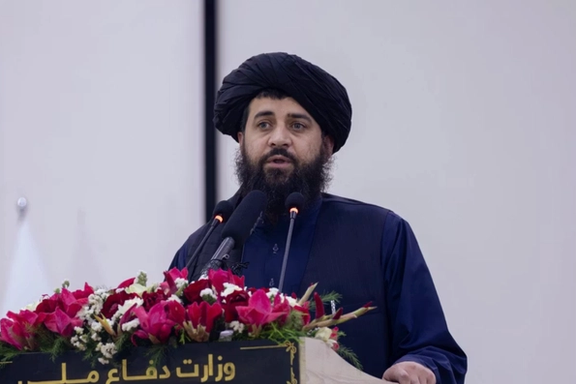
Taliban Defence Minister Mullah Yaqoob Mujahid said the group’s main priority in its dealings with Washington is the lifting of US sanctions.

Taliban Defence Minister Mullah Yaqoob Mujahid said the group’s main priority in its dealings with Washington is the lifting of US sanctions.
In an interview with Al Jazeera, Mujahid said Taliban relations with the United States are primarily focused on political and economic issues. He recently travelled to Doha, where he expressed solidarity with Qatar and met local officials.
The United States lists the Taliban as a “global terrorist organisation,” and several of its senior leaders remain under sanctions. Washington froze Afghanistan’s central bank assets after the Taliban seized power in 2021 and has said normalising ties depends on fundamental changes in the group’s human rights record.
Taliban leaders have repeatedly demanded recognition from foreign governments, including the United States, and pressed for sanctions relief. So far, only Russia has formally recognised the group.
Since March, US delegations have visited Afghanistan at least twice. Visitors have included Adam Boehler, presidential envoy for hostage affairs, and Zalmay Khalilzad, Washington’s former special representative for Afghanistan. Talks with Taliban officials have focused largely on the release of American hostages.
the Taliban defense minister reaffirmed the group’s commitment to the Doha Agreement, saying Afghan soil would not be used to threaten other countries. He also highlighted efforts to build a conventional army, claiming “significant steps” had already been taken.


Taliban leader Hibatullah Akhundzada is reportedly angry with Deputy Prime Minister Abdul Ghani Baradar for meeting a US delegation without his approval and without the presence of his trusted aides, sources told Afghanistan International.
The sources said Akhundzada insists that his loyal representatives must attend all meetings between Taliban officials and foreign envoys. His dissatisfaction grew after Baradar’s 16 September meeting in Kabul with Adam Boehler, the US president’s special envoy for hostage affairs, according to sources in Kabul and Kandahar.
One source in Kandahar questioned why the US delegation met Baradar instead of Taliban Prime Minister Mullah Hassan Akhund.
Akhundzada has reportedly instructed that senior figures including the ministers of Hajj and Religious Affairs, Mines, Justice, or Higher Education, the chief justice, the governors of Kandahar or Balkh, or the prime minister must participate in any talks with foreign officials. All are expected to follow his directives fully.
Several Taliban ministers, including Mines and Petroleum Minister Hedayatullah Badri, the ministers of finance and economy, Deputy Interior Minister Ibrahim Sadr, and the Taliban-appointed central bank chief, later travelled to Kandahar to deliver the US delegation’s message on American prisoners.
At the Kabul meeting, Boehler told Baradar that both sides had adhered to the Doha Agreement. Baradar briefed the Americans on Afghanistan’s economic conditions, unemployment, and efforts to combat narcotics, and urged Washington to pursue engagement rather than confrontation. Baradar’s office said Boehler confirmed that Washington and the Taliban would exchange prisoners.
But sources said Akhundzada views the talks between Baradar and other Taliban officials with Boehler and former US envoy Zalmay Khalilzad as unauthorized. He has accused some officials of disobedience.
“He removed Khairullah Khairkhwa from the Ministry of Information and Culture for failing to fully carry out his instructions,” one source said. “He is now looking for an excuse to sideline Baradar as well and may reassign him to another post.”
The Taliban has not issued an official comment.

Taliban leader Mullah Hibatullah Akhundzada attempted to block the use of smartphones in Afghanistan before ordering the shutdown of wireless internet, sources told Afghanistan International.
According to the sources, about a year ago in Kandahar, Akhundzada asked the Taliban’s council of clerics to find a “religious justification” for banning smartphones. The aim, they said, was to prevent criticism of the Taliban, halt negative publicity and silence voices the group described as “corrupt.”
A source in Kandahar said the clerics responded that banning smartphones was impossible because millions of dollars had been invested in the sector. They argued the move would cause severe disruption to daily life, commerce and education.
After the council’s refusal, the Taliban began efforts to filter the internet, observers said. But experts note such measures exceed the group’s technical and financial capacity, requiring advanced infrastructure, specialist engineers and significant resources.
About a month ago, a decision was made in Kandahar to cut fibre optic services first, followed by strict limits on mobile internet. The move aimed to prevent people from expressing views freely through global networks and social media, the sources said.
Several Taliban ministers reportedly travelled to Kandahar to warn Akhundzada about the damaging social and economic consequences of an internet shutdown, but he rejected their appeals and insisted on carrying out the plan.
One source said the Taliban leader has now ordered the formation of a new company to provide internet services to government institutions and diplomatic missions. Analysts believe this would both help the Taliban restrict public access to information and create economic benefits for figures close to the leadership.
Experts warn the move will have far-reaching effects, severely impacting daily life. They say it will not only restrict freedom of expression but also harm education, trade, healthcare and Afghanistan’s overall connection with the outside world.

The Taliban’s Ministry of Industry and Commerce said it has held talks with an Iranian delegation aimed at boosting annual trade between the two sides to $10 billion.
The ministry said in a statement Wednesday that Taliban commerce minister Nooruddin Azizi met in Kabul with Mohammad Atabak, Iran’s minister of industry, mining and trade, and his delegation to discuss expanding trade ties and easing transit.
According to the statement, the two sides discussed signing trade and investment agreements, addressing customs and non-tariff barriers, and lifting restrictions at border crossings. They also highlighted the need to resolve transit challenges for Afghan goods at the Milak, Dogharoon, Chabahar and Bandar Abbas crossings.
Taliban officials asked for regular meetings of the joint economic committee, the reactivation of the joint commission, and solutions to banking problems affecting cross-border trade.
Atabak, leading the Iranian delegation, has so far met with several Taliban officials. The visit was described as focused on expanding bilateral trade, improving transit facilities and strengthening joint investment projects.
Although Tehran does not formally recognise the Taliban administration, Iran is its largest trading partner. Current trade between the two countries exceeds $3 billion annually, according to Mohammadreza Modoudi, head of the Dogharoon Free Trade and Industrial Zone.

The Taliban’s Ministry for the Propagation of Virtue and Prevention of Vice said this week it has rounded up more than 1,500 people with mental health conditions across Afghanistan and handed them over to the Red Crescent.
Ministry spokesperson Saif al-Islam Khyber told Taliban-run media on Wednesday that most of those detained were from Herat and Faryab provinces. He said officials in Kabul, Maidan Wardak, Zabul, Badakhshan, Kunduz, Takhar and Helmand provinces were also carrying out similar operations.
In a statement, the ministry said 770 people with psychological disorders were collected from Faryab province alone, while about 200 were gathered in Herat. The ministry said the campaign was launched under orders from Taliban leader Mullah Hibatullah Akhundzada, who has instructed authorities in all 34 provinces to collect mentally ill people.
The Taliban-controlled Red Crescent has not explained how the individuals will be treated or where they will be housed.
Mental health experts warn that people with psychiatric conditions need specialised care, which Afghanistan’s public health system is unable to provide. The World Health Organization estimates that one in five Afghans suffers from a mental health disorder, a figure that experts say has risen since the Taliban's takeover of Afghanistan due to poverty and unemployment.

Taliban leader Mullah Hibatullah Akhundzada’s decision to cut fibre optic internet across Afghanistan is final, sources in Kandahar told Afghanistan International.
Talks between a Taliban delegation from Kabul and the leadership in Kandahar ended without results, the sources said, adding that Akhundzada has so far refused to discuss the shutdown.
According to the sources, Akhundzada ordered the creation of a new company to provide internet access for government offices and diplomatic missions. The Taliban may also allow Salam, a state-owned operator, to distribute limited services.
An executive at a private internet company said only a small number of WhatsApp accounts with special Taliban-issued permits will be allowed to connect, under strict surveillance.
The Taliban has already cut fibre optic services in Balkh, Kandahar, Uruzgan, Helmand and Nimroz provinces, while disruptions have been reported in Baghlan, Ghazni, Parwan and Herat provinces.
Failed Talks
Meetings between telecom operators and Taliban officials in Kabul, the ATRA regulator and Kandahar have yielded no progress. During one session at the Taliban-run Ministry of Communications and Information Technology, officials said mobile data speeds would be reduced to 2G.
“The order from the Taliban leader is irreversible and will be enforced nationwide,” one informed source said.
Banking Disruptions
Afghanistan’s banking sector has been among the first hit. Sources said banking services in Mazar-i-Sharif faced severe interruptions this week, prompting Taliban governor Yousuf Wafa to order exemptions for banks, the national ID office and a handful of other institutions. Internet access for banks in the city was restored by midday.
The Taliban ministries of finance and economy, along with the central bank, had previously opposed the order. Days earlier, a delegation led by the Ministry of Economy and joined by senior officials from finance, the central bank and other ministries travelled to Kandahar to warn Akhundzada of the risks.
The delegation, which included Mines Minister Hedayatullah Badri, Deputy Interior Minister Ibrahim Sadr and the Taliban-appointed central bank chief, stressed that government institutions depend on online systems and that cutting high-speed internet would cripple operations.
Impact on Education
The restrictions have also disrupted online schooling. Thousands of students and teachers have been unable to join classes.
A female student told Afghanistan International the shutdown had “closed the gates of online schools to girls,” depriving many of their last opportunity for education after the Taliban banned girls from secondary schools and universities.