Pakistan & Taliban Agree To Maintain Ceasefire
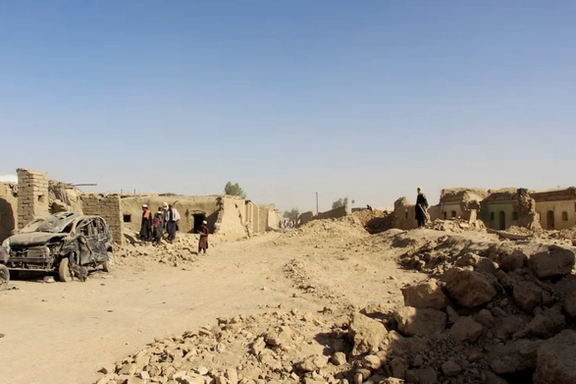
Three Afghan sources and two Pakistani officials, including one based in Istanbul, told Reuters that a meeting between Taliban and Pakistani representatives was held in Saudi Arabia.

Three Afghan sources and two Pakistani officials, including one based in Istanbul, told Reuters that a meeting between Taliban and Pakistani representatives was held in Saudi Arabia.
According to the report, both sides agreed to uphold the ceasefire and continue talks aimed at reducing tensions.
Previous efforts by Pakistani and Taliban officials to reach peace and end border tensions in Qatar and Turkiye have failed, and this meeting represents the latest attempt to defuse friction between the two neighbours.
A senior Taliban official told Reuters that they are ready to hold more meetings to achieve a positive result. Pakistani officials said Islamabad was represented in the talks by a delegation including members of the army, intelligence agencies, and the foreign ministry.
Pakistan’s foreign ministry and military, as well as Taliban and Saudi spokespersons, did not respond to Reuters’ requests for comment.
Islamabad claims militants based in Afghanistan have carried out attacks inside Pakistan and that Kabul has not responded effectively to repeated requests to act against them. The Taliban reject these allegations.
In October, both sides agreed to a ceasefire during talks in Doha, but a second round of negotiations held last month in Istanbul ended without a long-term agreement. Islamabad insists Kabul must commit to taking action against anti-Pakistan militants.


Families of ten Afghan migrants killed by Iranian border forces say the Islamic Republic returned their bodies only after keeping them “hidden for about 24 days.”
They condemned what they described as the “inhumane” treatment of the victims and called on international organisations and the Taliban to launch an investigation.
Bakhtar News Agency, run by the Taliban, reported on Wednesday that the migrants were from the Zer Koh and Shindand districts of Herat province. Relatives said the men were shot without warning while attempting to cross into Iran in search of work.
Taliban officials said the incident occurred on 13 November, when the group was travelling toward the border and came under fire from Iranian forces.
Families of the victims held a gathering in Herat demanding justice and accountability from Iran. They said they had gathered evidence and documentation from the site and urged national and international bodies to investigate and hold those responsible to account. They also asked the Taliban administration to pursue the matter diplomatically with Tehran.
The Taliban governor’s office in Herat said the families’ complaints had been registered and would be referred to the relevant authorities for follow-up.
The reports follow comments from Mohammad Nasim Badri, spokesperson for the Taliban police in Farah province, who said at least ten Afghan migrants were killed by Iranian border guards while attempting to enter Iran “illegally” via the Sheikh Abu Nasr Farahi crossing.
Iran has not issued any statement on the latest incident.
Human rights groups have documented several previous cases of deadly force against Afghan migrants by Iranian border units. Last year, Hal Vash, a rights organisation monitoring Sistan and Baluchestan, reported that Iranian forces opened fire on a group of 300 Afghan migrants in the Kalagan area. At the time, the Taliban said two people were killed and several wounded were sent back to Afghanistan.
In 2020, Iranian border guards in Herat’s Gulran district allegedly beat and pushed dozens of Afghan migrants into a river. Officials of Afghanistan’s former government said 18 people died in that incident.

An Afghan national living in the United States has been charged with threatening to build a bomb, carry out a suicide attack, and kill Americans, the US Attorney for the Northern District of Texas, Ryan Raybould, announced on Friday.
Mohammad Dawood Alokozay, 30, faces up to five years in federal prison if convicted.
The US Department of Homeland Security earlier confirmed that an Afghan refugee had been arrested on suspicion of making terroristic threats. According to the Department of Justice, Alokozay recorded video messages on 23 November in which he issued threats, prompting the charges against him.
Officials said the videos were posted across multiple social media platforms, including TikTok, X, and Facebook. In the recordings, Alokozay allegedly threatened to carry out a suicide attack, issued threats against “infidels” and Americans, praised the Taliban, and claimed he had come to the United States to kill people.
Alokozay is currently in custody and awaiting his initial appearance before a US magistrate judge. Assistant US Attorney Vincent Mazzurco is overseeing the case.
US Attorney Raybould said the United States has “zero tolerance for violence and threats of violence” such as those allegedly made by Alokozay. Attorney General Pamela Bondi said the case demonstrated the national-security risks posed by what she described as a breakdown in vetting under the Biden administration. She said the Justice Department would continue working with federal and state partners to protect Americans.
The Department of Homeland Security confirmed that Alokozay entered the country on 7 September 2022 under “Operation Allies Welcome,” the resettlement programme for at-risk Afghans.
A video circulating on social media appears to show Alokozay speaking live with several users, threatening to make a bomb “right here” in the United States and stating he would carry out a suicide attack against “infidels” or anyone he chose.
White House spokesperson Karoline Leavitt said the scale of the national-security challenge created under Joe Biden “cannot be overstated,” adding that President Donald Trump had directed his administration to continue rooting out such threats inside the United States.

The United States has suspended all immigration applications including green card and citizenship requests from nationals of 19 countries, all of them outside Europe.
The affected countries are Afghanistan, Myanmar, Chad, the Republic of Congo, Equatorial Guinea, Eritrea, Haiti, Iran, Libya, Somalia, Sudan, Yemen, Cuba, Laos, Sierra Leone, Togo, Turkmenistan, and Venezuela.
An official memo outlining the Trump administration’s new policy linked the decision to last week’s attack on members of the US National Guard in Washington, in which an Afghan man was arrested as the suspected gunman. Officials identified the suspect as Rahmanullah Lakanwal, a 29-year-old Afghan who had been granted asylum in April.
Since returning to office in January, President Donald Trump has introduced a series of stringent immigration policies. Following the recent attack in Washington, the administration has intensified measures targeting migrants, particularly Afghans.

Uzbek media, citing the country’s Chamber of Commerce and Industry, reported on Wednesday that the Termez–Hairatan border crossing has reopened after four years.
Officials said the move is intended to ease the movement of travellers and strengthen bilateral trade with Afghanistan.
According to Uzbek outlets, reopening the land border forms part of a broader plan to increase exports to as much as $2.5 billion by 2026.
Uzbekistan closed its land border with Afghanistan in 2021 after the Taliban returned to power, citing security concerns. Under the new policy, citizens of both countries may now cross the border, although visa requirements remain in place.
The development comes as the Taliban, facing heightened tensions with Pakistan and the closure of multiple crossings, seek alternative trade routes.
Afghanistan and Uzbekistan maintain extensive economic ties, with frequent official visits exchanged over the past four years. According to data from Uzbekistan’s Statistics Committee, bilateral trade reached $1.3 billion from January to October this year, a 46.7 percent increase compared with the same period in 2023.

The Taliban governor’s spokesperson in Khost said on Tuesday that two sons of a man executed earlier that day have also been sentenced to death. Their executions, he said, have been postponed because the heir of the victims is not currently in Afghanistan.
Mostaghfer Gurbaz, spokesperson for the Taliban governor in Khost, also released details of the charges against the man executed on Tuesday, identified as Mangal. He said Mangal was accused of killing members of a family.
According to Gurbaz, Mangal and his two sons killed 13 members of a family ten months ago in the Ali Sher district of Khost. He wrote on X that the cases of Mangal and his sons were identical and that the same ruling of retribution had been issued for all three. However, he said the executions of the two sons were delayed because, under Islamic law, the victims’ heir, described as the family’s surviving young daughter, is abroad. He added that had the heir been present, the two sons would have been executed alongside their father.
On Monday, the Taliban issued a public call urging people to gather at the Khost stadium to witness the execution. The governor’s spokesperson later said that around 80,000 people were present, with images showing spectators even climbing trees to get a clearer view.
Taliban courts have issued death sentences for the man and his sons. The United Nations and human rights organizations consider public executions a violation of human dignity and an inhumane practice, and have repeatedly urged the Taliban to halt them. The Taliban, however, insist they will continue implementing what they describe as Islamic Sharia.