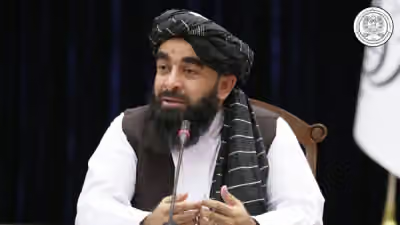
Zabihullah Mujahid, the Taliban’s spokesperson, wrote on X on Thursday, 4 December, that the administration had decided the routes would reopen only after receiving “strong guarantees” from Pakistan. He said these guarantees must ensure the passages will not be closed “for political pressure, illegal misuse or coercion of the people,” and that the rights of traders and citizens on both sides will be protected.
Mujahid accused Pakistan of “illegally” shutting trade and transit routes and using them as a tool of political and economic leverage. He acknowledged that the closure of the crossings had caused serious harm to the population, but said Afghanistan is currently meeting its needs through other countries.
His remarks come nearly 50 days after border crossings were closed following deadly clashes between Taliban forces and Pakistani troops.
Meanwhile, Pakistani media, quoting Tahir Andrabi, spokesperson for Pakistan’s Ministry of Foreign Affairs, reported on Thursday that the border has been partially reopened for the movement of UN humanitarian aid. Commercial trade with Afghanistan, however, remains suspended.
Recently, Taliban Energy and Water Minister Abdul Latif Mansour said Pakistan’s fruit season had begun and Islamabad was seeking to reopen the crossings to export its produce to Afghanistan. He argued that Pakistan had closed the borders during Afghanistan’s fruit season, and that the Taliban should now keep the gates closed in response.