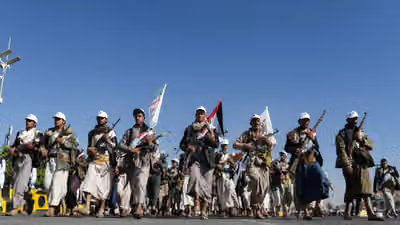
According to Takal, the decision was based on the Taliban’s view that Afghanistan already maintains active relations with regional countries through existing regional organisations and cooperation frameworks, and has made what he described as significant progress in this regard.
Tehran is set to host the regional meeting on “developments related to Afghanistan” on 16 and 17 December. One of the key issues on the agenda is reducing tensions between the Taliban and Pakistan.
The meeting is expected to be attended by special representatives from Pakistan, Tajikistan, Uzbekistan, Turkmenistan, China and Russia.
On Thursday, Iran’s Foreign Ministry spokesperson Esmail Baghaei told reporters: “The Islamic Republic of Iran attaches fundamental importance to security and stability in its neighbourhood and, in this context, will spare no effort to reduce tensions among regional countries and strengthen mutual understanding.”
Referring to recent tensions between the Taliban and Pakistan, Baghaei added: “We hope this meeting can play an effective role in promoting convergence and easing tensions.”
The meeting comes amid a sharp deterioration in relations between the Taliban and Pakistan. Since clashes erupted between the two sides, Iran has repeatedly called for mediation and de-escalation, but neither party has so far responded substantively to Tehran’s efforts.
A day earlier, Iran’s representative to the United Nations expressed concern about the expansion and activities of terrorist groups in Afghanistan, saying Iran is “directly and immediately” affected by developments in the country. He warned that “without the formation of an inclusive national government, conflict in Afghanistan will intensify.”
Ahead of the meeting, Iran also facilitated discussions among Afghan opposition political groups, resulting in a joint statement known as the “Unity of Afghan Political Parties and Movements.” Encouraged by Tehran, the groups issued a declaration calling for the resolution of Afghanistan’s crisis through political dialogue.